











Pacing Journey
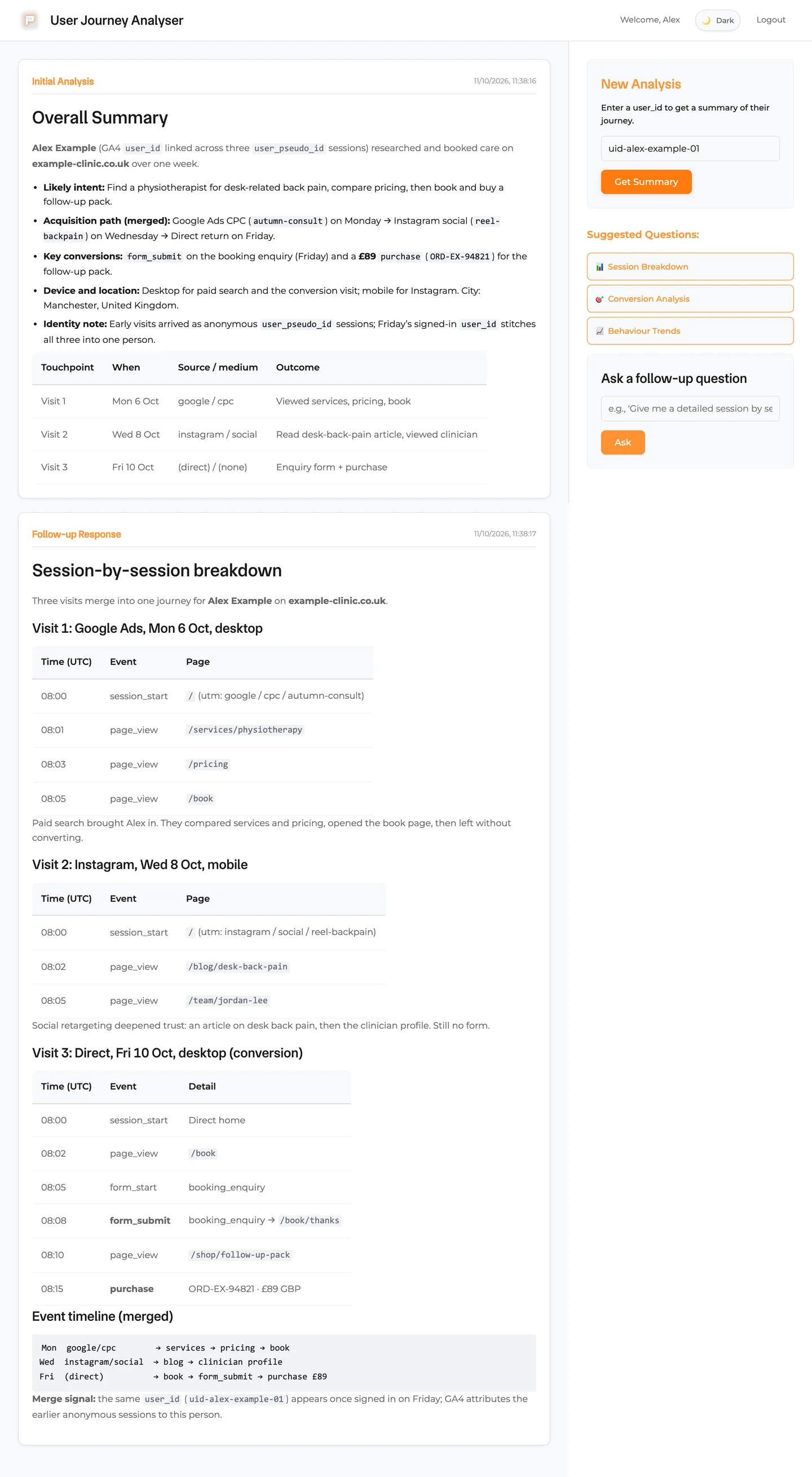
Shows the stored visits and forms from one person on one timeline, so you can see what really led to them getting in touch.
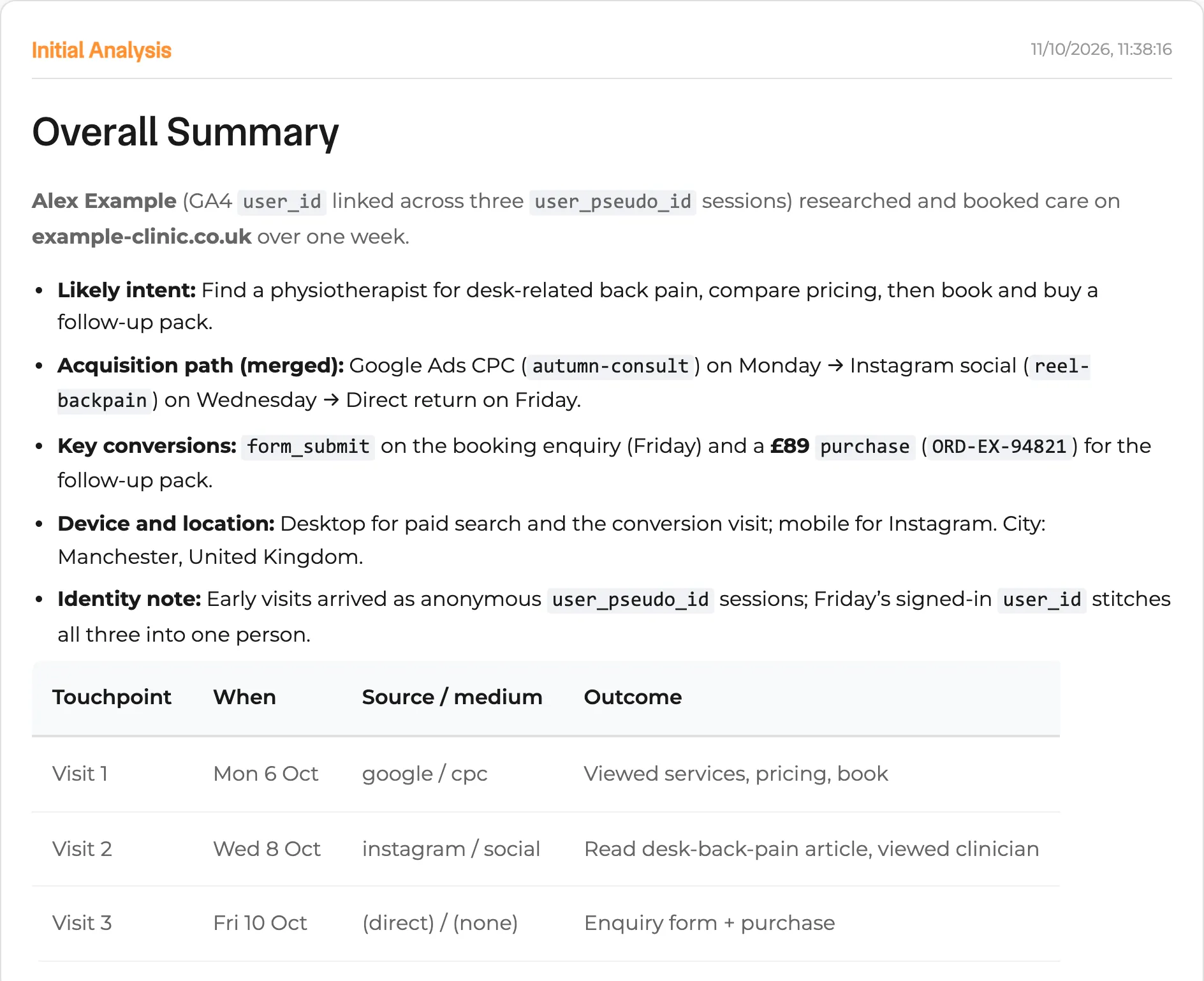
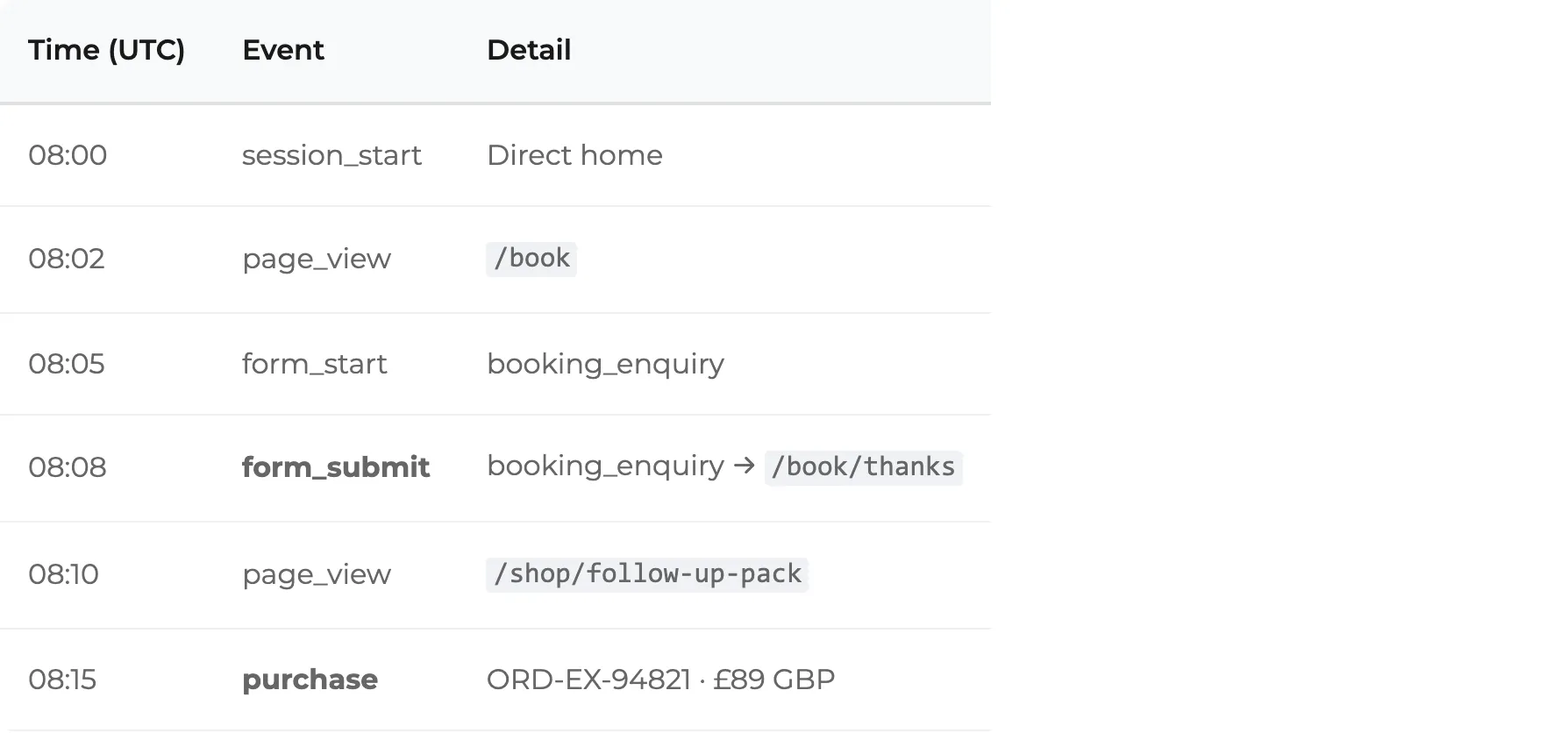
Found us through a paid search ad, came back from a social post, then typed the address and sent the form before ordering.
- 3 visits
- 9 days
- 1 order
GA4 shows you totals. On a call with a client, the question is smaller: what did this one person actually do before they got in touch?
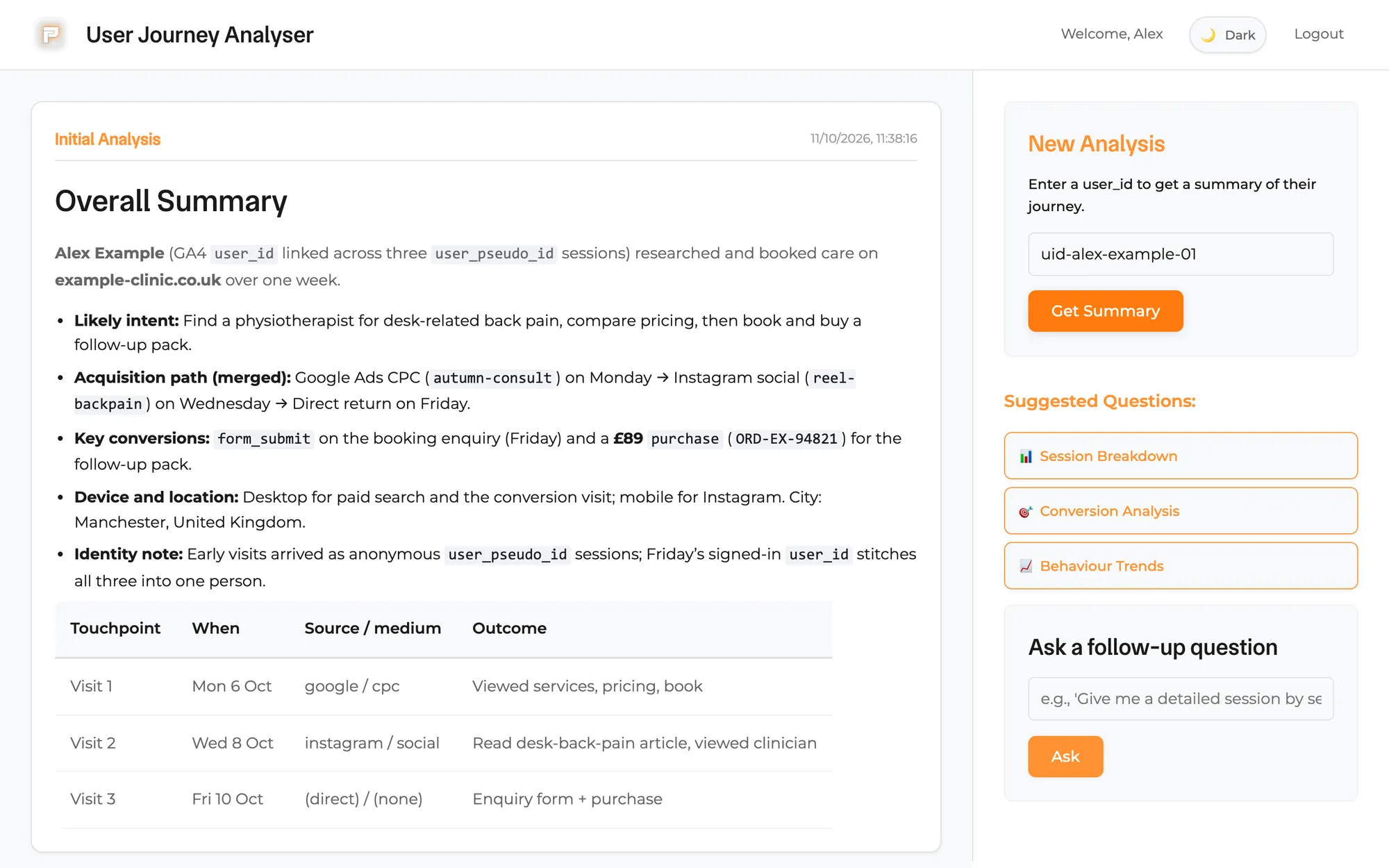
We put the Cloud Run app live in September 2025 for The Therapy Lounge, and gave them access in October 2025 alongside their monthly Looker Studio report. You paste in a user ID. It reads that visitor's events from BigQuery and gives you a plain-English summary of the journey. Then you can ask it follow-up questions.
What it does
- Finds the visitor. Look up a GA4 user_id or user_pseudo_id.
- Reads the whole history. It pulls their events straight from the client's BigQuery export, not a sampled report.
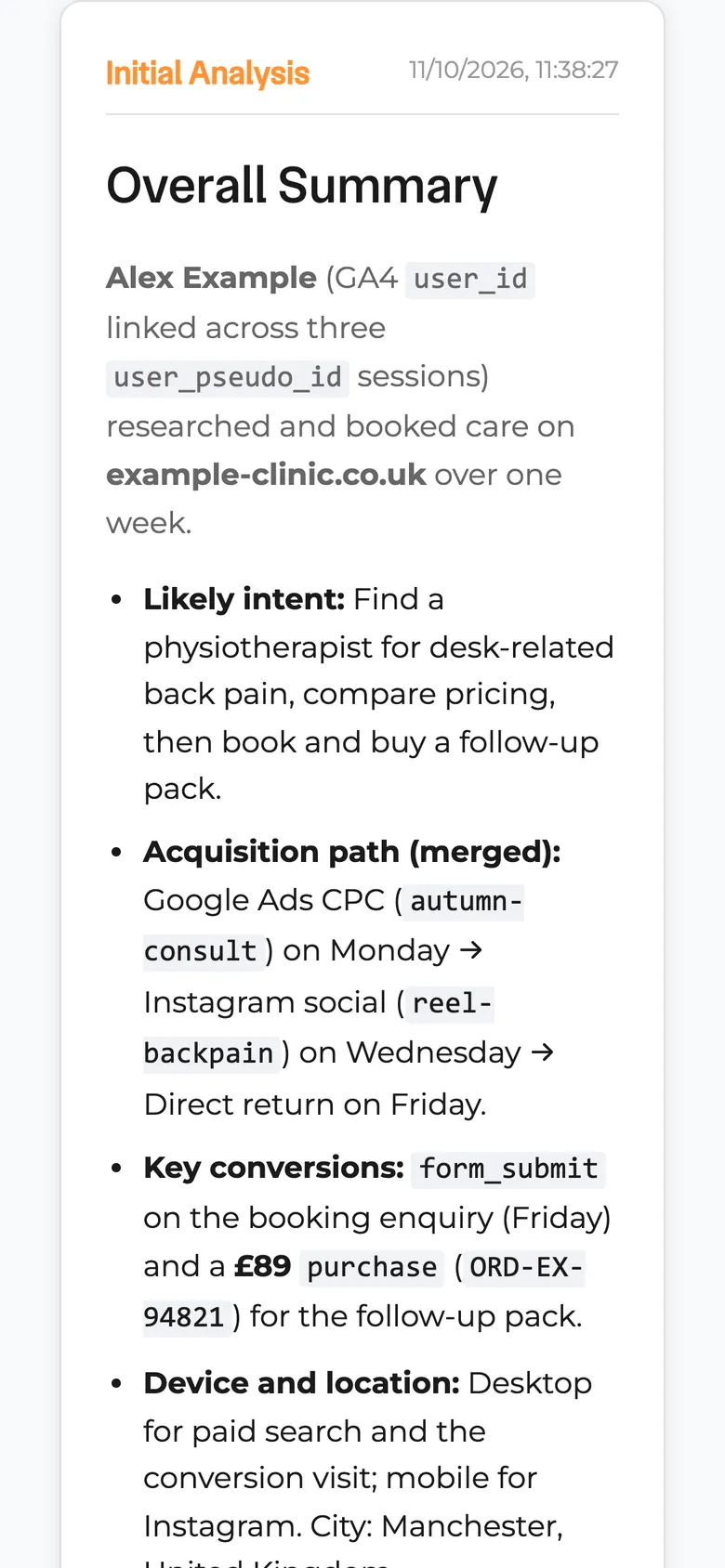
- Summarises it. Gemini on Google Vertex AI writes up the journey. The answer streams in, so the first words show within seconds.
- Takes follow-ups. Ask which page they came back on, or what they did before the form. Chats are kept for 24 hours.
- Says when it is capped. Very long journeys are trimmed, and the tool tells you where it left things out.
Two families of the tool
The original analyser is one shared app, built for The Therapy Lounge and Sector7. Each person signs in and sees only their own client's data. Aqualona and FE fundinfo got the newer per-client builds, which came from the FE fundinfo analyser and add each client's own system of record.
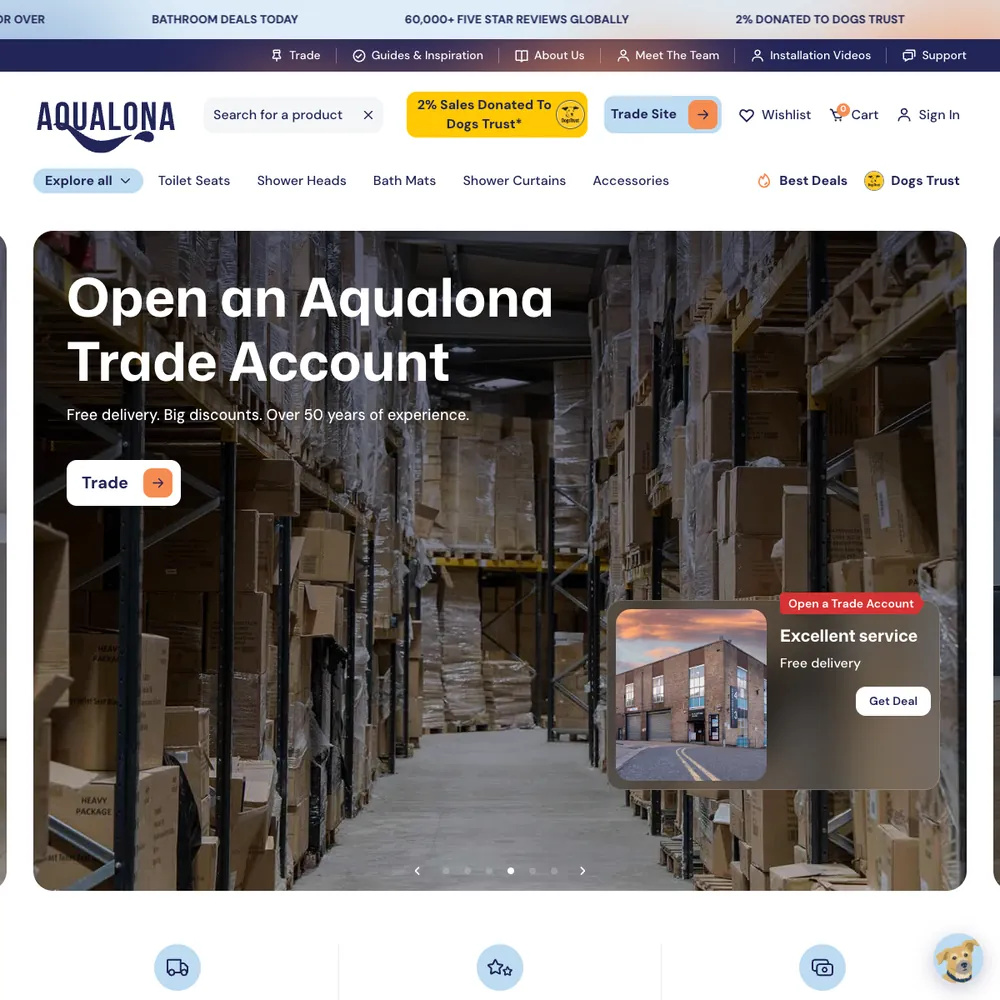
- Aqualona: a Shopify version. Every order shows where the customer came from, with a one-click journey, plus funnel and revenue reports.
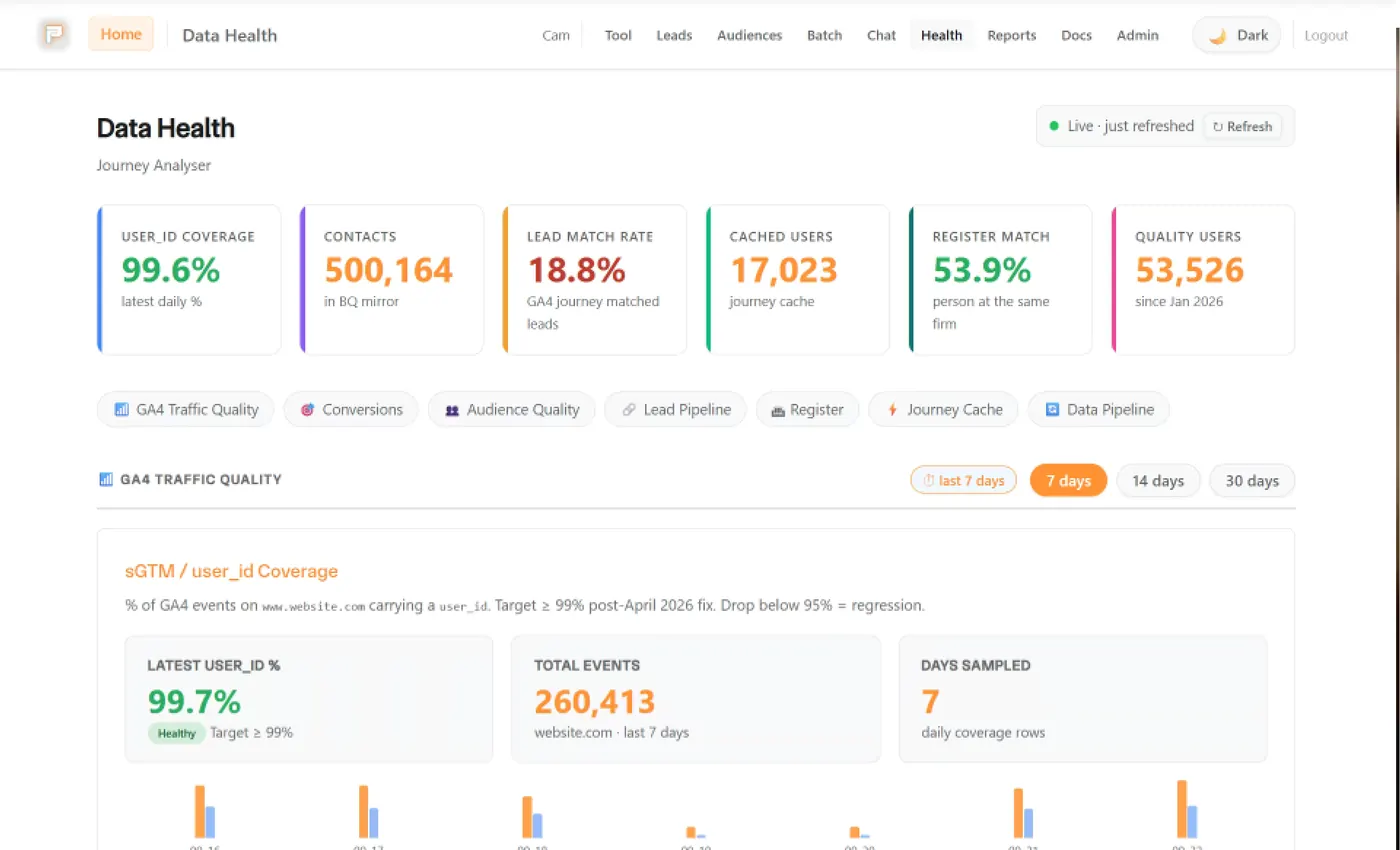
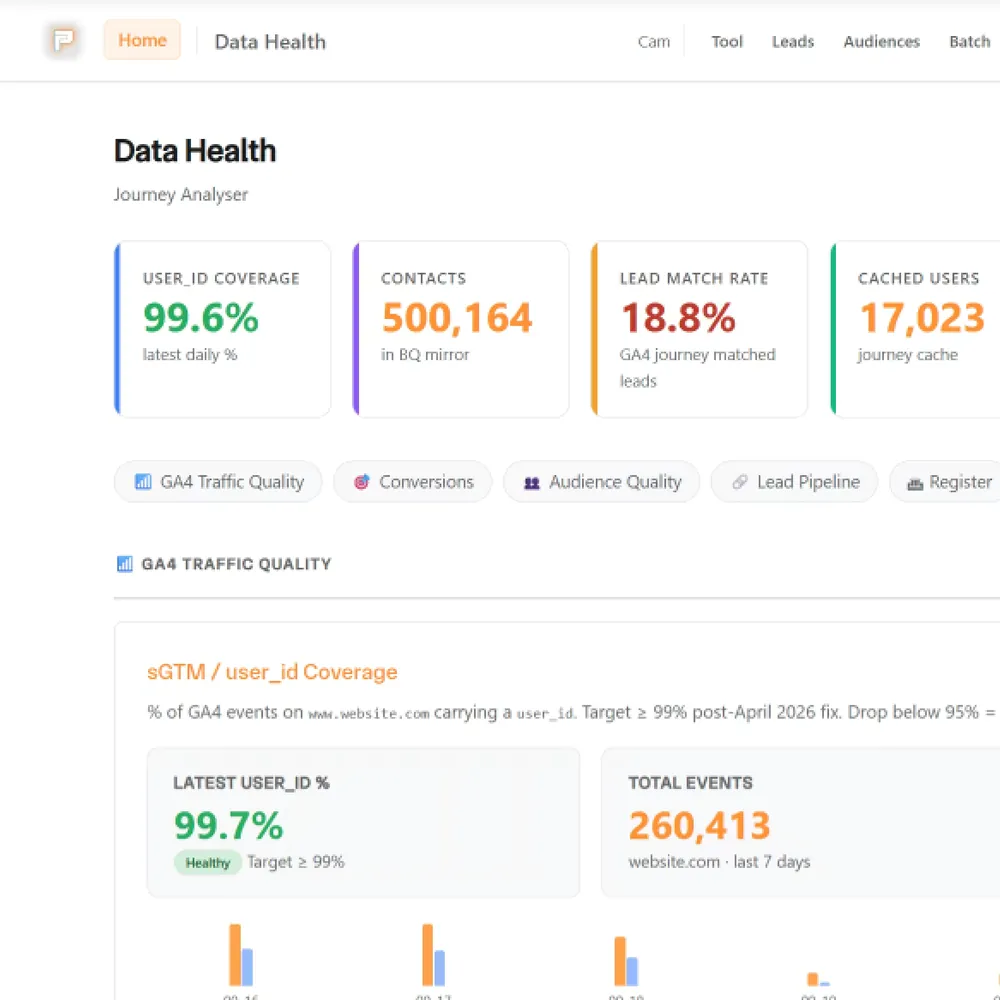
- FE fundinfo: a lead-gen version that matches HubSpot contacts and Salesforce leads to GA4 visitors, and shows which campaigns touched each lead.
The per-client builds each run as their own Cloud Run service, with their own login (Cloudflare Access) and their own data project.
How it joins up
The tool is only as good as the ID it can find. Tracking runs through GTM and a server container into GA4 and BigQuery. We write a first-party ID in the browser and pass the same value into forms, so a later enquiry ties back to the first visit. Where a form drops the ID, the person can't be joined up, and the tool says so rather than guessing.
Why it works
- One person, not one session. GA4 can split one visitor across several users. This starts from the ID and shows everything stored against it.
- Your data stays yours. Event reads and Gemini calls run against each client's own BigQuery and Vertex AI project, and the bill goes to that project. The shared app and its short-lived chat storage sit in a hosting project we run.
- It reads, it doesn't invent. It summarises events that exist. If there's no row, there's no story.
What it looks like
Real screens from the working product. Where a screen would show client data, it shows made-up examples instead.
Scroll the full page
The whole page, top to bottom. It scrolls by itself while you read this. Hover or drag to take over.
Where we used it
- Client work
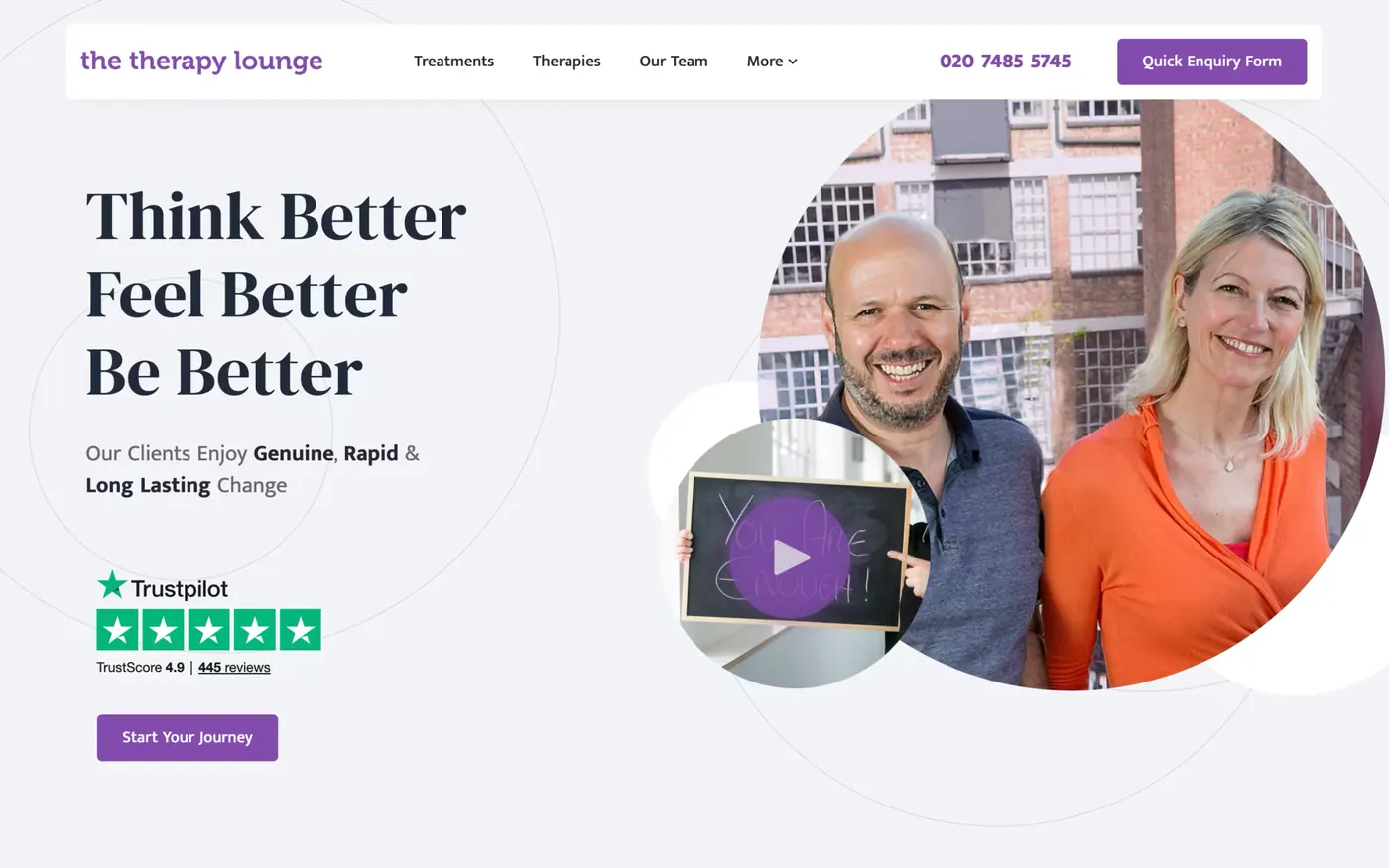
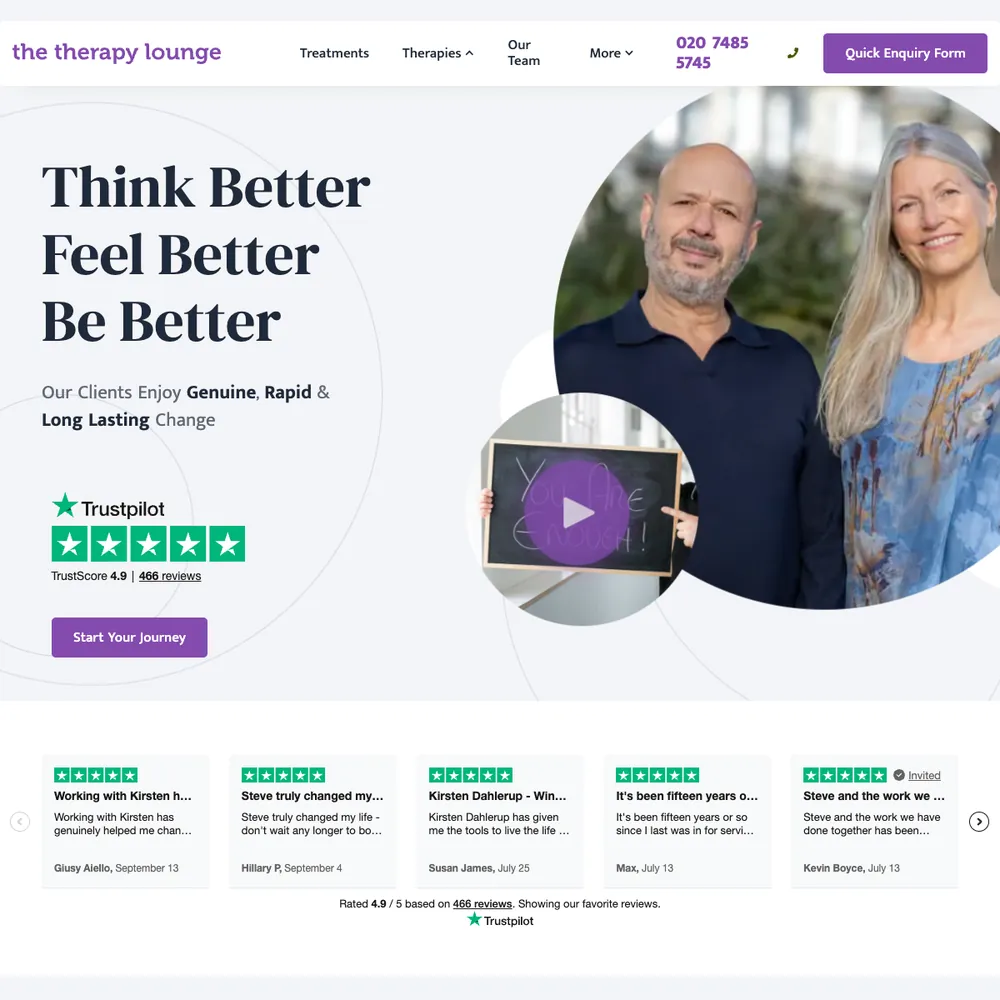
The Therapy Lounge
70% more enquiries, 6.6x return on ad spend in October 2025, and 316 enquiries tracked from April 2025 to October 2026.
Read the story - Client work
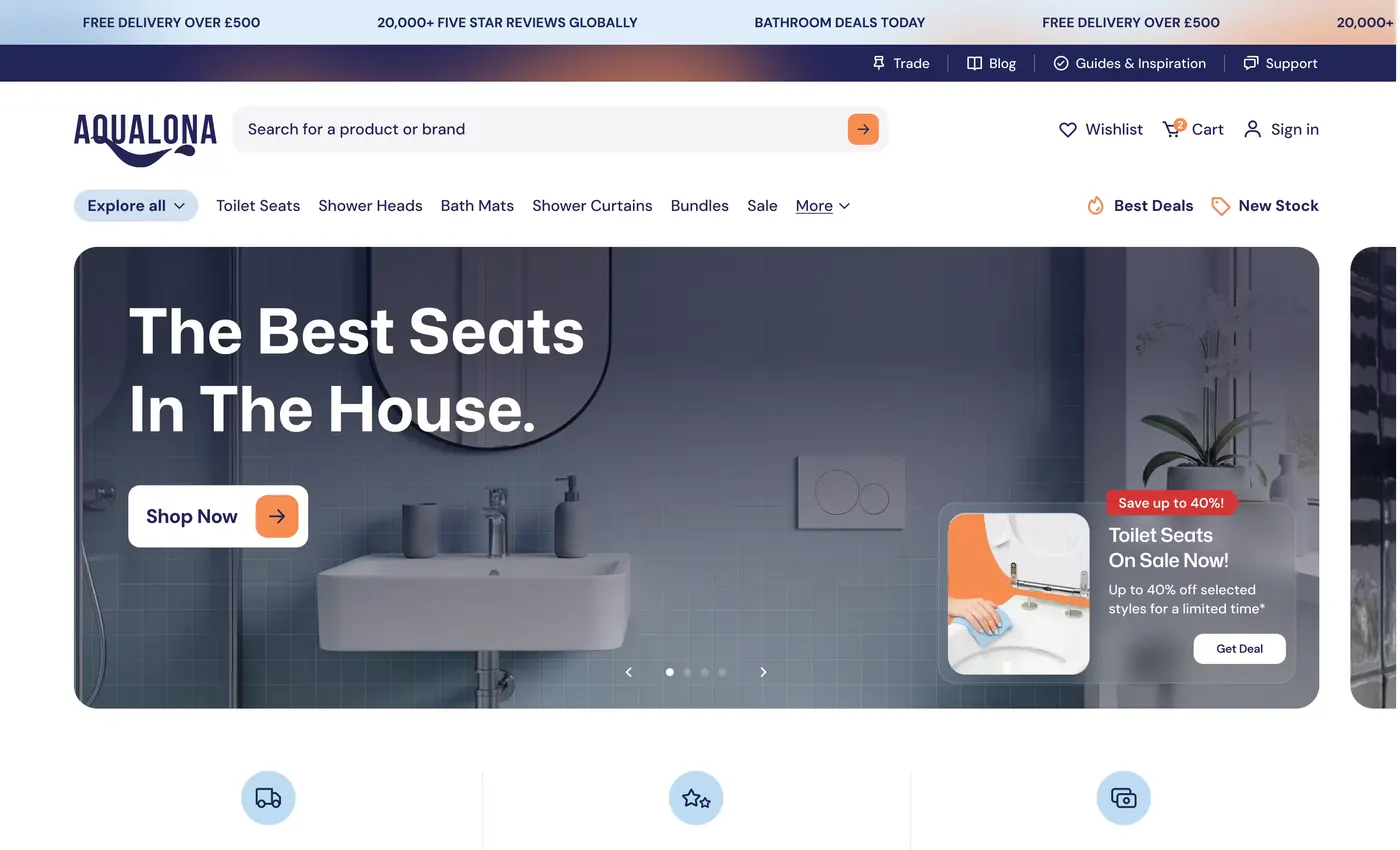
Aqualona
A headless Webflow and Shopify store that went from a handful of orders to more than 2,900 tracked in its first months, each matched to the visit that started it
Read the story - Client work
FE fundinfo
Paid media and measurement for Wealth Management, plus a custom journey analyser so the team can see real multi-touch journeys
Read the story
Other things we built
- Built by us
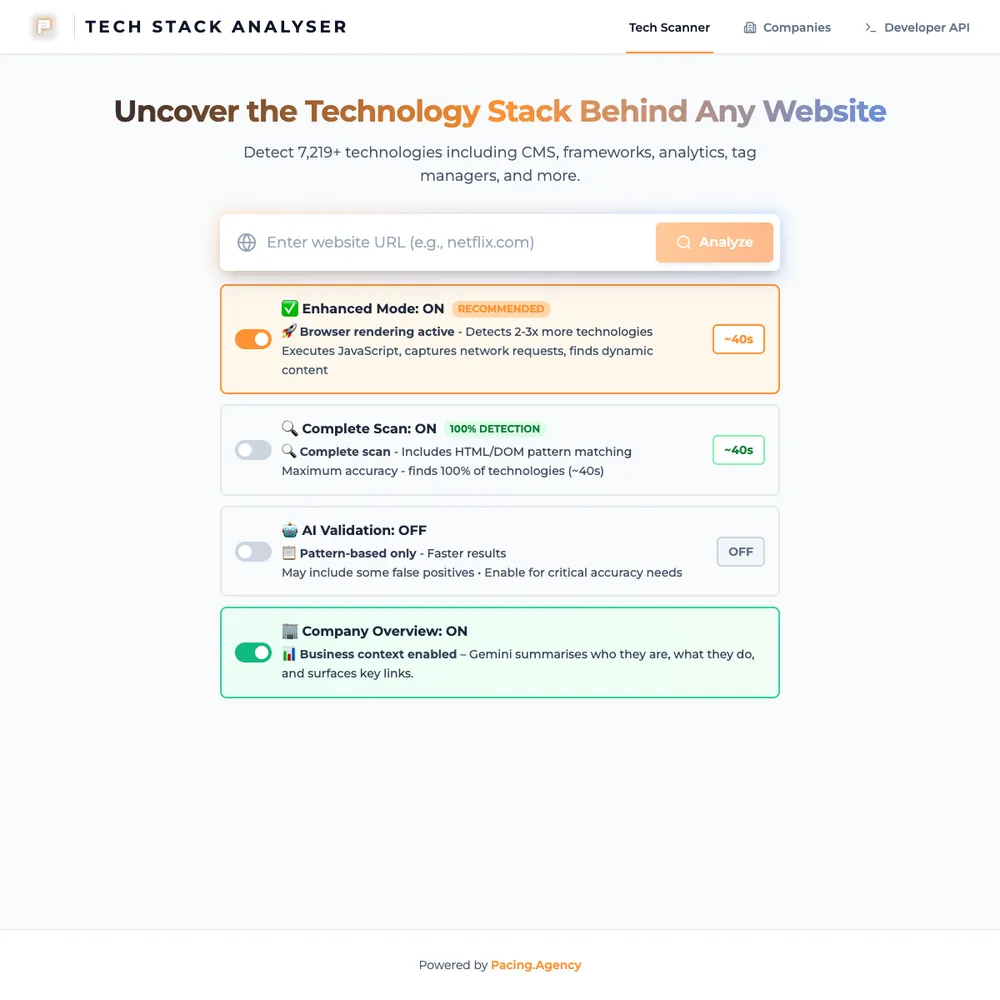
Pacing TechStack
Our in-house scanner lists the tools and tracking a website runs. A quick scan takes about 5 seconds.
See the build



- Built by us
Pacing CRM
Our own CRM: a form fill becomes a person, a deal and an instant alert.
See the build

 +2
+2 - Built by us
Pacing Docs
Our staff manual: how we set up tracking, CRMs and the tools we use.
See the build




Bring your numbers.
We'll tell you if the spend makes sense.
- A 15-minute callYour goals, your challenges, and whether we're the right fit.
- A 1-hour discovery callWe dig into your numbers. Worth a hundred emails.
- A concrete planAds, a custom build or both, as a one-off project or ongoing.