











Shopify
- Shopify Partner
- Headless with Webflow
- Server-side purchase tracking
- Merchant Center feeds
Shopify runs the products and checkout behind a store we build, and we send purchases to the ad platforms from the server, so ad blockers and checkout scripts don't lose them.

- Partnerwe're a Shopify Partner and build stores in our own Partner account
- 1build on it
- 2services it belongs to
- 6tools it connects to
What Shopify takes off your plate
Checkout that's built in
Shopify's own checkout and abandoned checkout recovery come with every plan, and the recovery applies once someone reaches checkout. Your design hands people into the cart and Shopify takes the payment. Basket and browse emails come from your email platform, such as Klaviyo.
Products, stock and orders
One admin for variants, stock, orders and customers. On a headless build, the team edits products in Shopify and pages in Webflow.
Your design, not a theme
Smootify syncs Shopify's products and collections into Webflow, so the storefront is a custom brand design rather than a template.
Purchases the ads can see
We send purchase events to the ad platforms from the server, so ad blockers and checkout scripts are less likely to lose them. Browser tags often fail on a Shopify checkout.
A feed for Google Shopping
Products go to Merchant Center with custom labels like category and product type, so Shopping campaigns can be split sensibly.
A store you own
We build in a client transfer store under our Partner account, then transfer it to you. You keep the store and we keep collaborator access.
Shopify is the shop behind the stores we build. We've built a headless store this way: a custom Webflow storefront, with Shopify behind it for products, stock and checkout.
How a headless store fits together
- Shopify holds the products, their variants and stock, and runs the cart and checkout. The shop's team edits products there.
- Webflow carries the design: catalogue, filtered collections, product pages and motion. It's a brand site, not a theme.
- Smootify syncs Shopify's products and collections into Webflow, so the two stay in step.
- Cloudflare looks after the domain's DNS and security.
Why purchases need the server
Browser tags often fail on a Shopify checkout, and an order the ad platforms never see is one they can't use. So we send purchase events through server-side tracking on Stape, with the tags managed in Google Tag Manager. On a headless build, the server container can run on a path of the main domain.
Feeding the ads
- The product feed goes to Google Merchant Center with custom labels such as category and product type, so Shopping campaigns can be split sensibly.
- Shop email runs in Klaviyo, in the merchant's own account.
When we build a new store
We build it in a client transfer store under our own Shopify Partner account. Test payments only, a password page, and a hand-over by email to the merchant when it's ready. They have seven days to accept and choose a paid plan, and we keep collaborator access to carry on helping.
What we connect it to
Shopify records the order, but the ad platforms only learn from it if the purchase event reaches them with the right details.
 WebflowCarries the storefront design on top of Shopify.
 StapeStape hosts the server container that sends Shopify purchases to the ad platforms.
 GTMHolds the purchase tags.
 KlaviyoReceives Shopify's products, orders and browsing for email.
 CloudflareHolds the DNS for the store's domain.
 n8nStarts a workflow for every new order.
It's one part of the setup.
If another part is broken, this one wastes money.
What's a customer worth?
- 1
- 2
- 3
- 4
Where we've used Shopify
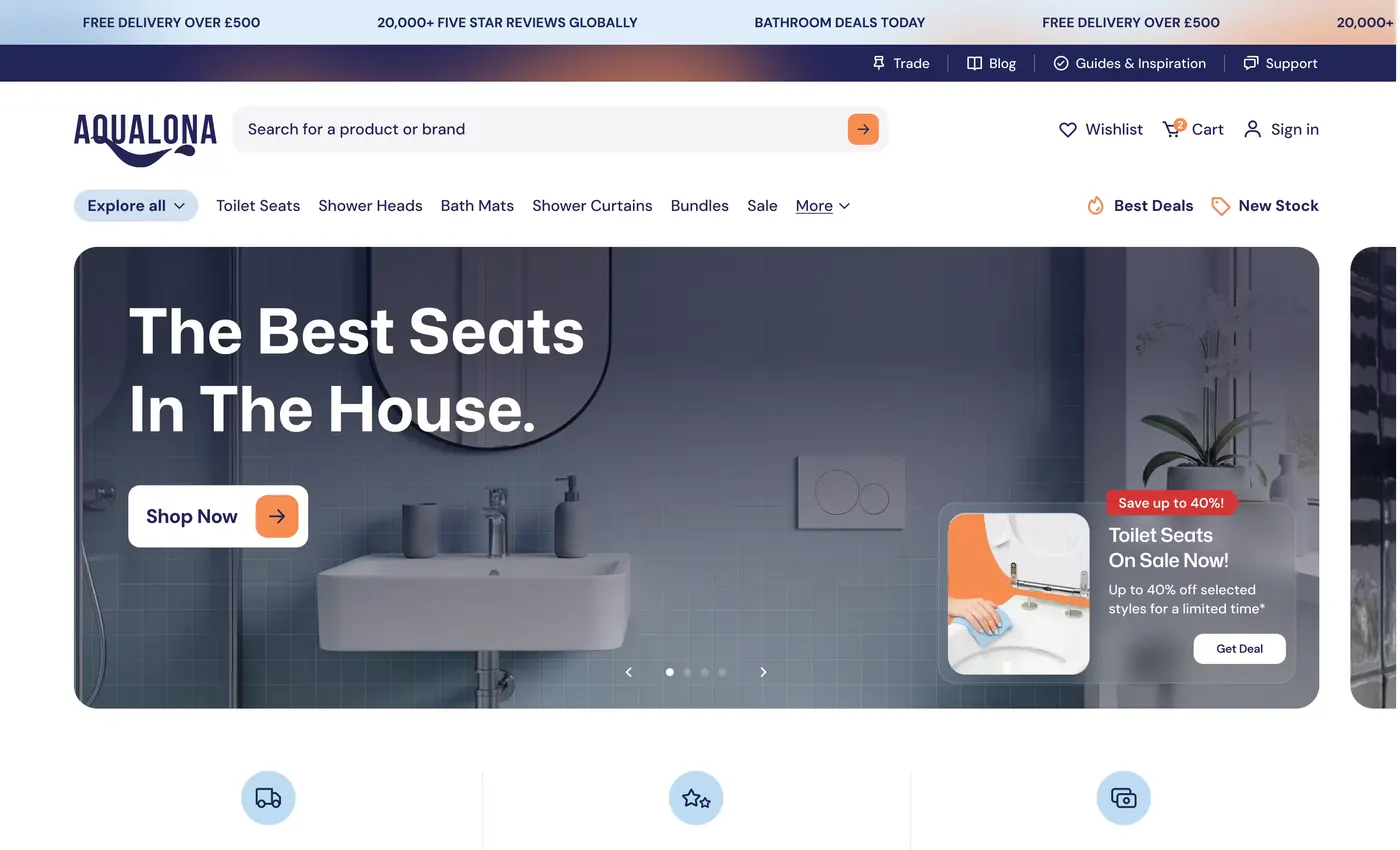
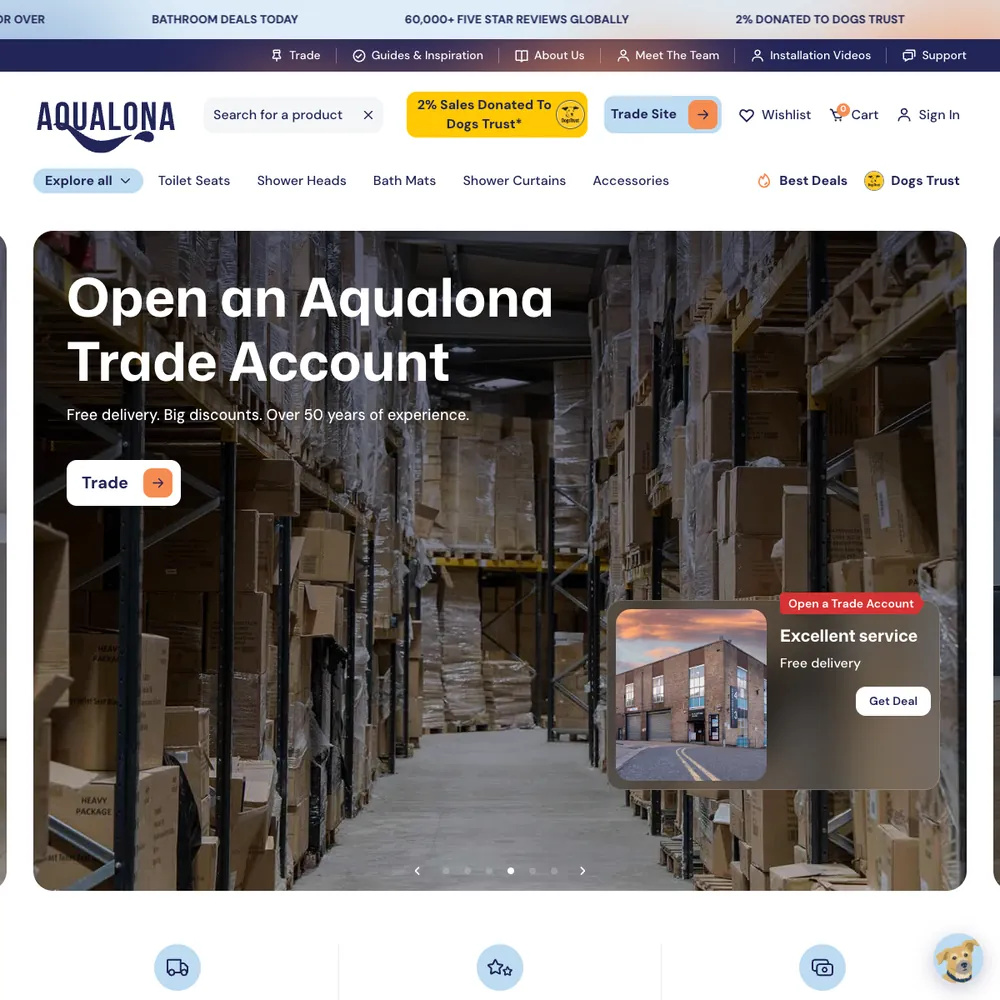
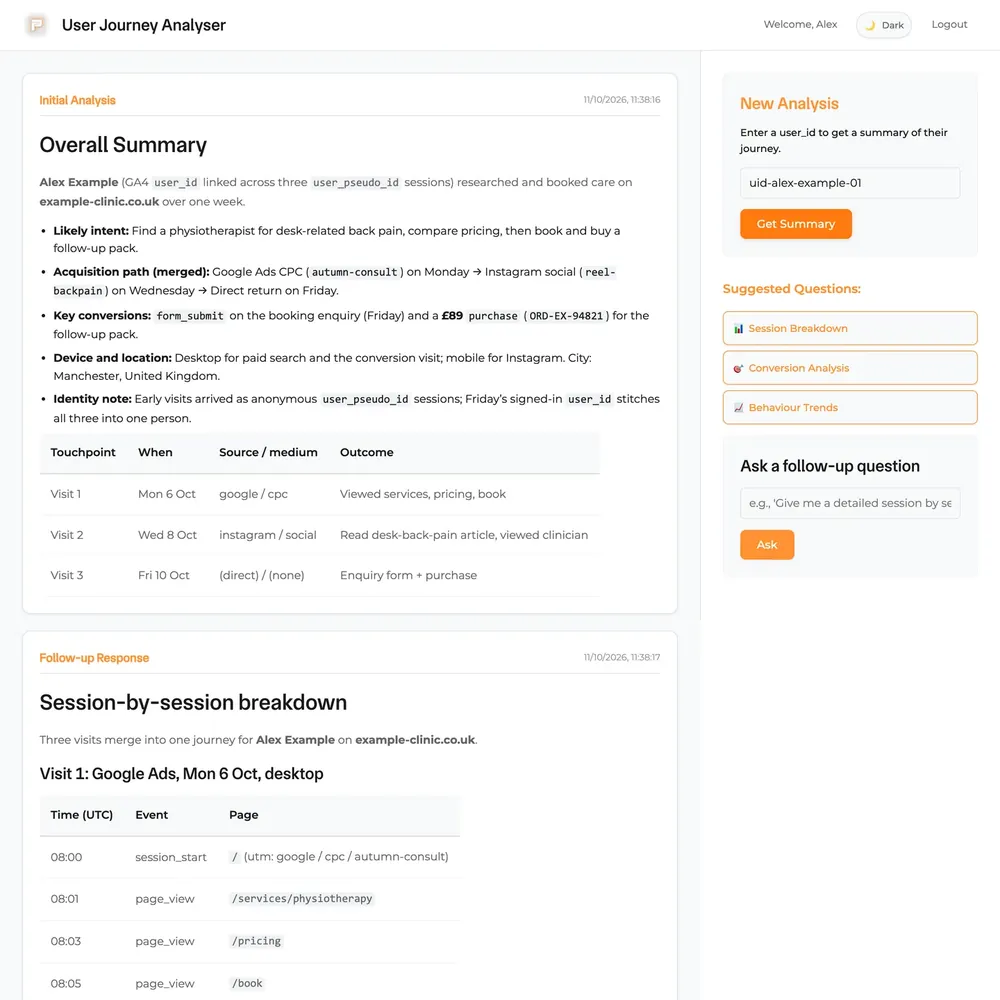




Services that use it
We don't sell it on its own. Each of these services uses it alongside the rest of your setup.
- Place in the loop: WebsiteWebsite Design & DevelopmentWebsites that look the part, turn visitors into enquiries, and that your team can update without a developer.Related tools: Webflow, Astro and Keystatic, Shopify, FigmaHow it fits
- Place in the loop: TrackingTech & TrackingTracking that ties every visit and lead back to where it came from, and follows it into your CRM, set up so your data and your customers' data stay safe.Related tools: Google Analytics 4 (GA4), Stape, Looker Studio, Google Tag Manager (GTM)How it fits



What Shopify is
Shopify is an ecommerce platform. It holds your products, variants, stock, orders and customers, and it takes the payment. Every Shopify plan (Basic, Grow, Advanced and Plus) includes Shopify's own checkout and abandoned checkout recovery, which applies once someone reaches that checkout.
Most shops use a Shopify theme for the front of the store. A headless build keeps Shopify for the back end and puts a different design on the front. Our headless build uses Webflow for the front, joined to Shopify by an app called Smootify.
Start with your numbers.
We'll tell you which tools you need and which connections are missing.


















Bring your numbers.
We'll tell you if the spend makes sense.
- A 15-minute callYour goals, your challenges, and whether we're the right fit.
- A 1-hour discovery callWe dig into your numbers. Worth a hundred emails.
- A concrete planAds, a custom build or both, as a one-off project or ongoing.