









Content & SEO
Content and SEO that get you found on Google by people already looking for what you do.





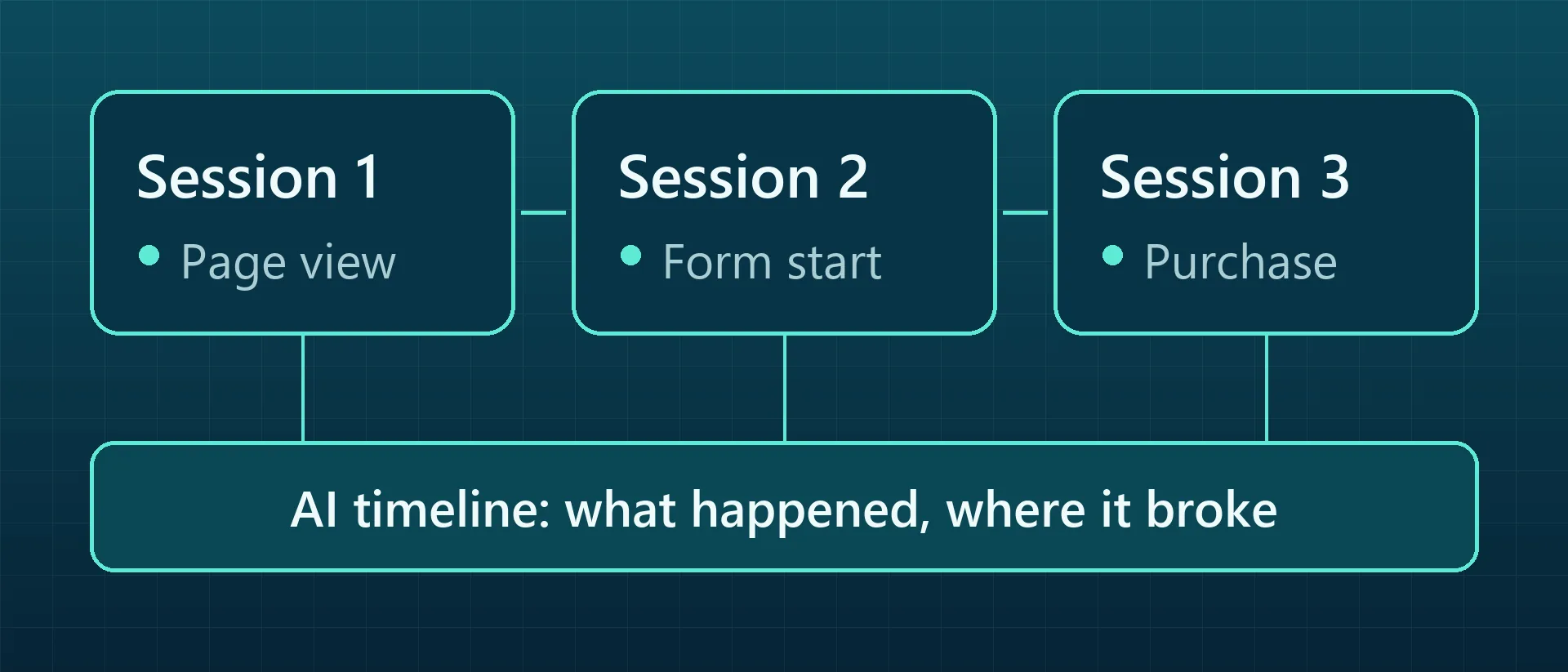
Someone searches, reads your page, and the enquiry is counted
We write each page for a search your customers make, then use Search Console and GA4 to see which pages their enquiries came from.
An example. The business, the page and the times are made up.
A first six months
We start with the pages you already have, then add new ones.
- Month 1
Audit. Pages that get views but few clicks are listed first.
A short list of what to fix - Month 2
Rewrite the first pages. Pages competing for one search are merged.
Better titles on live pages - Month 3
First new pages for the searches your customers make.
New pages, each checked by a person - Month 4
Read Search Console and GA4. Change what has not moved.
Which pages earn clicks - Month 5
More pages for the searches that worked.
A longer list of pages people find - Month 6
Review the enquiries counted from search. Plan the next six.
Enquiries counted against pages
Search work we have done
- Client work
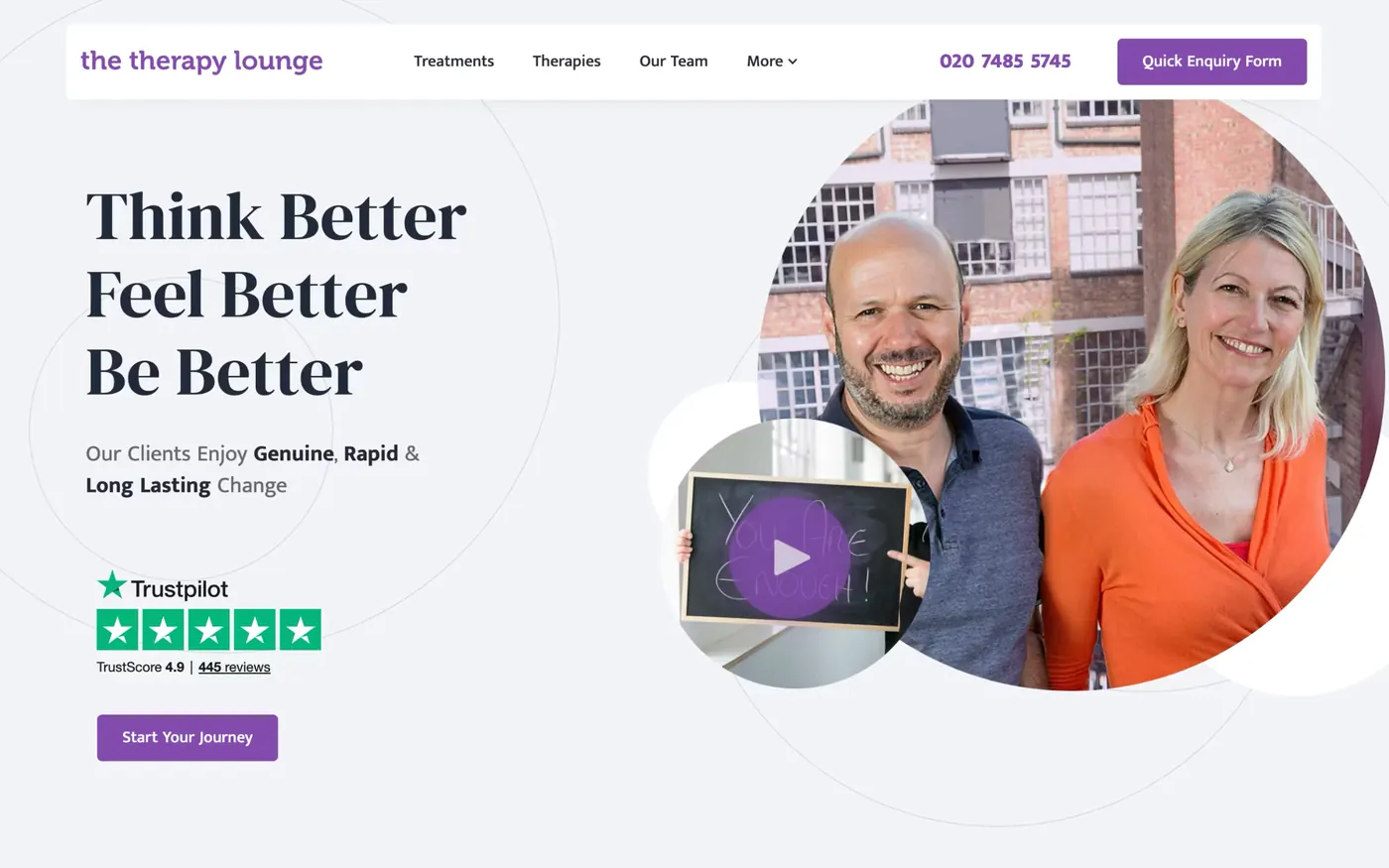
The Therapy Lounge
The hypnotherapy treatment pages on Webflow, built alongside the ads, the tracking and the journey tool.
Read the story - Client work
Sector7
A PDF-heavy site rebuilt as 139 Webflow pages, with a map of 215+ redirects checked in Search Console after launch. New users rose 177% in 2025 against 2024, with the rebuild and the campaigns it made possible.
Read the story - Built by us
This website
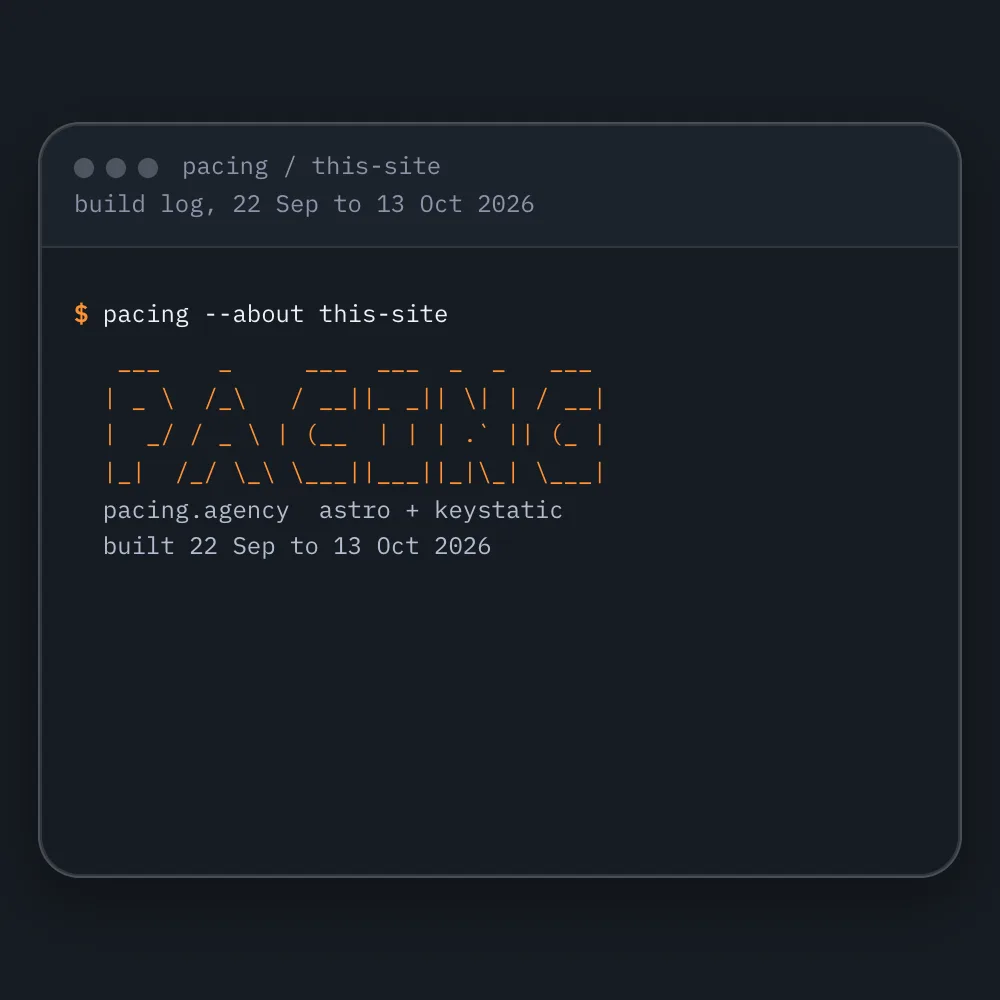
When we moved our own site, 113 old addresses were set to redirect to their replacements on 13 October 2026, and a check compared the text of all 372 old addresses with the new build.
See the build


 +4


Search brings people to your website. Tracking shows which ones enquire.
Content and SEO fill the site with pages people find. Tracking shows which searches and pages bring enquiries, so we know what to write next.
What's a customer worth?
- 1
- 2
- 3
- 4
Tools we use for this
- GSCShows which searches bring people to a site and which pages Google has indexed. We check it after every launch, migration and batch of new pages.Reporting
- GA4Counts sessions and events. We check it against the raw data before we report from it.Reporting
 Google AdsSearch for leads, Shopping and Performance Max for online shops. Conversion goals match what the business actually counts, and real leads and sales go back to Google.PPC
- WebflowWe're a Webflow Certified Partner. Your team can edit the pages without a developer, and the tracking and forms are wired in before launch.Tech
 Google GeminiGemini is the AI inside some of the tools we host on Google Cloud. We're also testing it for ad images, and it takes notes on some calls.Content
 GTMHolds every tag, in the browser and on the server, so a change goes in once and gets tested before it goes live.Tech
 Looker StudioWhere our client reports live: weekly and monthly dashboards the whole team can open, built on data we've checked.Reporting
- GoogleTen Google products under our client work: Ads, Analytics, Tag Manager, Search Console, Cloud, BigQuery, Looker Studio, Sheets, Workspace and Gemini.Strategy
Show 4 more
SEO has three parts
How Cam explains it to clients.
- 1
Technical
Search engines and AI tools can find your site easily and read it properly.
- 2
Off the page
Authority. The more good sites link to you, the more of an authority you look. Links from spammers don't count.
- 3
On the page
The content on your site is relevant to the people who land on it.
"There's no secrets. The internet, you can find out anything you want on the internet, so you might as well have people come and find that information from you rather than somewhere else."
 Cam Bowen, co-founder
How we do content and SEO
SEO is a long, long-term project, and only one part of the bigger puzzle. It pays off, but there's no point doing it on its own: you need a few different prongs to your marketing. We write for the person searching, make the page easy to find and understand, then check Search Console to see what happened.
Start with what your website is for
AI Overviews are taking more and more of the informational searches, so fewer people click through for plain answers. That changes where we start. We ask who you want landing on the site and what you want them to do, and build from there. Your site should be a function for your business, not an informational portal.
We still publish the useful information. AI pulls its answers from somewhere, and it can cite you and link to you, so people see your name even when they don't click.
Where the topics come from
We can always propose ideas, but you're the expert, and what you find interesting is likely what your audience finds interesting. So we start with what you want to write about, then check it against the searches your site already appears for in Search Console and the volumes in Google Keyword Planner. It's the same method we used to plan our own search campaigns.
Structure before keywords: Sector7
On Sector7 the job was mostly a content structure piece rather than a full keyword research one. We matched each page to the searches it should answer, then wrote it so it made sense to the people who land on it.
How we use AI
We use AI for research and summaries, and a person checks every piece.
Site moves
Moving to a new site is mostly careful redirects, mapped before launch and checked in Search Console after it.
Frequently Asked Questions
Wondering about keywords, content strategy, or how SEO really works? Ask away.
Still have questions?
Talk to usWhat is content and SEO, and why does it matter?
Content is everything your audience reads, watches or listens to. SEO makes it easy to find when someone searches, on Google and other search engines. Together they bring in people who are already looking for what you do.
How do you develop a content strategy for my business?
We start with who you need to reach and which searches matter, using your Search Console data first. Then we line up the content you already have against the customer's journey, mark the gaps and put the pieces that matter most into a content calendar. After that it's writing and checking what earns clicks and enquiries.
How do you optimise content for search engines?
We make each page answer the search as fully as it can, and link to the expert where we aren't one. Then we get the basics right (keywords, titles, headings, internal links) and check in Search Console what the page actually appears for. Underneath it all, we write for the reader.
How often should I publish new content for SEO?
There's no number that suits everyone. Publish as often as you can keep up with at a standard you're happy with, because one good page a month beats four thin ones. Updating an older page counts too.
What makes Pacing.Agency’s approach to content and SEO different?
We start with who you're trying to reach, using what Search Console and GA4 already show about your visitors, plus what you know about your market. We write for the reader first, then check Search Console and GA4 to see what's working.
What’s the difference between on-page and off-page SEO?
On-page SEO is everything on your own site: content, titles, headings, internal links and speed. Off-page SEO is what happens outside it, mainly links from other sites and earned mentions. Start with on-page, because there's nothing to link to otherwise.
We've written about this
 How to make a free websiteYou can make a free website and own it. Here's how we built our own, pacing.agency, with AI coding tools and hosting that can cost nothing, step by step, and the parts that still cost money.Read the note
 Why move your website from WordPress to Webflow or Astro?Migrations might be a pain, but longer term they're worth it.Read the note
 The secret life of the user ID: what it is, why it matters, and when you can’t use itIf you're not using User IDs, do you really know what your website users are doing? Probably not.Read the note
What usually sits next to this
- Place in the loop: WebsiteWebsitesPages that turn visitors into enquiries.Related tools: Webflow, Astro and Keystatic, Shopify, FigmaSee the service
- Place in the loop: TrackingTrackingSee which ads and pages bring customers.Related tools: Google Analytics 4 (GA4), Stape, Looker Studio, Google Tag Manager (GTM)See the service
- Place in the loop: CRMCRM and emailEvery enquiry saved and followed up.Related tools: HubSpot, Klaviyo, Twenty CRM, NotifuseSee the service
- Place in the loop: AdsPaid mediaGoogle, Meta and LinkedIn ads, judged on customers.Related tools: Google Ads, Meta, LinkedIn, Google Tag Manager (GTM)See the service
- Place in the loop: Custom buildCustom buildsTools we build when nothing you can buy fits.See the service
- Place in the loop: AIAI setupCursor and Claude Code set up for you or your team.Related tools: Cursor, Claude Code, Anthropic, GitHubSee the service












Bring your numbers.
We'll tell you if the spend makes sense.
- A 15-minute callYour goals, your challenges, and whether we're the right fit.
- A 1-hour discovery callWe dig into your numbers. Worth a hundred emails.
- A concrete planAds, a custom build or both, as a one-off project or ongoing.