











Pacing Starter
Cursor rule templates, a git hook that refuses credentials, and a script that makes one rule set work in Cursor and Claude Code.
github.com/Pacing-Agency/pacing-ai-starter
$git add .envnew file: .env$git commit -m "Add config"secret guard: these files should notbe committed: .envKeep secrets in .env (ignored) oryour secret manager.
When you let AI agents loose on a repo, a few mistakes come round again and again: an email nobody asked for, a key pasted into a commit, two tools editing the same files. We'd written rules and a commit check for our own repos that stop each of those, so we cleaned them up into a starter kit anyone can copy. It is open source under the MIT licence: Pacing-Agency/pacing-ai-starter on GitHub.
What's in it
- Six Cursor rule templates. Each stops one kind of mistake, and the blanks are marked in double braces for you to fill in.
- A secret guard for git. A pre-commit hook that refuses a commit when it spots a credential.
- A rule-sync script for Claude Code. It reads the rules you wrote for Cursor and writes the Claude Code versions, so one rule set serves both tools.
The rules
- Project baseline. One short page of house conventions (language, secrets, naming, repo hygiene) that every agent reads first.
- No em dashes. An example of a house-style rule: small, concrete and easy to check. Keep it or swap it for your own.
- No outbound email. Agents sending or drafting mail unless you ask in the current message.
- No outbound chat. The same for Slack, Google Chat or Teams.
- Agent lanes. Several AI tools in one repo with no owner. It gives each kind of work one owner and a handoff file, and says how to back that with a hook.
- OAuth and credential hygiene. Treating an expired token as a broken tool. It says to re-authorise, use narrow scopes and keep credentials out of the repo.
These six have the same names as rules we run in our own internal repos. The ones in the kit are generic versions with the names and tools swapped for placeholders.
The secret guard
Run hooks/install.sh and git points at a pre-commit hook in .githooks/. On every commit it looks at the lines you've added, and refuses the commit if it finds any of these:
- key shapes for OpenAI-style (
sk-), GitHub (ghp_,github_pat_), AWS (AKIA), Slack (xox) and Google (AIza) - a private key block
- a
refresh_tokenvalue - a quoted assignment such as
api_key = "...", for keys, secrets, tokens and passwords of 20 characters or more - a staged
.env,*.keys.json,credentials.json,client_secret*.json,.pemor.p12file (.env.exampleis fine)
It prints file names, never the values.
It's a safety net, not a scanner. It only reads the lines in the commit you're making, it can be skipped with git commit --no-verify. For history and CI, pair it with a scanner such as gitleaks or trufflehog. An optional start-of-session hook turns it on in each fresh clone.
One rule set for two tools
The kit includes the script from our Cursor to Claude Code parity build: write your rules once for Cursor and it writes the Claude Code side, with a check that catches drift.
Other things we built
- Built by us
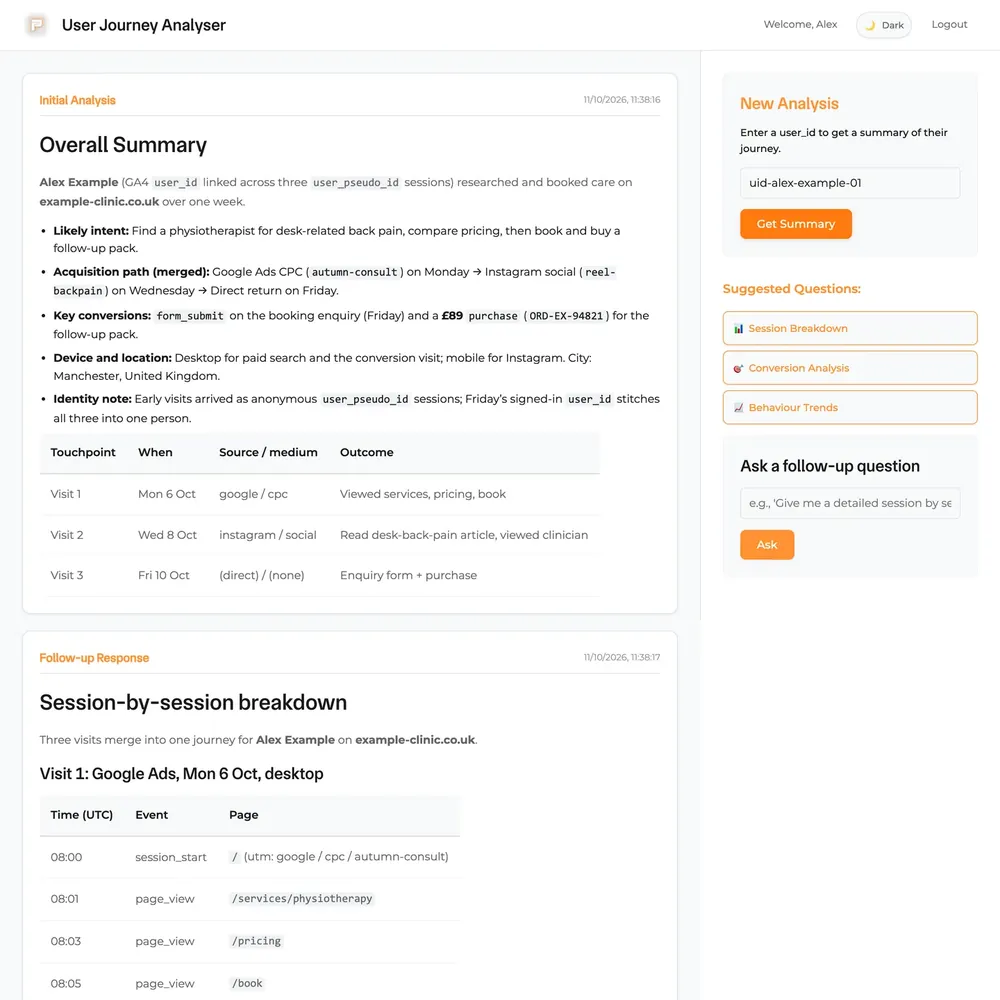
Pacing Journey
The stored visits and forms from one person on one timeline.
See the build


 +4
+4 - Built by us
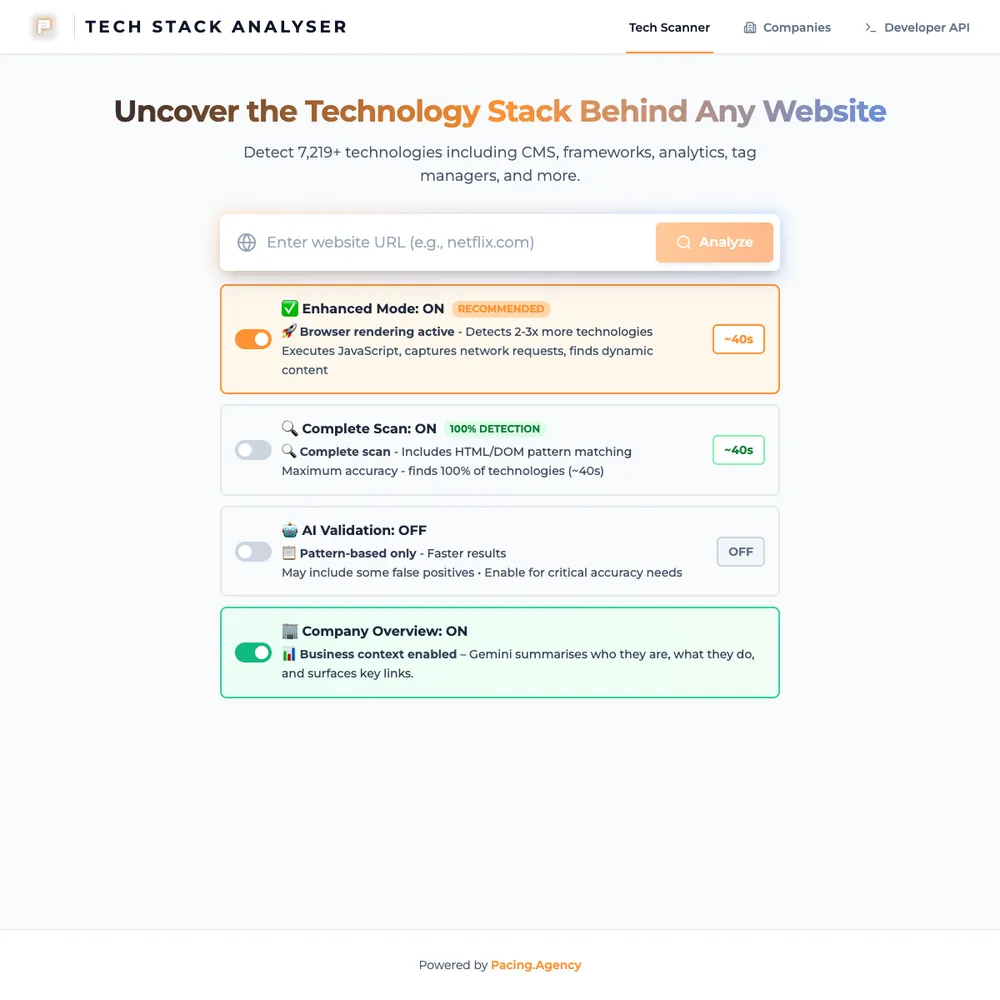
Pacing TechStack
Our in-house scanner lists the tools and tracking a website runs. A quick scan takes about 5 seconds.
See the build

- Built by us
Pacing CRM
Our own CRM: a form fill becomes a person, a deal and an instant alert.
See the build

 +2
+2


Bring your numbers.
We'll tell you if the spend makes sense.
- A 15-minute callYour goals, your challenges, and whether we're the right fit.
- A 1-hour discovery callWe dig into your numbers. Worth a hundred emails.
- A concrete planAds, a custom build or both, as a one-off project or ongoing.