











Pacing Numbers
Work out a marketing budget, the most you can pay to win a customer, and whether your ad spend is working. Your figures stay in your browser.
Spend up to £300 to win one and every £1 returns £3 in profit.
"How much should we spend on marketing?" and "Is our ad spend working?" both have real answers, and they start with a few numbers the business already has. So we put the sums on the site as four small calculators. You type in your figures, the working shows beside the answer, and nothing asks for your email first.
The four calculators
- Budget planner (/numbers). You put in annual revenue, what a new customer is worth, gross margin, a growth goal (hold, grow or grow fast) and a target return, either LTV:CAC from 2:1 to 5:1 or ROAS from 2x to 5x. You get a marketing budget, the profit on one customer, the most to pay to win one, and how many new customers that budget buys a year. A second mode takes monthly ad spend and new customers a month and reads your cost to win one against the target.
- Spend check (/numbers/spend-check). Three taps first: what you know (revenue, ad spend or both) and what you look at (ROAS, cost per customer or not sure). Then margin and a growth goal. You get your return placed on a ruler from 0.5x to 20x, with break-even marked, and a plain reading of whether the spend is working and whether there is room to grow.
- Break-even ROAS (/numbers/break-even-roas). Ad spend, ROAS and your margin. The same ruler, opened on the break-even line, with a short explainer of the maths.
- Cost per customer (/numbers/cost-per-customer). Revenue, what a customer is worth and your margin. The budget planner framed around one answer: the most you can pay to win a customer and still hit your return goal.
The rules behind the answers
- Budget. Revenue times 5% to hold steady, 8% to grow or 12% to grow fast. These are our own rules of thumb, shown as a starting point and not a promise.
- Break-even ROAS is 1 divided by your margin. At 50% margin that is 2x.
- A strong return is 2 divided by your margin, about 4x at 50%: the profit left after ads at least matches what you spent on them. That is a rule of thumb too, and the spend check says so.
- Target cost per customer. On LTV:CAC it is the profit from a customer divided by the ratio you pick. On ROAS it is customer value divided by the ROAS target.
- If your tracking misses sales (calls, offline orders, repeat buyers, people who decline cookies), you can tick a box on the spend check. A thin reported return is then read as likely fine, rather than as losing money.
What happens to your figures
The sums run in your browser as you type, and the calculators send your figures nowhere while you use them. They record one thing: that a calculator was used. That is an event called calc_use with the calculator's name and no figures, pushed to the site's tag manager, which only loads on pacing.agency. If you press "Talk numbers", your figures travel in the address of the contact page, which lists them on the form and drops them into the message box for you to edit. They reach us only if you send the form.
The honest trade-off
A calculator can only be as good as the numbers you give it. "What a customer is worth" is a judgement call, gross margin is not net profit, and a reported ROAS is only as good as the tracking behind it. The answers are a place to start a conversation, and we would sooner you bring the figures to a call than trust the first number you see.
Other things we built
- Built by us
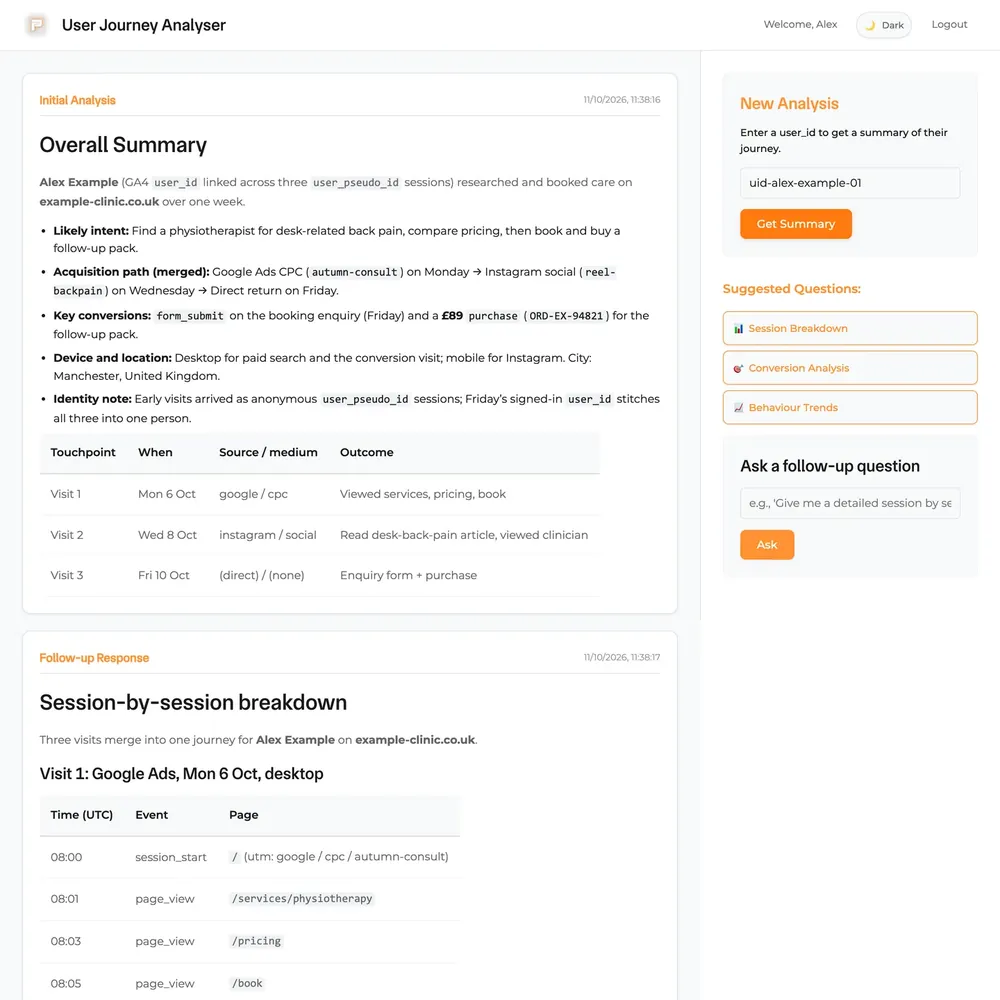
Pacing Journey
The stored visits and forms from one person on one timeline.
See the build


 +4
+4 - Built by us
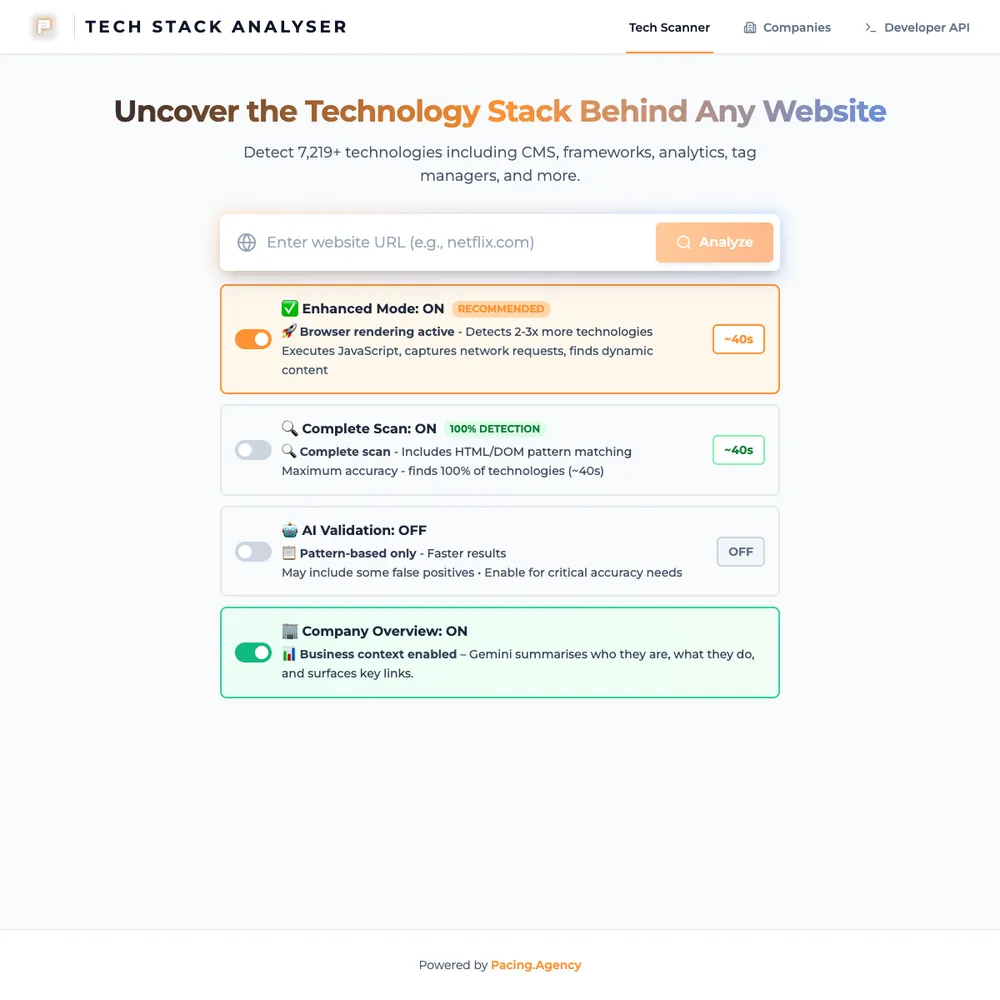
Pacing TechStack
Our in-house scanner lists the tools and tracking a website runs. A quick scan takes about 5 seconds.
See the build

- Built by us
Pacing CRM
Our own CRM: a form fill becomes a person, a deal and an instant alert.
See the build

 +2
+2


Bring your numbers.
We'll tell you if the spend makes sense.
- A 15-minute callYour goals, your challenges, and whether we're the right fit.
- A 1-hour discovery callWe dig into your numbers. Worth a hundred emails.
- A concrete planAds, a custom build or both, as a one-off project or ongoing.