








Approach

Every business is different, so we always start with a conversation.

How we work
  1. 15 minA quick callYour goals, your numbers, and whether we're a good fit.
  2. 1 hourDiscoveryWhere you're losing enquiries, and what's already working.
  3. ThenA clear planPaid ads, a custom build or both, as a one-off project or ongoing.
About

We're a small London team of marketers, and we use AI to go faster.

About us
  • Cam BowenCam BowenCo-founder
  • Ben PowerBen PowerCo-founder
  • ElectraElectra
  • MahirMahir
  • NatashaNatasha
  • RahabaRahaba
  • ZobaerZobaer
  • EmilyEmily
Custom builds

We build the software you can't buy

If you're paying for software that doesn't quite fit, or your team still does a lot by hand, we build the tool that does the job properly. An AI pricing tool for aircraft parts, an app for a therapy practice, a chat that answers questions about your own data: each one is built around how that business works.

Built for Reliance Aircraft and Aqualona, and plenty of tools for ourselves.

Reliance Aircraft: AI pricing tool

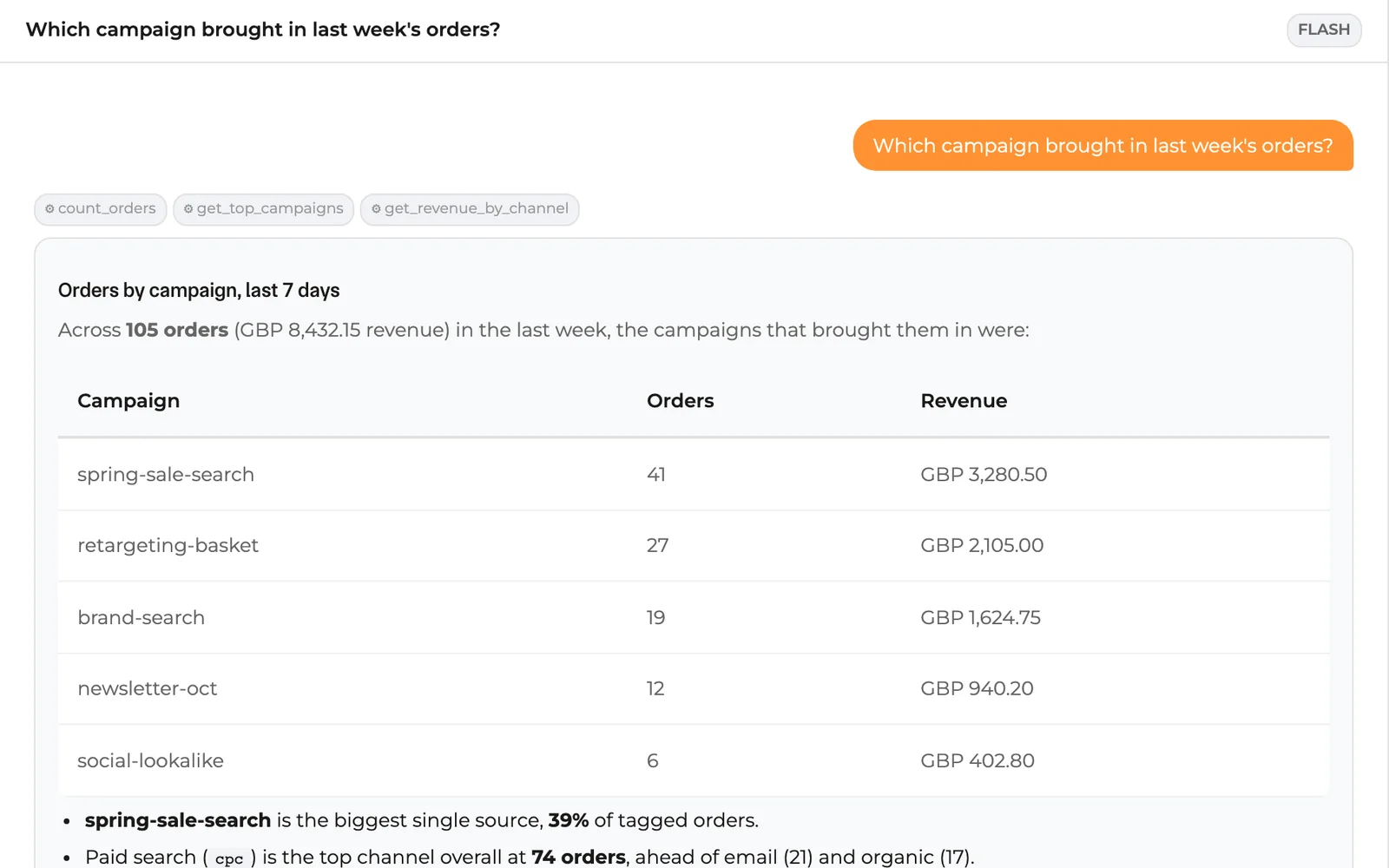
Pacing Journey chat: the question "Which campaign brought in last week's orders?" and the top of its answer, orders by campaign, with example dataExample data

Pacing Journey: ask your data a question

The Therapy Lounge: app in build

Our phone line: AI assistant

What every build has to do

Every build has to earn its keep

Before we build anything, we agree which of these it's for.

  1. 1

    It saves time

    We work out how many hours it saves, so you know what it's worth in money before we start.

  2. 2

    It replaces costly tools

    It takes over from software you pay a lot for that doesn't really fit how you work.

  3. 3

    It wins customers

    It helps bring in new customers and drives revenue.

"Anything we build either has a direct saving ... or it's directly serving acquisition of new customers."

Ben PowerBen Power, co-founder
How it fits in

A build plugs into what you already have

We don't ask you to change systems. The build reads what you already keep, and gives your team something they can use straight away. Here's how it worked for Reliance Aircraft.

1Their data

What they already had

  • Ten years of sales and quotes in their parts system
  • A weekly export of new sales, quotes and purchases
  • Lists of parts from sellers, as spreadsheets or PDFs

2The tool

What we built

  • Matches every part on a list to their history
  • Prices each line from past sales and quotes
  • Marks how sure it is about each price

3The screens

What their team gets

  • A priced list, line by line
  • The parts worth getting fresh prices for
  • Nothing changed in their own system
  1. 1Their data stays where it is. A weekly upload keeps the tool up to date.
  2. 2The tool does the slow part: looking up every part and its history.
  3. 3The team gets a priced list and a short list of parts to check.

Reliance Aircraft, aircraft parts, Austin, Texas. 2026.

Reliance Aircraft

An AI pricing tool for aircraft parts

Reliance Aircraft buys and sells aircraft parts in multi-million dollar lots, often hundreds or even a couple of thousand parts at a time. Checking them used to mean looking each part up, one by one.

Now the tool prices the whole lot, line by line, from the last 10 years of their own sales and quotes.

Client work, 2026. Austin, Texas

  • Upload a list of parts, as a spreadsheet or a PDF
  • Each part gets a price and how sure the tool is, with the past sales behind it
  • It picks out the parts worth getting fresh prices for
  • Nothing is ever changed in their own system
Talk about a pricing tool

Press a line to see the past sales and quotes behind its price, or look further back.

AppraisalHistorical filesPart checkerUploadNew Run
Example lot: A320 teardown8 lines, priced against sales and quote history
5 Priced1 To check2 To price by handExample data

Evidence for EX-0471-3 Flap actuator

$6,900From 4 past sales and quotes in the last 180 days

Today1 year ago

  1. Sale12 days ago$6,900
  2. Sale45 days ago$7,200
  3. Supplier quote75 days ago$7,600
  4. Sale140 days ago$6,600
  5. Sale330 days ago$6,100

A person checks every price before it's used. Nothing is ever changed in their own system.

Pacing Journey, our own tool

Ask your data a question in plain words

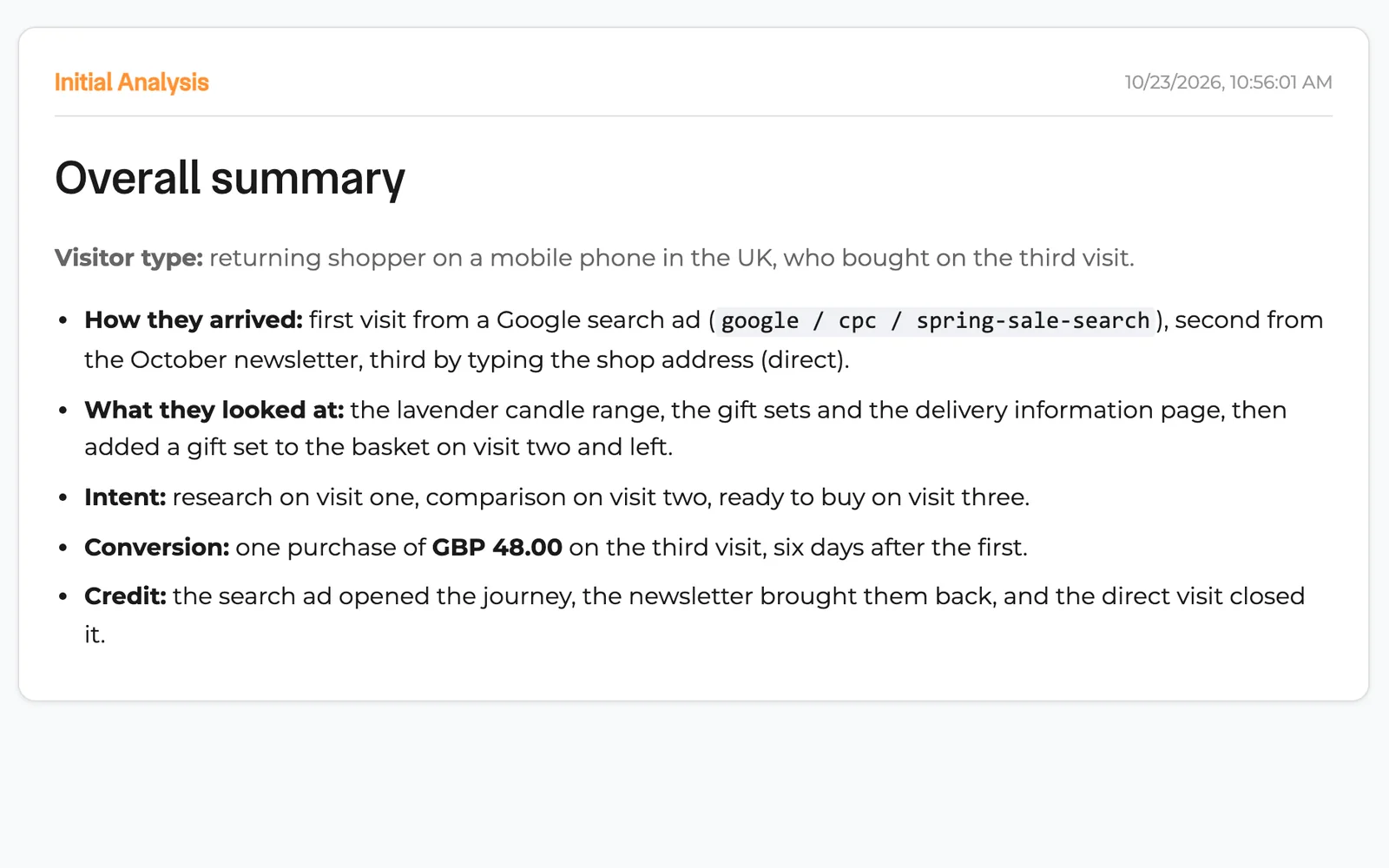
Pacing Journey is our own journey tool. Ask it a question in plain words, like which campaign brought in last week's orders. It looks up the orders, the campaigns and the channels, then answers, with the figures behind the answer.

Our build

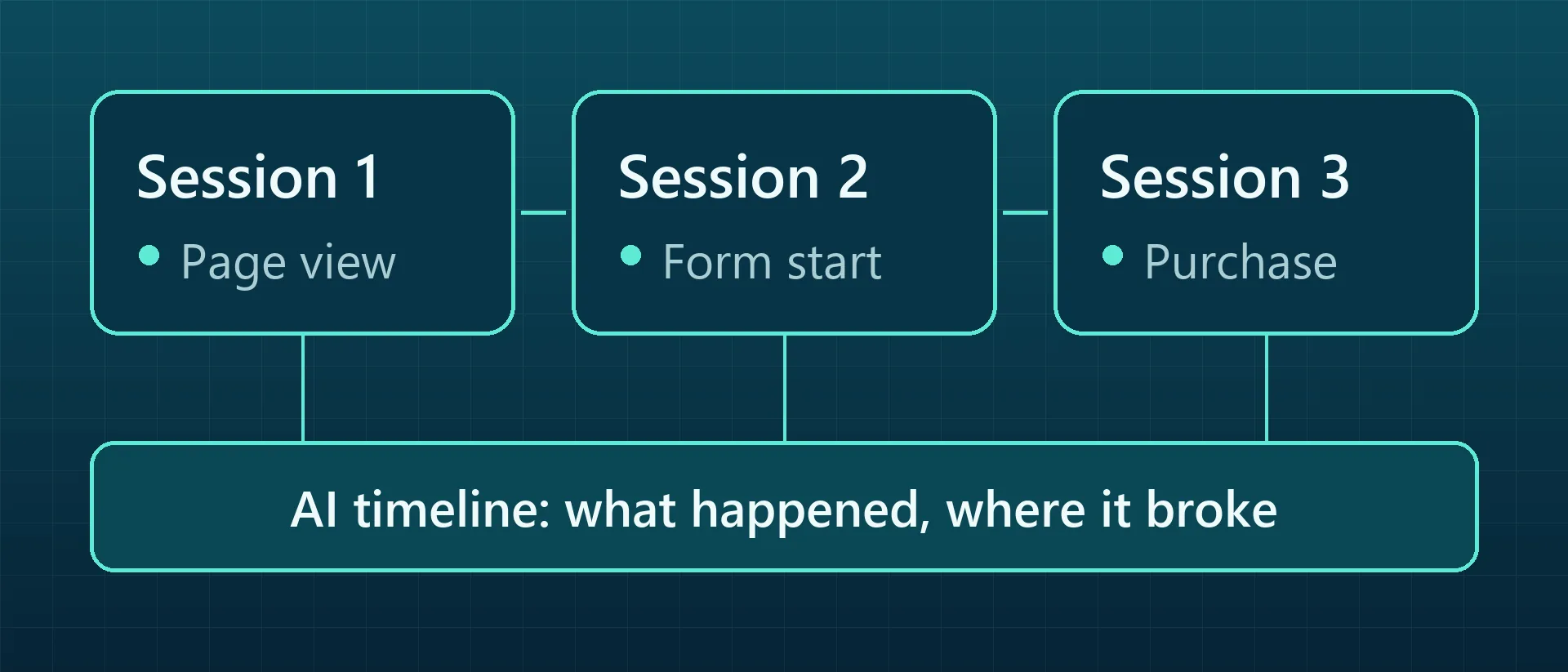
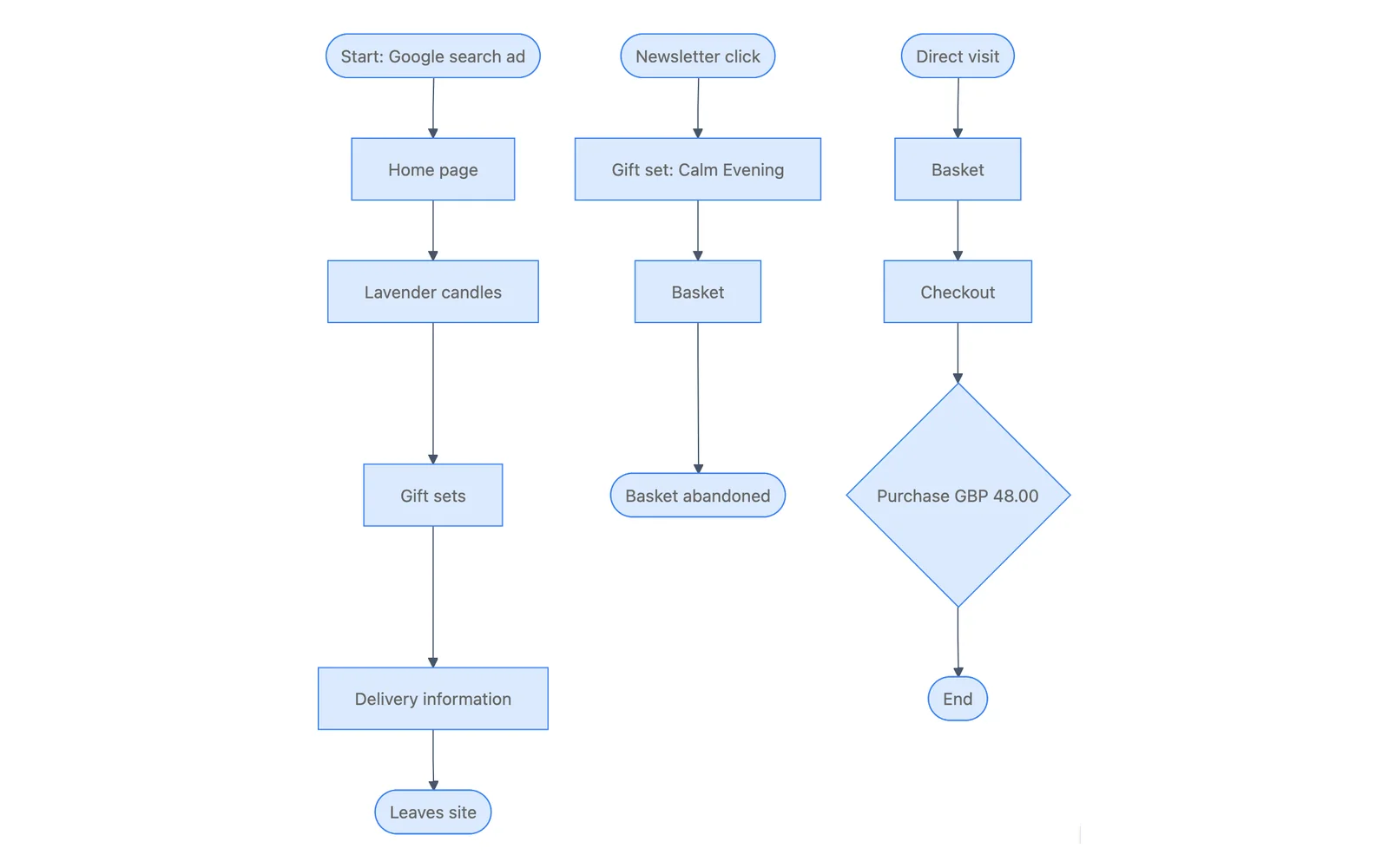
  • One person's visits, forms and orders, drawn as a map in the order they happened
  • A written summary of each visitor, and follow-up questions in a chat
  • FE fundinfo has its own journey analyser, built on their HubSpot and GA4 data, so their team can see what each lead did
See the build

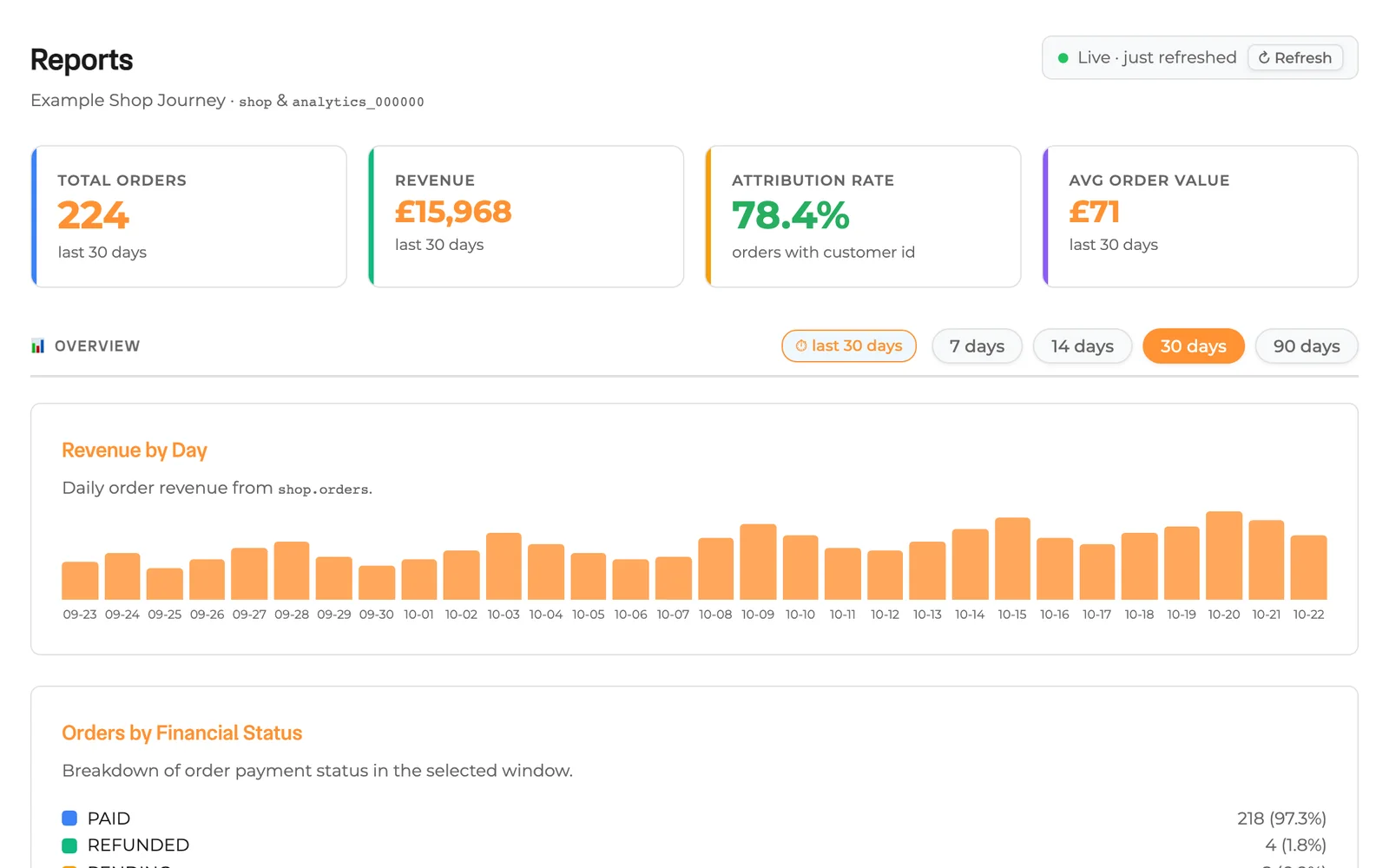
Real screens from Pacing Journey with an example shop. Every figure is example data.

Pacing Journey chat: asked which campaign brought in last week's orders, it looked up the orders, campaigns and channels and answered with a table, using example dataPacing Journey: a map of one example shopper's three visits, from a search ad to a purchasePacing Journey: a written summary of one example shopper's three visitsPacing Journey reports: order and revenue tiles and a revenue chart, with example data
Our own build, example data
More we've built

Builds that look nothing alike

Each one does a different job, so each one looks different. Swipe through to see them working.

1 / 4

Client work

Custom Shopify work

We build custom features on Shopify, from the basket to the back office.

  • Aqualona: a custom Shopify app and scripts that send their products and extra product details to their Webflow site, plus basket and checkout features
  • Circular Groove, a London vintage store: photos and notes go in, a listing written in the shop's voice comes out, and the owner approves every item
  • A jewellery ecommerce startup: a shop built straight from the designs in Figma, with 29 custom sections and 1,000+ products loaded in one go
Read Aqualona's story

Our build

Our ad platform tools

Our own tools for Google, Meta and LinkedIn ads, and for Microsoft Advertising reports, so we can work in your ad accounts properly and safely.

  • Preferential access to the Google Ads API, with write access: we create campaigns, ad groups, keywords and ads through it, all paused, and send results from your CRM back to Google
  • A verified Meta Tech Provider. Anything we create on Meta stays paused until a person switches it on
  • On LinkedIn, we've uploaded audiences straight from the UK government's list of schools for an education client
  • Microsoft Advertising: we read and report on it through its API, and change nothing there
  • We can give your team the same access to your own accounts
Read our Meta page

Our build

Our phone line

Callers choose a person, our AI assistant or a text with our website, and every call is saved in our CRM.

  • Each ad gets its own number, so we know which ad made the phone ring
  • The AI assistant answers from our website, takes the caller's details and texts us a summary
  • Every call is saved with its recording, the transcript and the ad behind it
See the build

In build, 2026

The Therapy Lounge app

An app where a therapist writes each client a private book, and the client reads it between sessions.

  • The therapist writes the client's vision, beliefs and the wisdom worth keeping
  • Clients tick off weekly goals and message their therapist
  • Web first, with iPhone and Android apps to follow
The Therapy Lounge's story

Every part number, price, name and caller in these pictures is an example.

Our own tools

Tools we built for ourselves

We use them every day. These are real screens from some of the tools we built for our own work.

Pacing Journey chat with example data
Pacing Journey
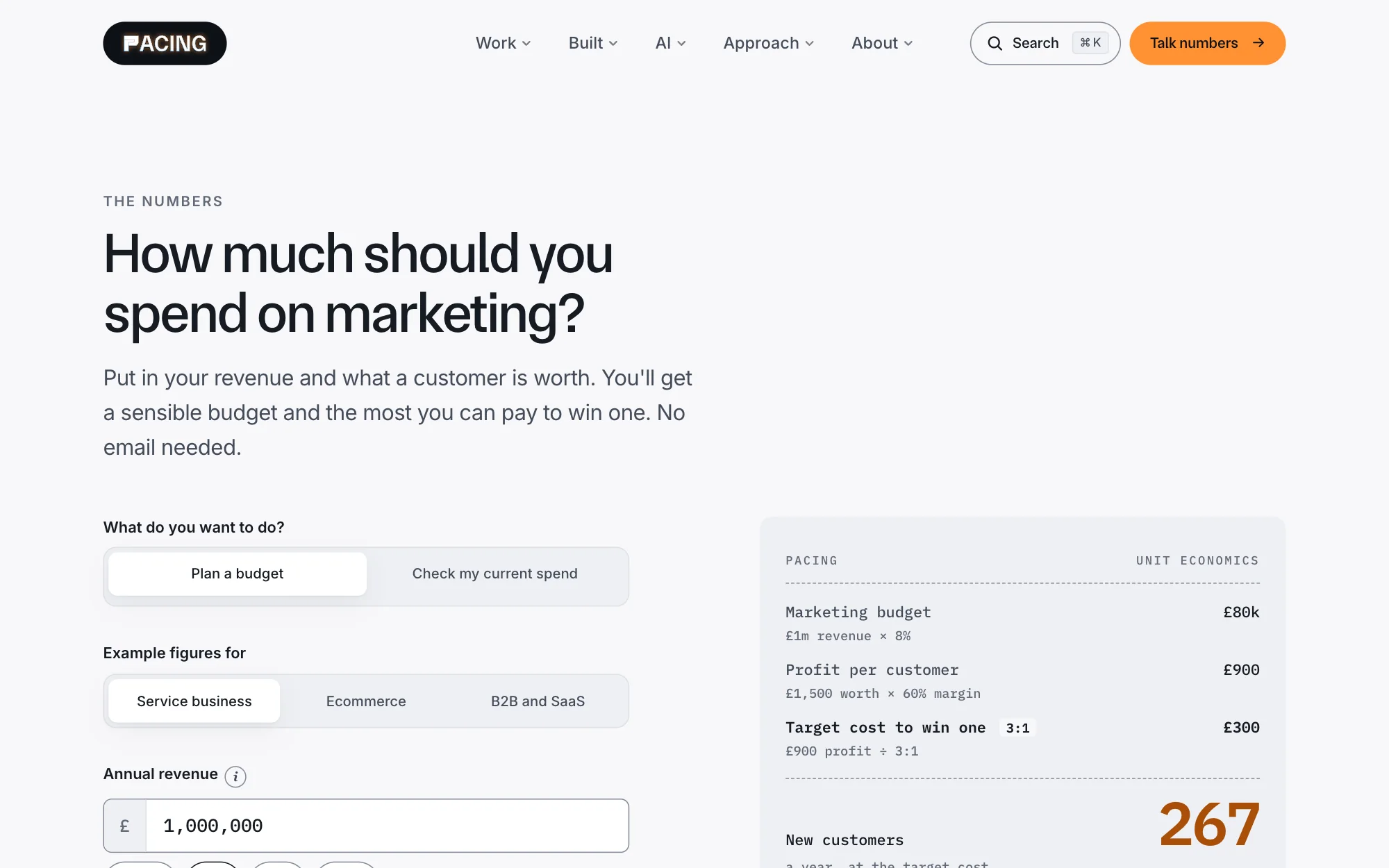
Pacing Numbers, the marketing budget calculator
Pacing Numbers
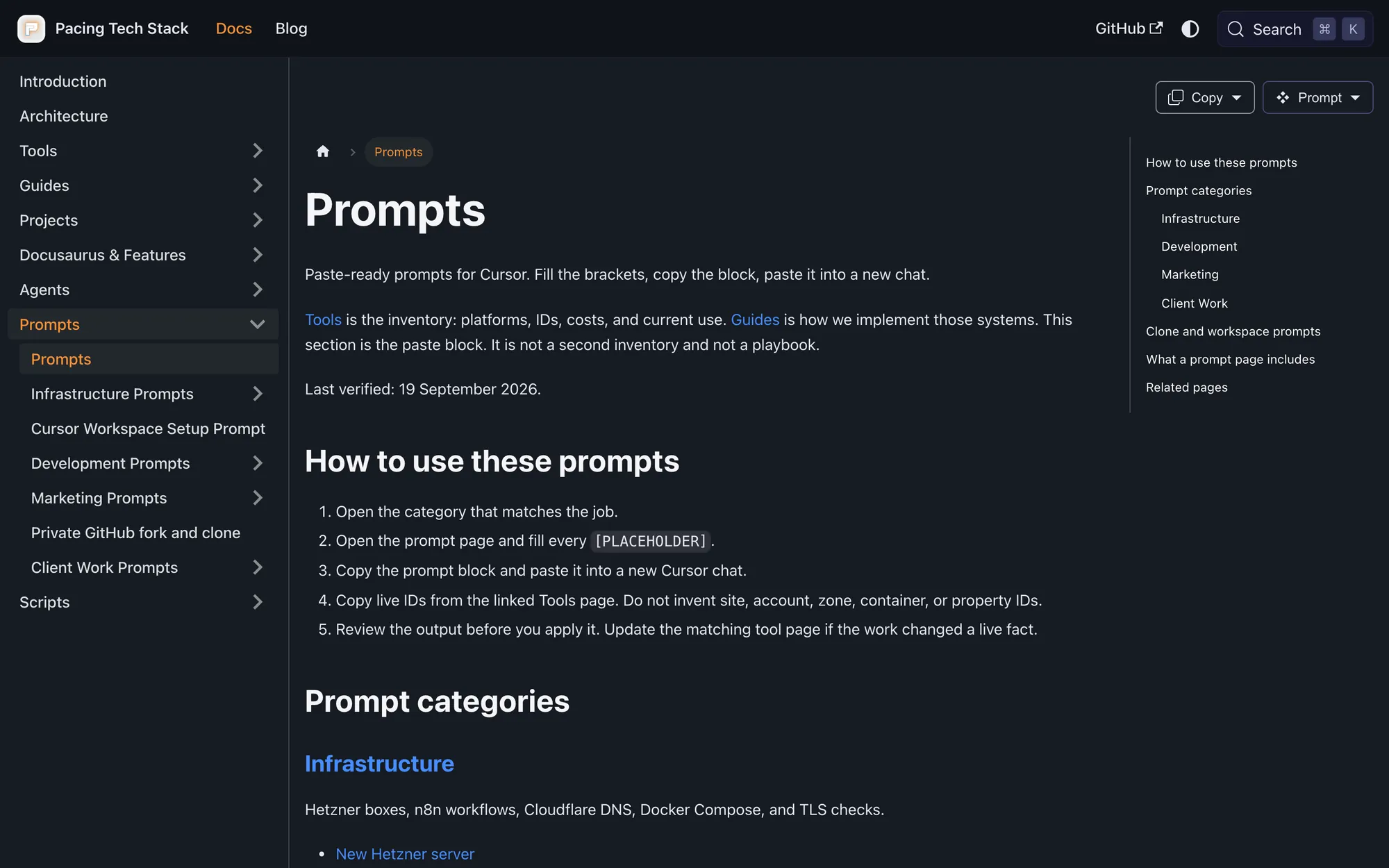
Pacing Docs, our staff manual
Pacing Docs
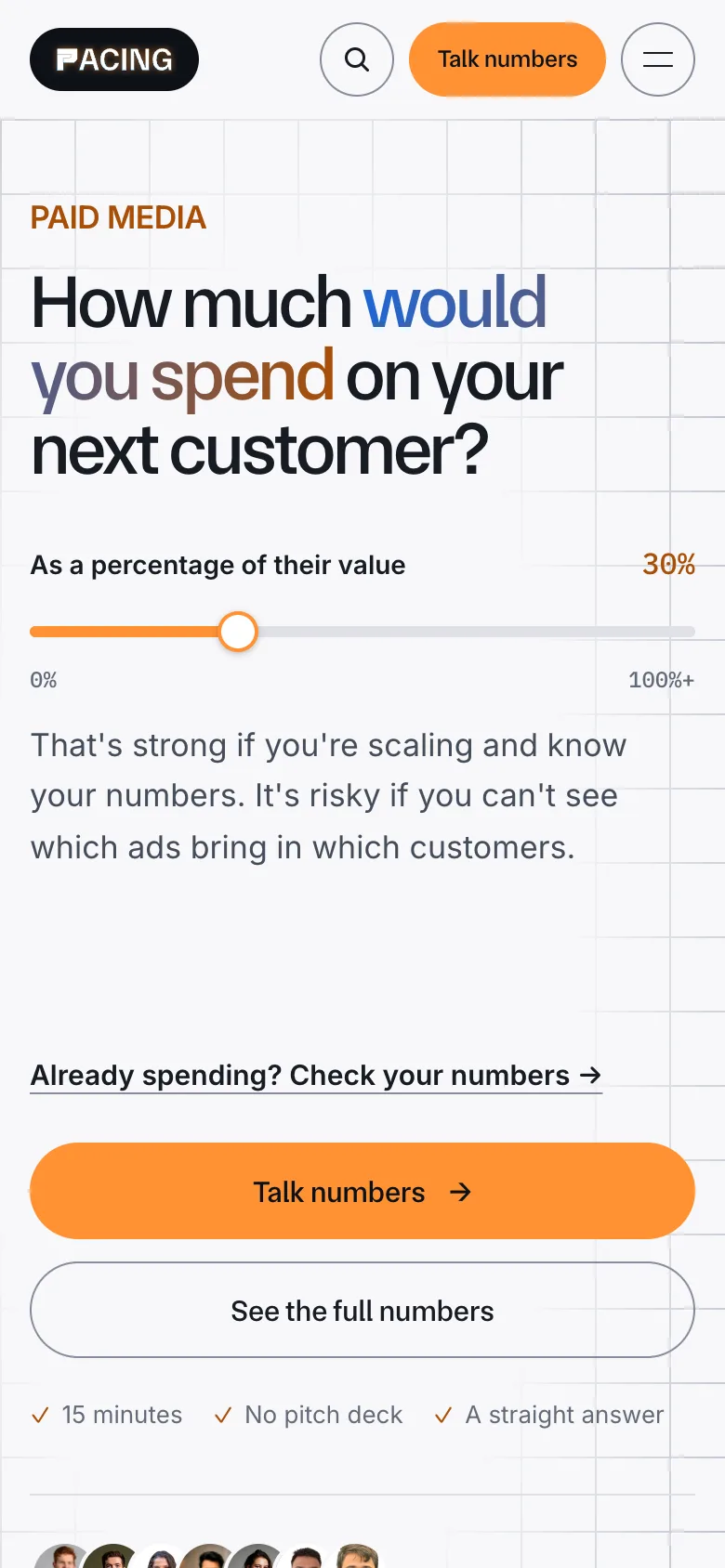
pacing.agency on a phone
This website
Pacing TechStack on a phone
Pacing TechStack
Pacing Viewer on a phone
Pacing Viewer
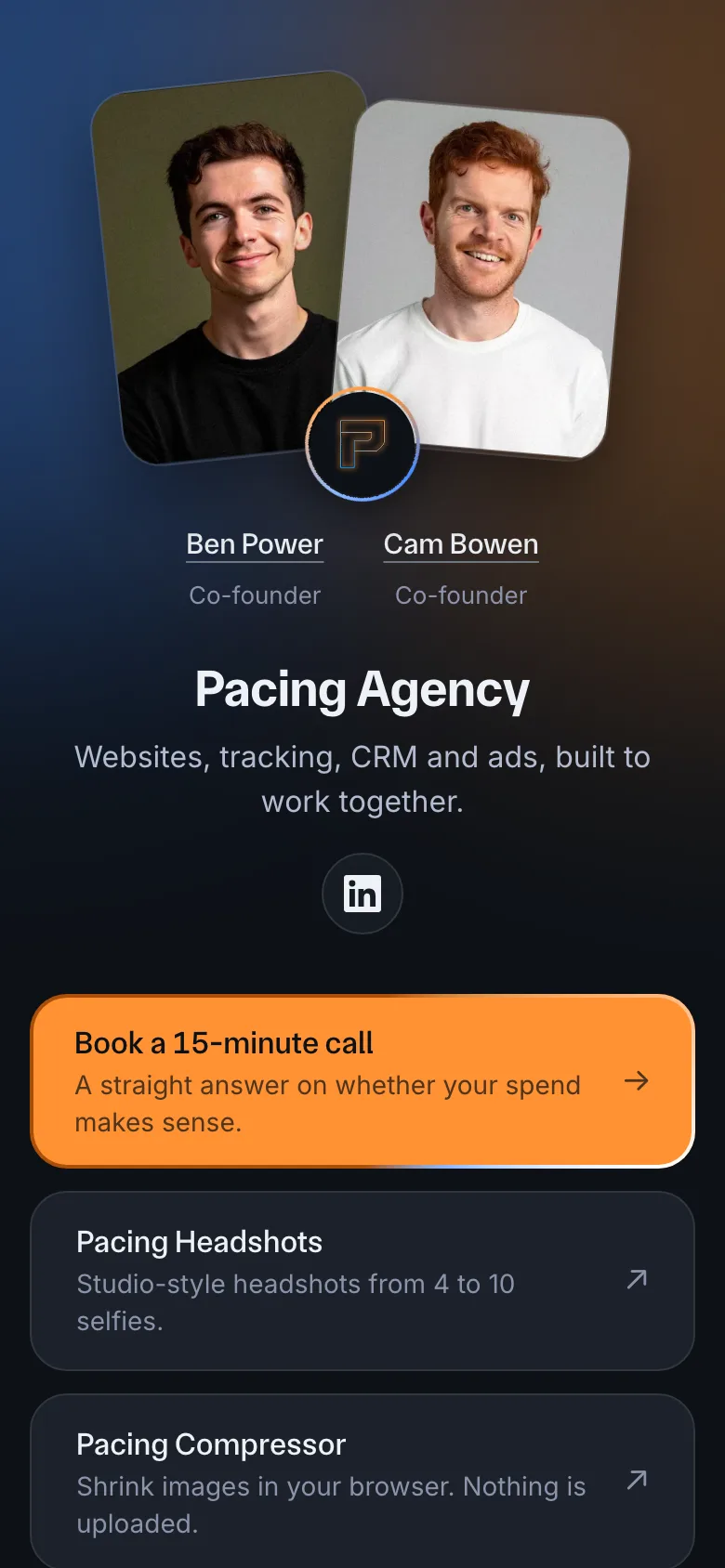
Our biio.link bio page on a phone
biio.link
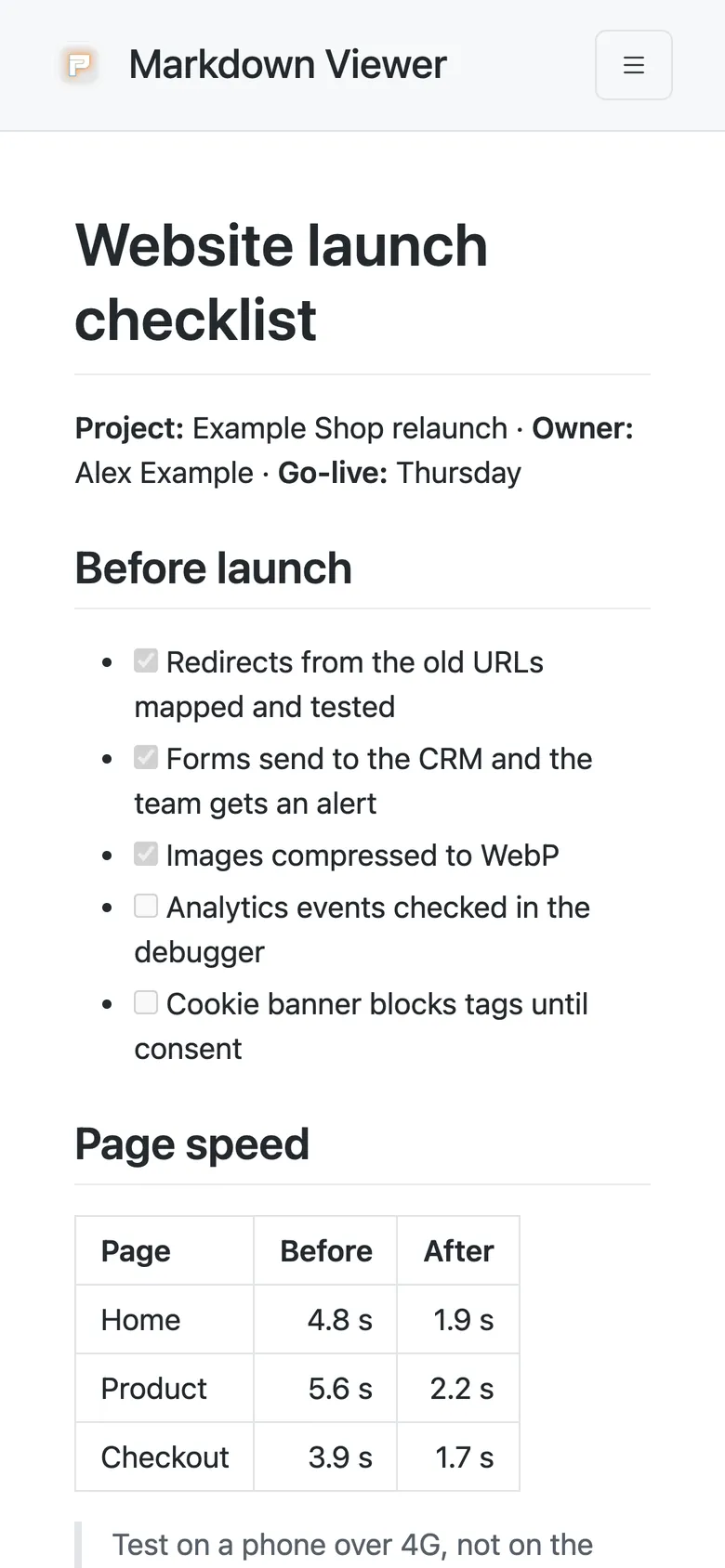
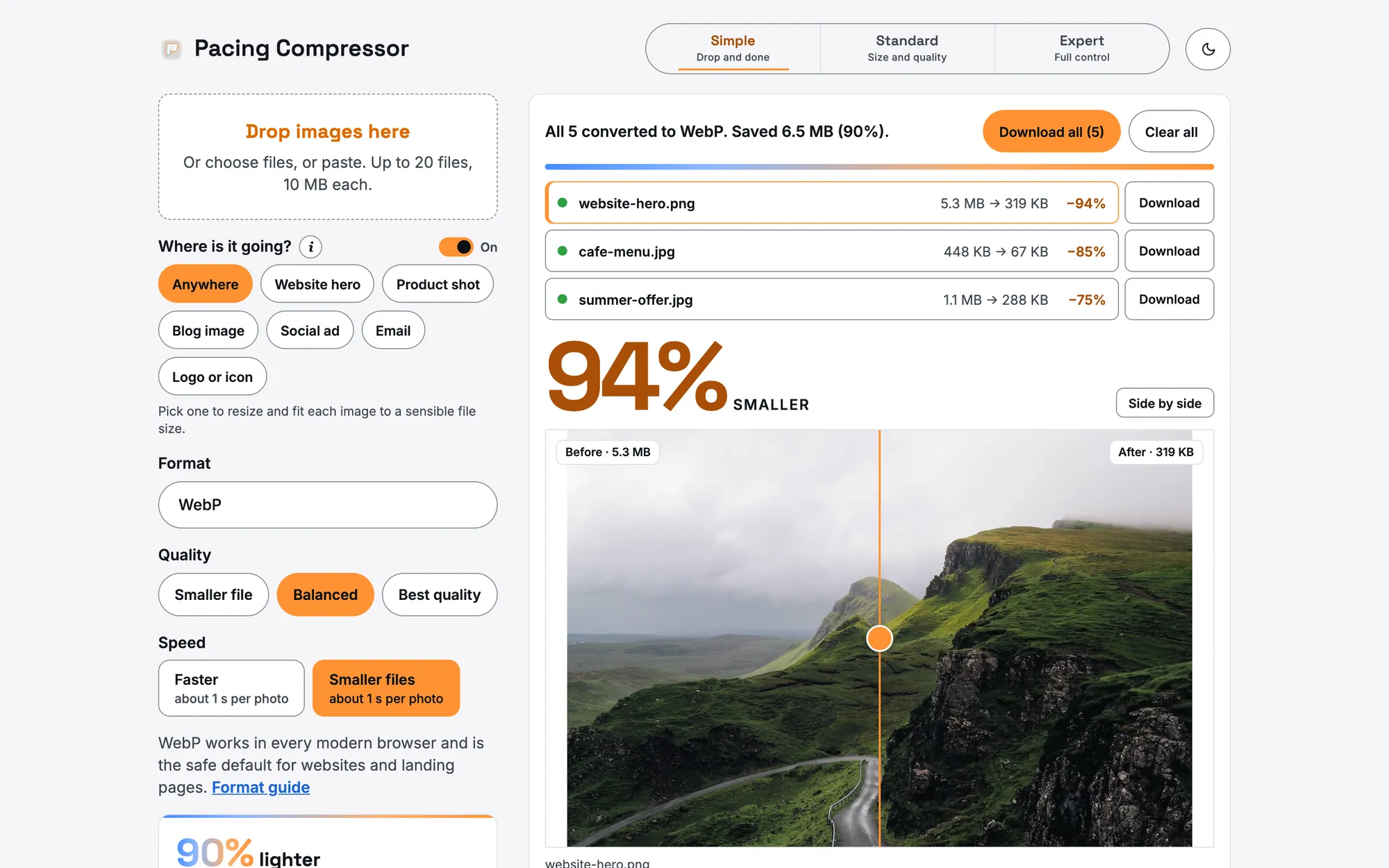
Pacing Compressor shrinking images in the browser
Pacing Compressor
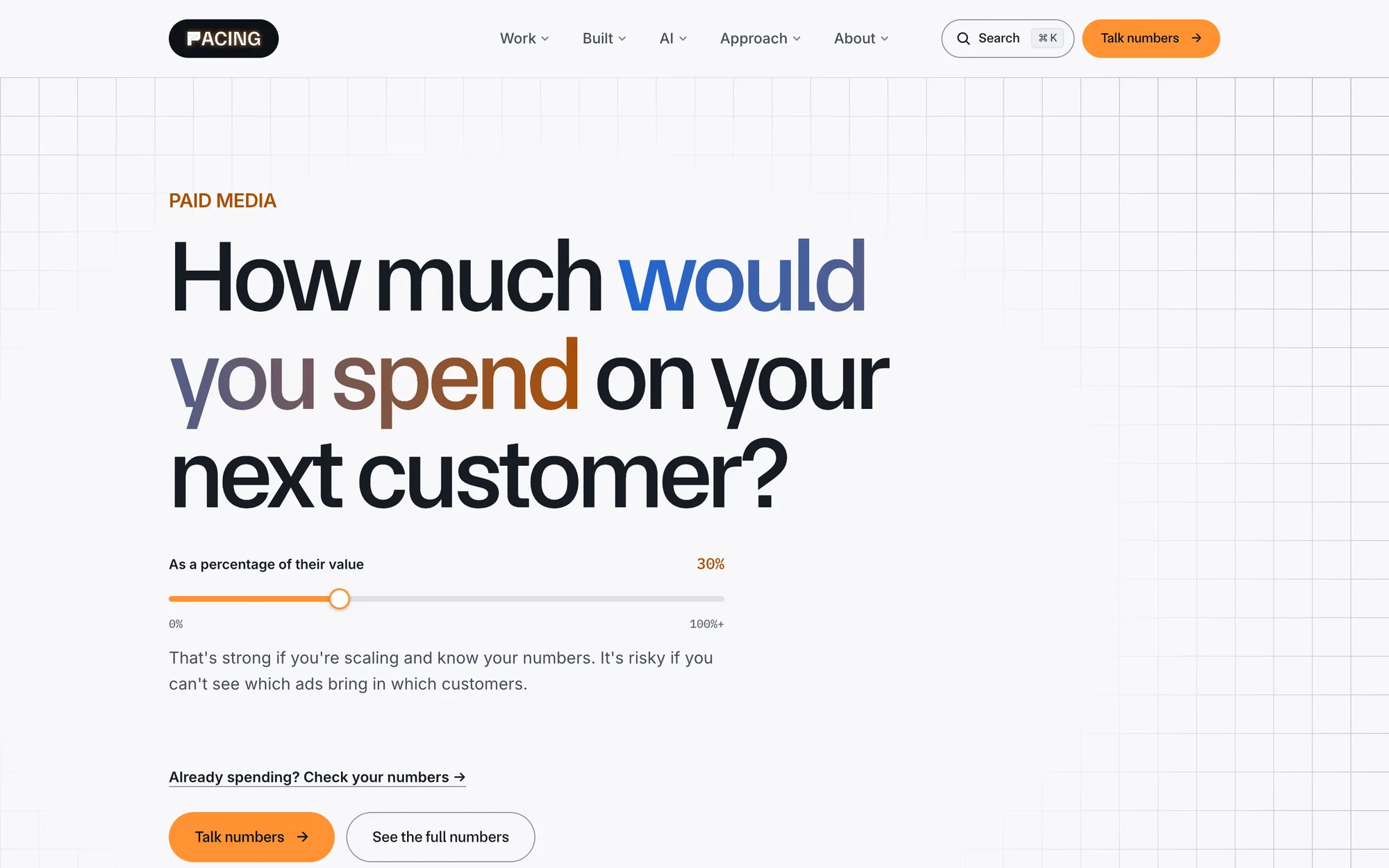
The pacing.agency homepage, which we rebuilt in code
This website
Our 3D bed configurator drawing an emperor bed in galvanised tube with a headboard of upright bars
Bed configurator
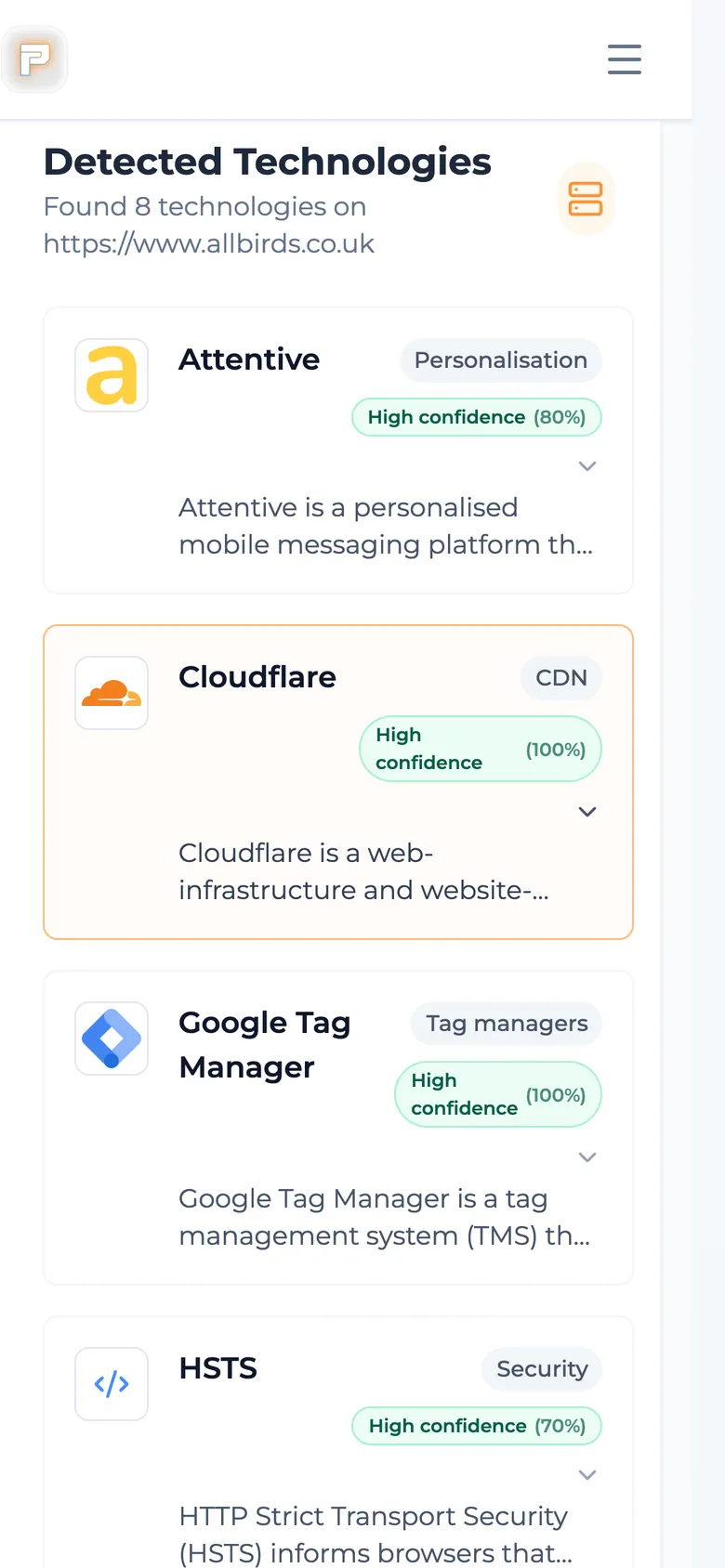
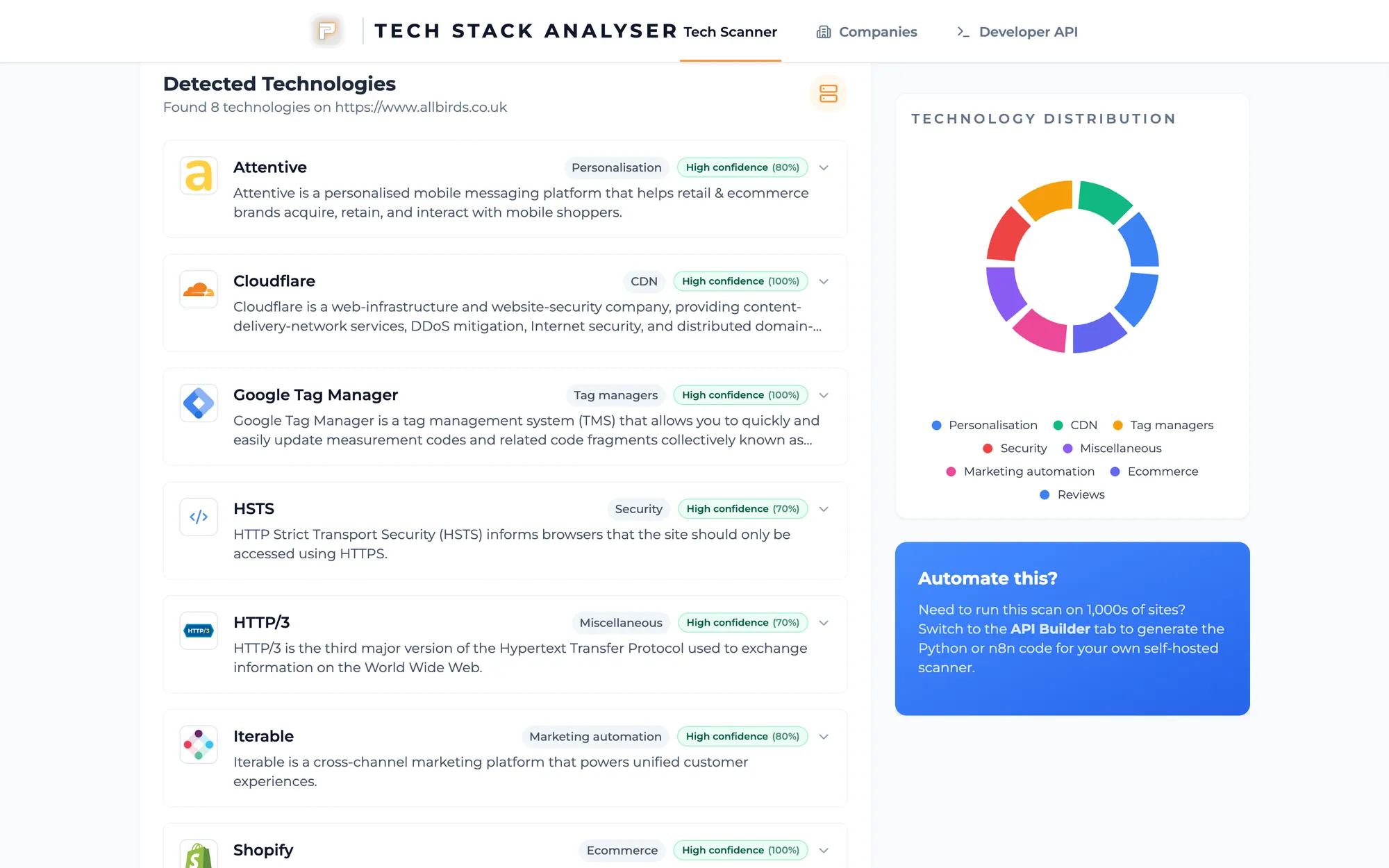
Pacing TechStack scan results
Pacing TechStack
Pacing Journey map of one example shopper
Pacing Journey
A 3D product configurator, our own build

It started with a bed

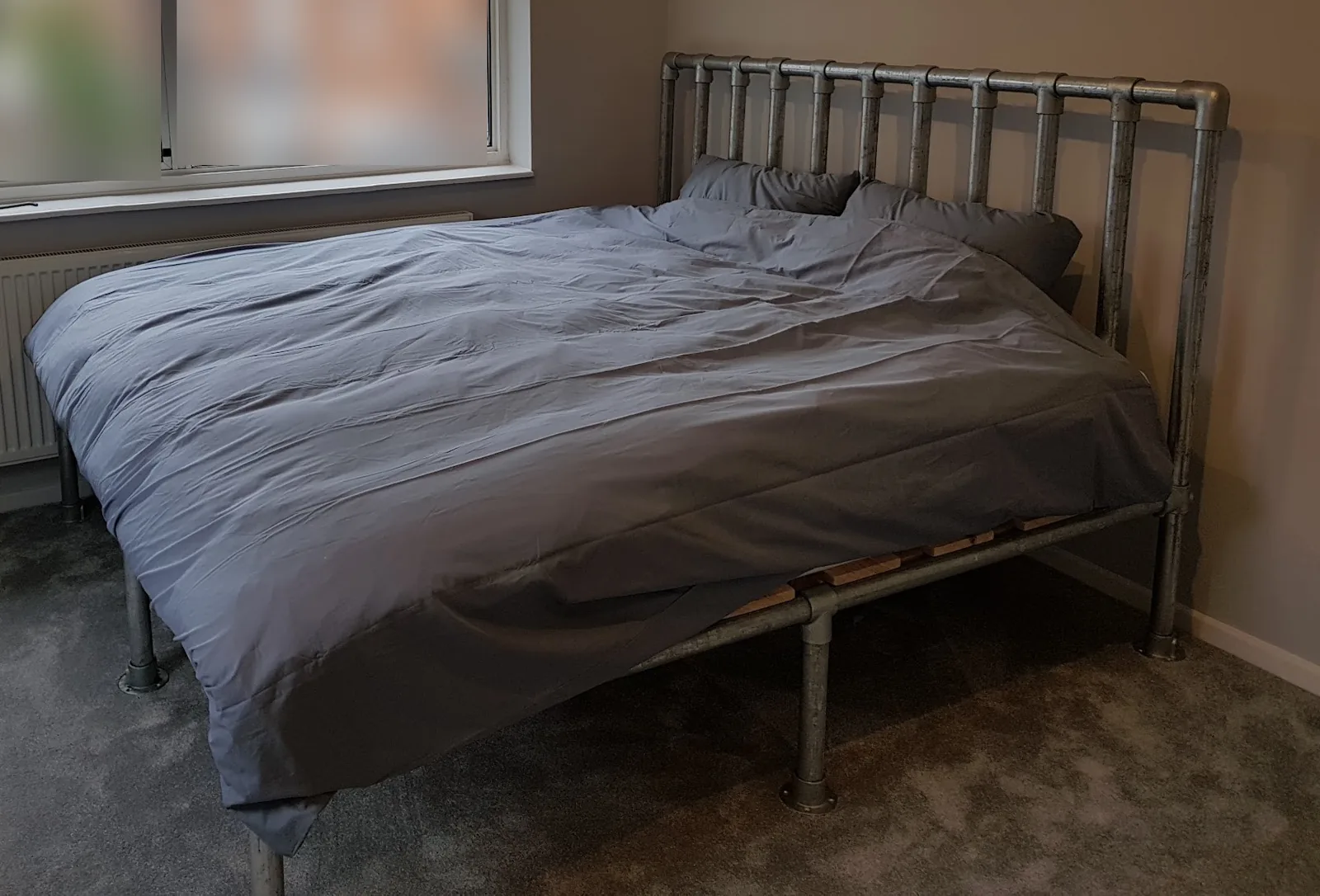
When Ben renovated his flat, he got a really good deal on an emperor-size mattress. Then he found an emperor bed costs £2,000 to £3,000, the price of a used car.

So he built his own from scaffolding pipes and handrail fittings.

"It's a very nice result. It's indestructible."

Ben Power, co-founder
The emperor bed Ben built from galvanised scaffold tube and fittings, made up with grey bedding, with a headboard of upright tubes
The bed Ben built, in galvanised scaffold tube.

The configurator, drawing Ben's own bed.

The configurator drawing Ben's bed: an emperor frame in galvanised scaffold tube with a headboard of upright bars, turning slowlyThe same emperor bed in black powder-coated tubeThe configurator's cutting plan: each standard 3.5 m length of tube with the pieces cut from it and what is left over
Our own build

Then we built the tool, so anyone can design one

The tube comes in standard lengths and the fittings are standard, so a configurator can work out the whole frame. It draws Ben's bed by default, upright bars and all. Pick a size and a finish, and it works out every tube, fitting and cut.

  • Five mattress sizes up to emperor, or a custom size
  • A headboard of upright bars or two plain rails, a centre support and side tables as options
  • It lists every tube, fitting and bed slat, and plans the cuts from standard 3.5 m lengths so little is left over
Talk about a configurator

Then the rest of the flat

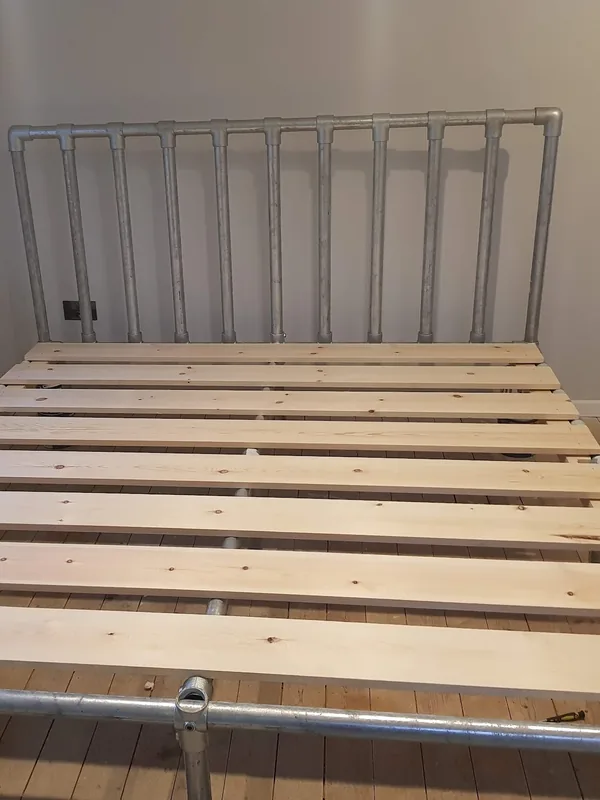
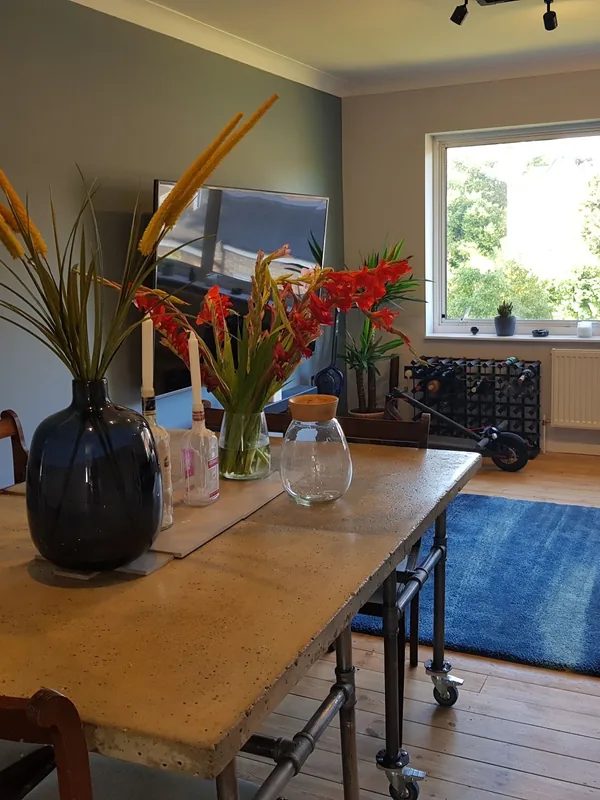
Real photos. Ben built these from tube and fittings too.

  • The bed frame half built, with pine slats laid across the scaffold tube and a headboard of upright tubes
    The bed, half built
  • A dining table with a wooden top on a black tube frame with castors
    Dining table
  • Two wooden corner shelves held up by galvanised tube and fittings
    Corner shelves
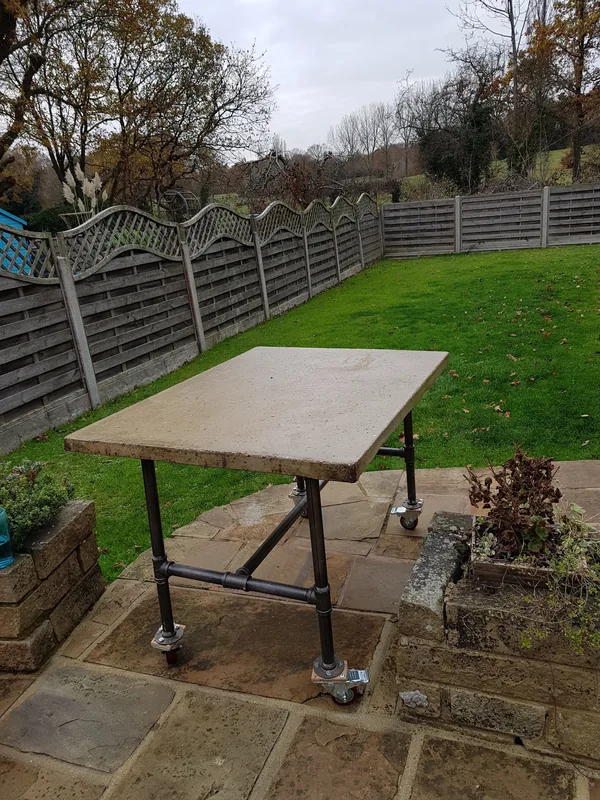
  • A garden table on a black tube frame with castors, on a patio
    Garden table
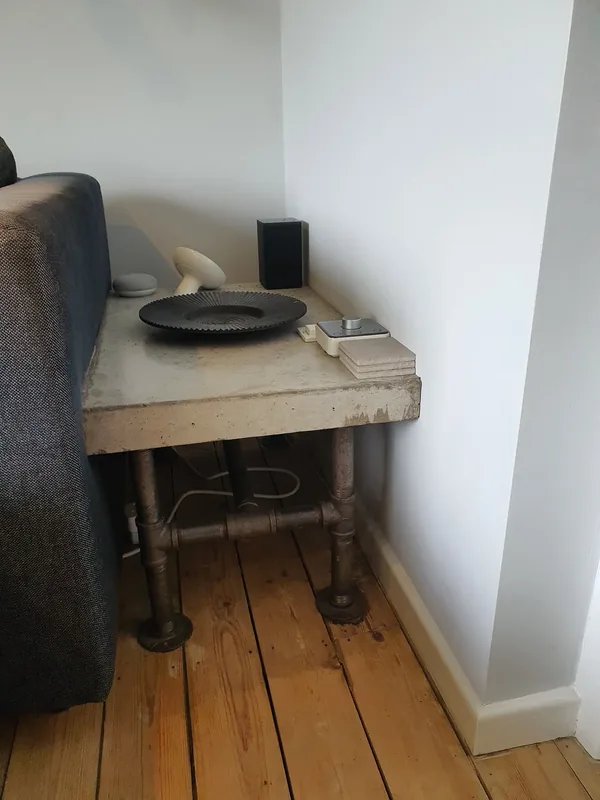
  • A bedside table with a concrete top on a black tube frame
    Side table with a concrete top
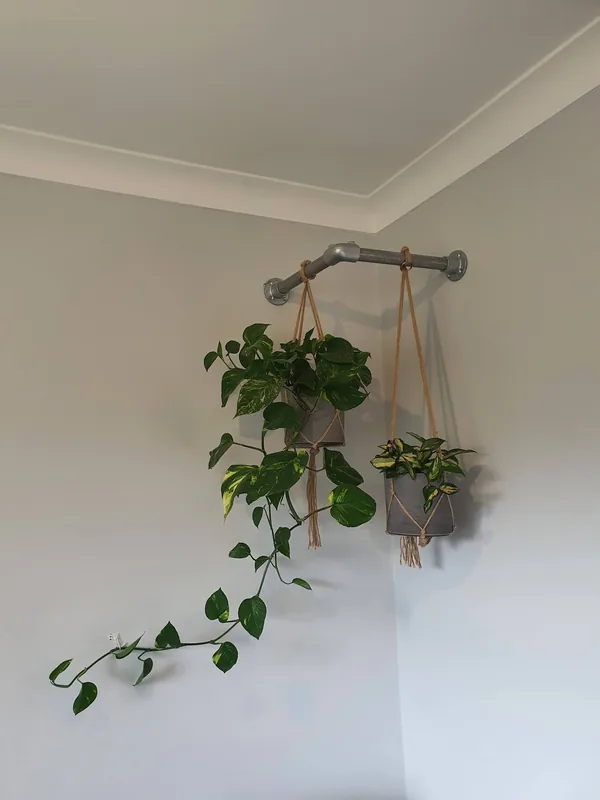
  • A plant hanger made from galvanised tube fixed to the wall, holding two trailing plants
    Plant hanger
Working with us

How a build starts, and what happens after

Starting

If your team is lean and knows what it wants, we can talk one day and have a first working version ready the same week, sometimes within 24 hours. With a bigger team we spend about a week at the start understanding everyone's view, then the build moves quickly. After that it's short rounds of changes with you.

After launch

As Ben puts it: "Most clients don't want to have to do anything, so we can just manage it for them." Your data sits in accounts your company owns, and we look after them for you.

If you ever want to use another supplier, we hand over to your team with proper documentation.

Questions

Questions about a custom build

Wondering when a custom product is worth building?

Still have questions?

Talk to us
When is a custom build worth it?

When nothing you can buy does the job, and the gap is costing you. We check that first: often the answer is a setting or an integration, not a product. If it really is missing, we build only that piece.

What have you built yourselves?

Several tools, each with a write-up under Built: a journey lookup that shows one person's stored visits and forms on a timeline, a scanner that lists the tools on any website, our CRM and n8n automations, our stack docs site, and smaller ones like our phone line and a set of free ad calculators.

Can a custom build work with the tools we already use?

Yes. It plugs into your website, tracking and CRM rather than replacing them. Our own CRM works that way: n8n catches a form fill and writes it into the CRM, so nobody copies rows by hand. More on custom builds.

Will we depend on you to run it?

It depends on where it runs. Our own builds are a mix: some run on servers we host, some on Google Cloud or Cloudflare. Before we build, we agree where yours will run and who looks after it. If it runs on a server we host, you depend on us for it, so say at the start if you want to run it yourselves.

Next step

Tell us the job that eats your team's week

We'll tell you straight whether a build would pay for itself.

  1. A 15-minute callYou tell us the job, the tools you use and who does it today.
  2. A look at your dataWe check what you already have, and whether it's enough to build on.
  3. A planWhat we'd build, what it saves or wins you, and how soon you'd see a first version.
15 minutes · No pitch deck · A straight answer