







How I built a booking page with AI tools, round by round
A studio booking page for a London vintage store, mocked up with Claude Code in 1 hour 42 minutes and then changed with the owner's own words. What the AI showed me each round, what I said back, and where it went wrong.
 Ben PowerCo-founder
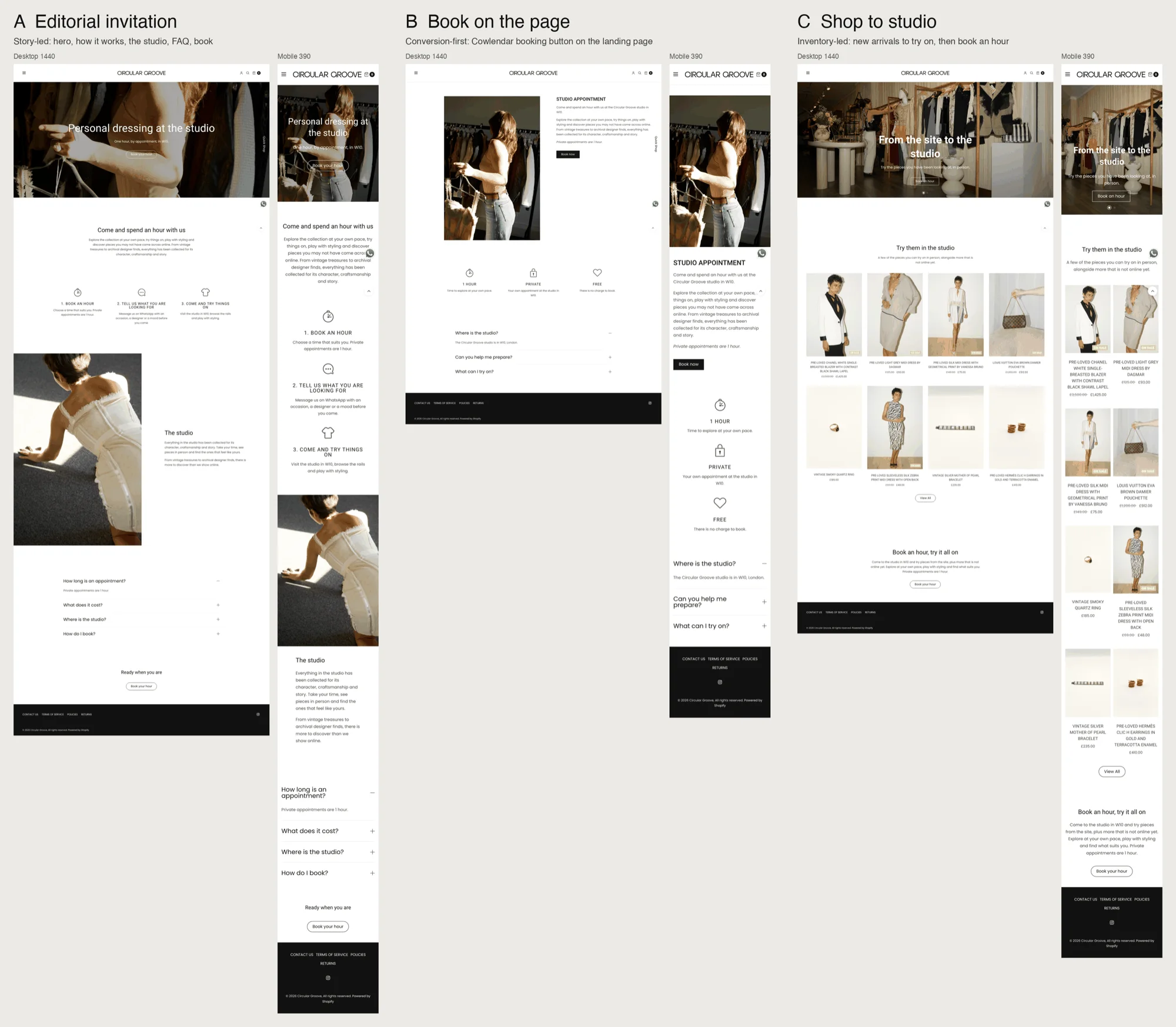
Ksenia runs Circular Groove, a London concept store for vintage and pre-loved designer fashion. She's opening a studio for personal dressing appointments. On 21 October I asked Claude Code to mock up a booking page for it.
It's on an unpublished copy of her theme, so it isn't live yet. Ksenia has seen it, sent me her changes and they're in. It goes live when she says. Click any screenshot to see it full size.
The starting point
The agent pulled her live theme, read-only. It found she had already installed Cowlendar, a booking app, and published a studio appointment on 14 October. So we built on her tool.
Round 1: three concepts
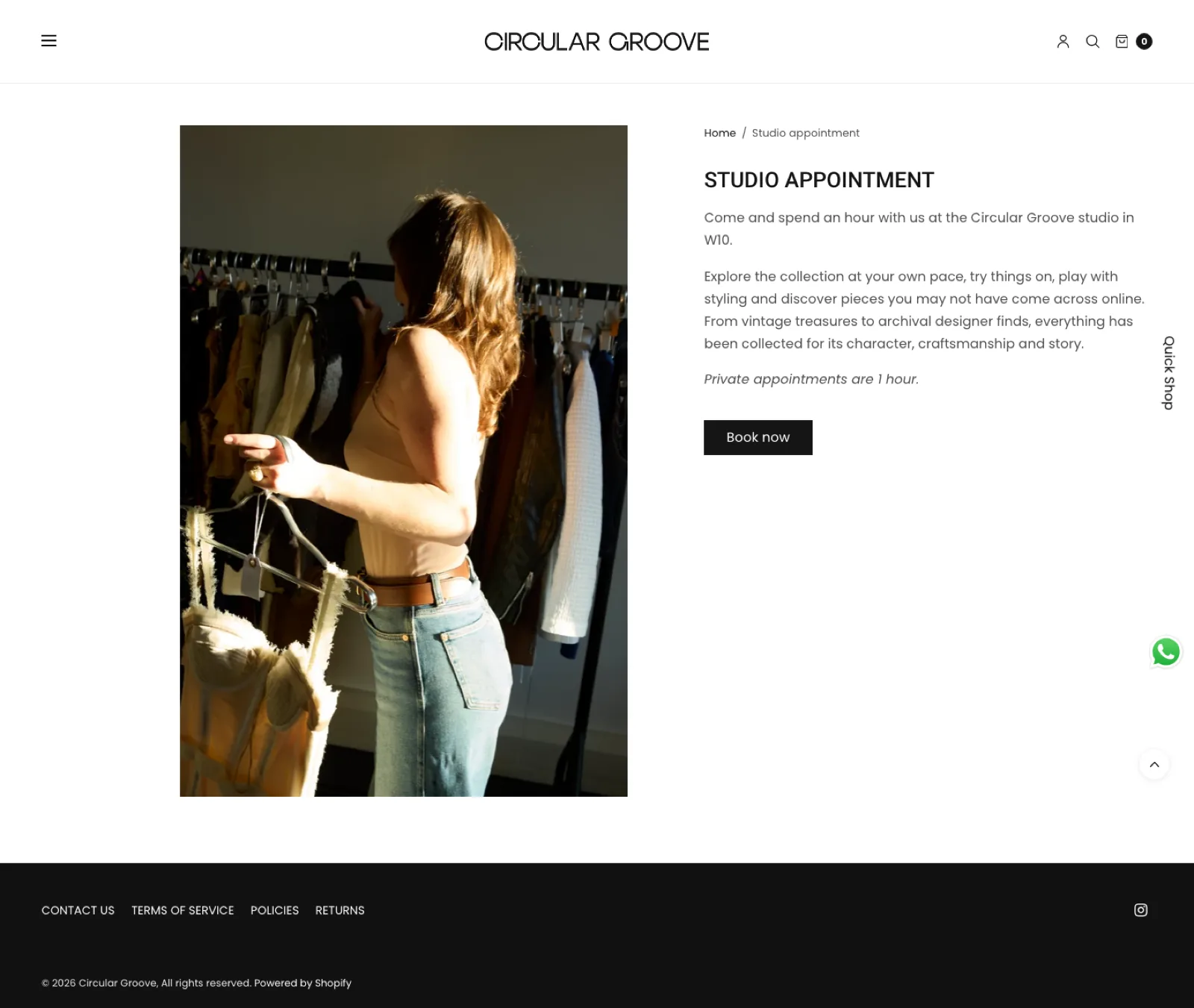
The first board came 21 minutes in: concepts A, B and C, desktop and mobile. The agent leaned towards C.
My reply:
I like the hero from A. maybe the booking flow should have some options? We could make it clear we also approve group appointments? We could include a photoshoot? (any other ideas?) I like the 'try them in the studio' block - with the ecommerce links to specific pieces - they should be from the top 30% of most expensive items on shop - prefer shots with models...
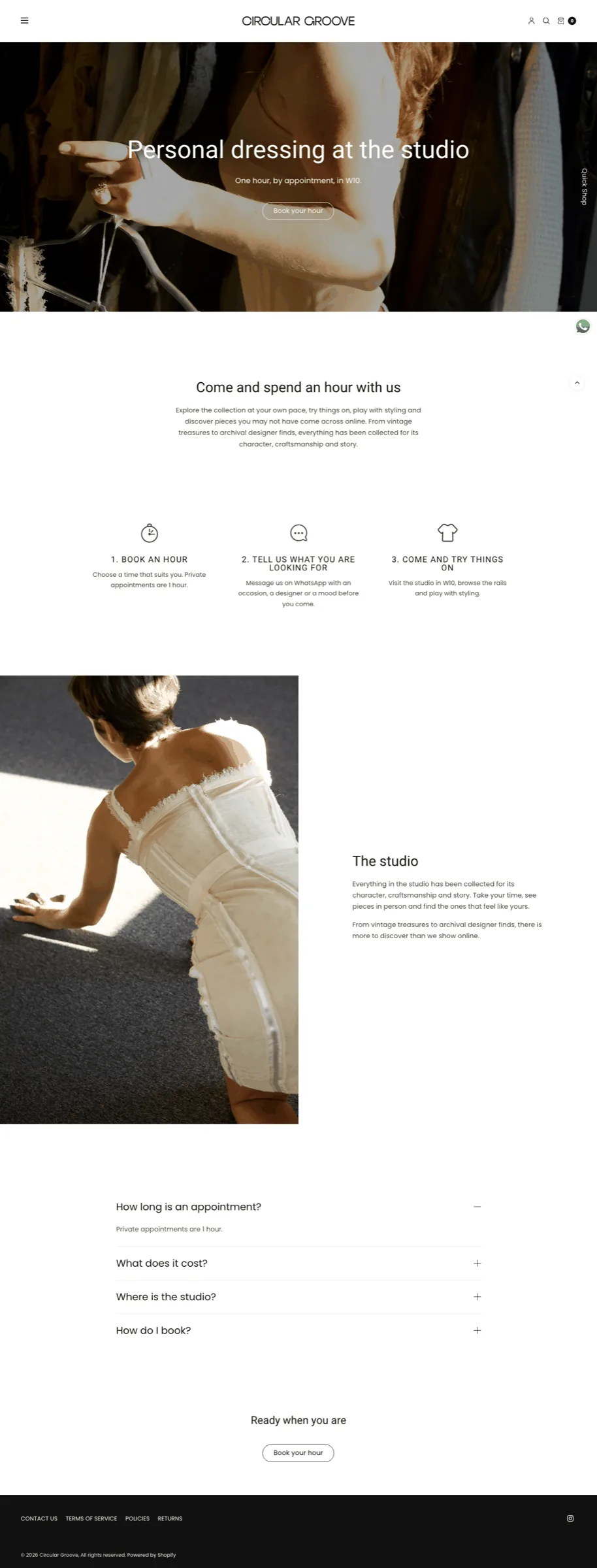 See the full page
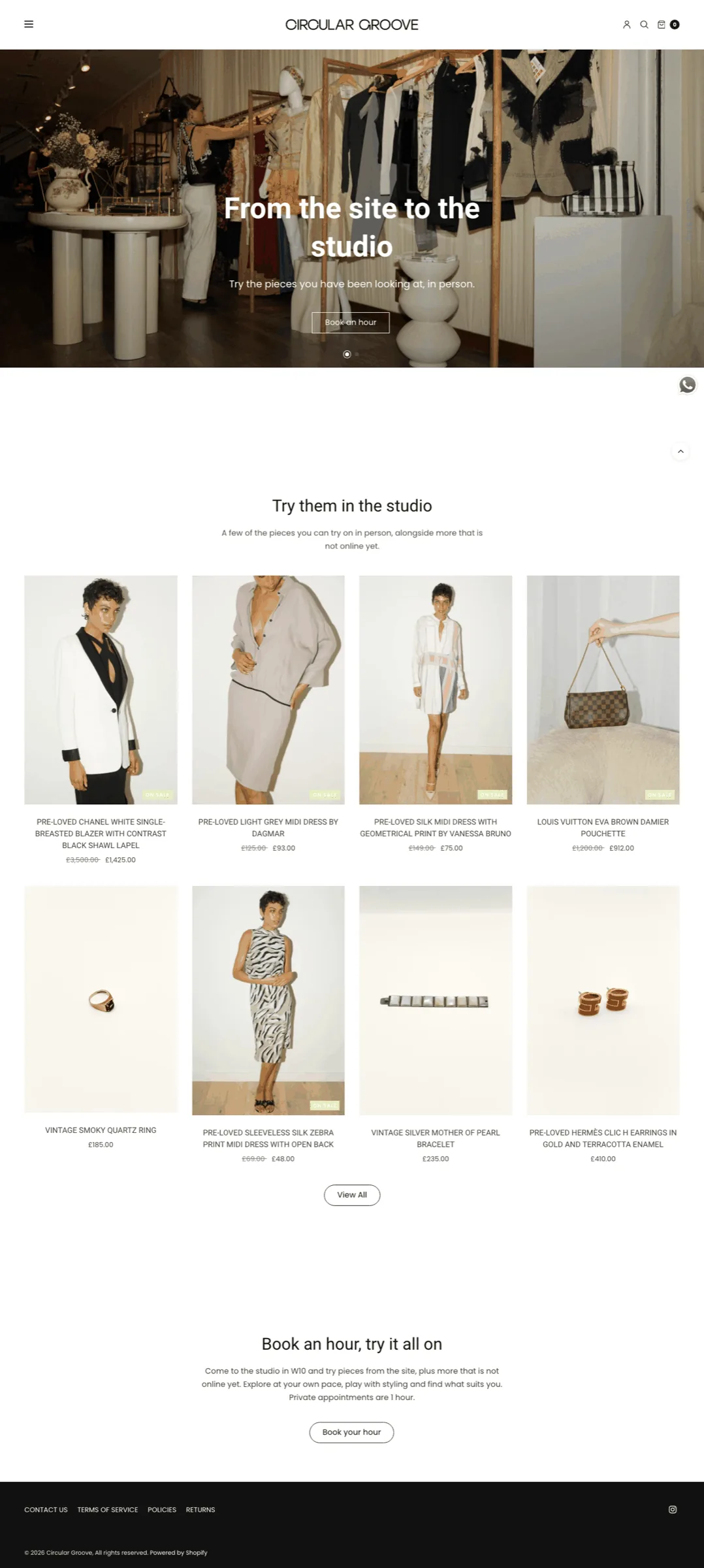 See the full page
I asked how we'd take bookings. The agent compared Cowlendar with Cal.com and said keep Cowlendar.
I asked for studio call-outs (pieces, rough hours, toilets, hot drinks) and FAQs on lift access and parking. The agent had no facts, so it wrote "tell us when you book". I told it to fill them in as if we'd checked, so I could judge the page. They were all placeholders, and Ksenia's own details replaced them in round 4.
Round 2: three heroes
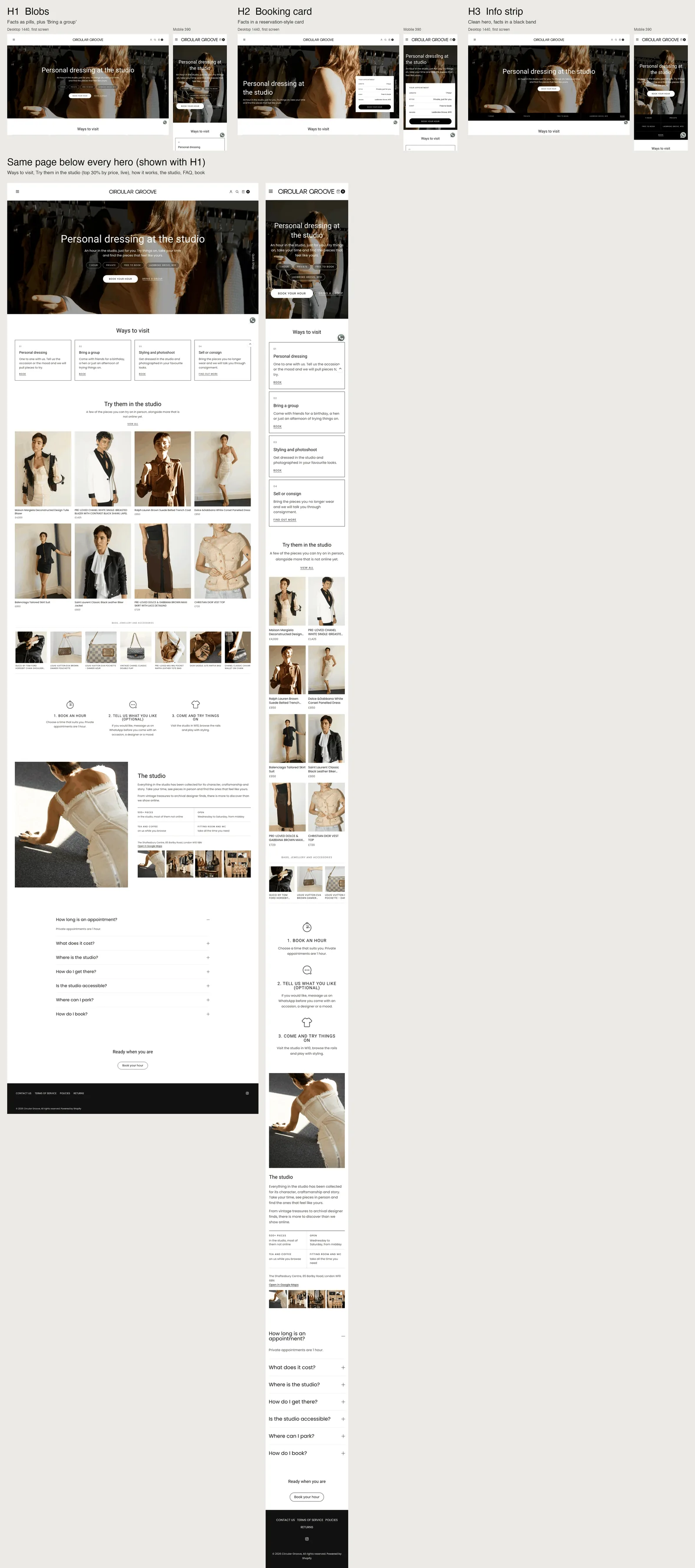
Three hero options over one page body. The agent picked hero 2, the booking card. I said "v good - we're getting there", then "I like hero 1". I also said yes to Cowlendar.
 See the full page
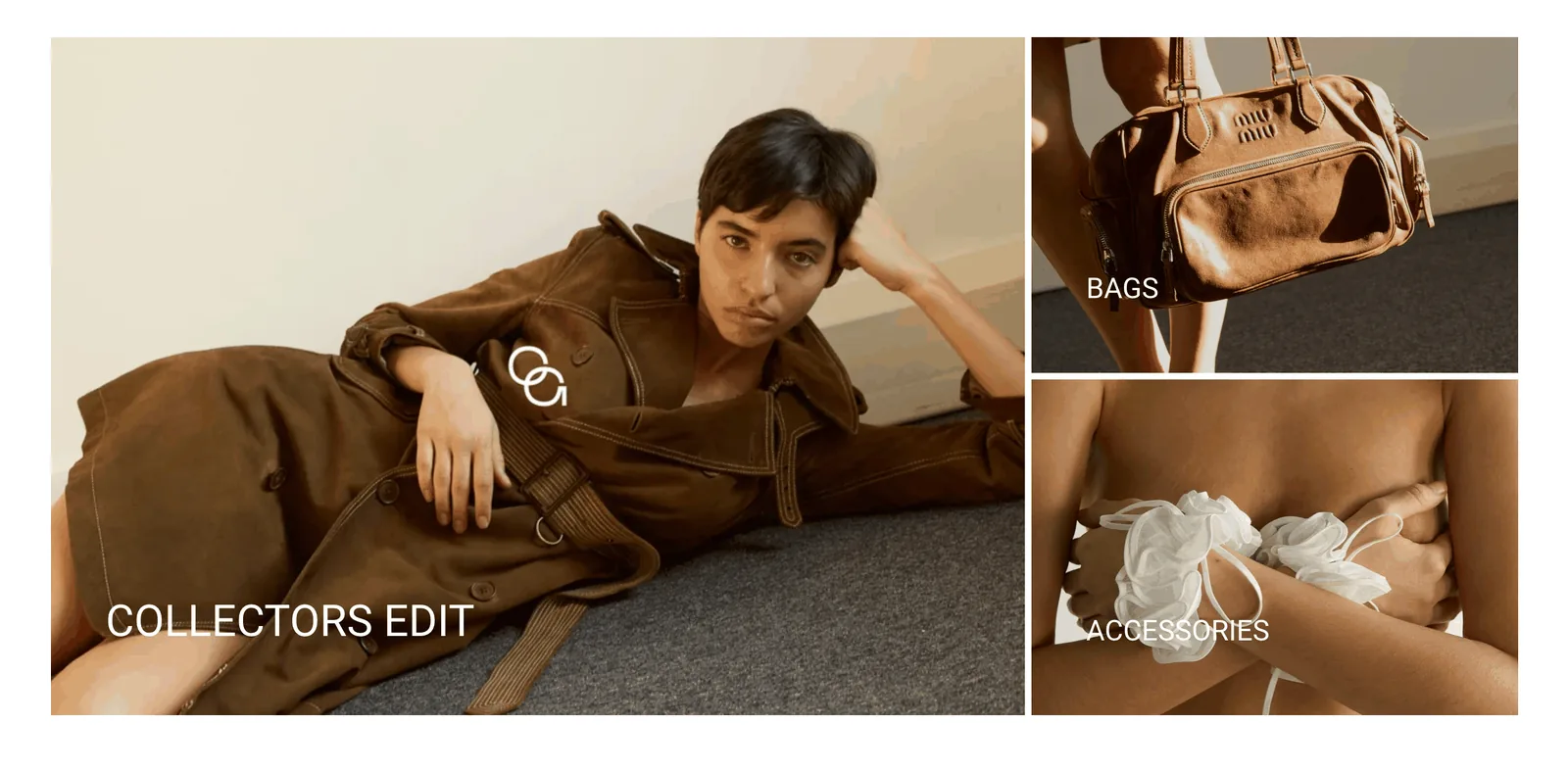
I pasted in a block from her shop's homepage to copy, and asked for a small map and a less dull "ways to visit" section.
Round 3: three ways to visit
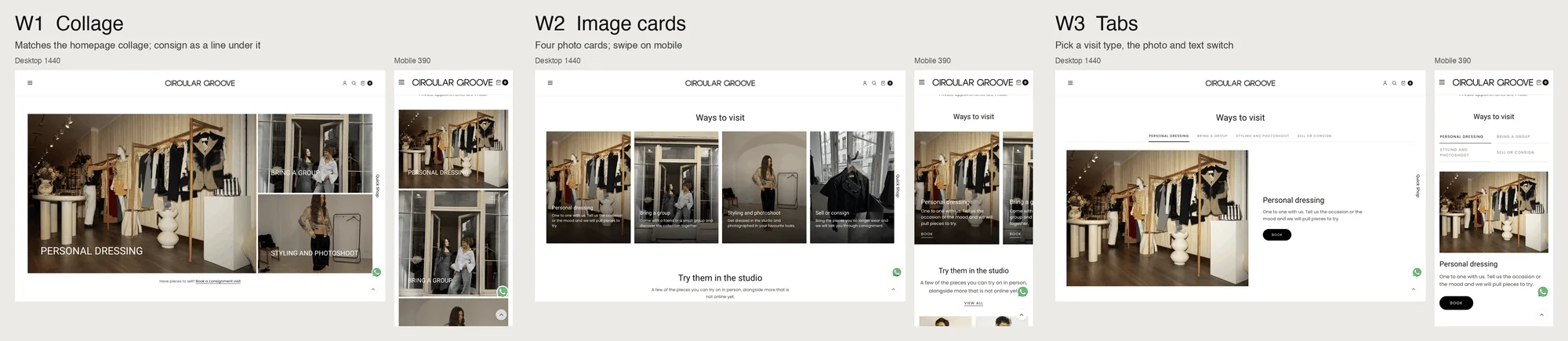
Collage, image cards or tabs. The agent liked the collage. I went with tabs and asked for the collage as a collection block at the bottom.
Round 2 had dropped Ksenia's own words from her live page, so I pasted them back in. I also asked for the group line to be toned down. It now reads "Come with a friend or a small group and discover the collection together."
Round 4: Ksenia's changes
Ksenia sent her changes on 4 November: she wanted it more chic and less salesy. They went into the same unpublished copy of her theme on 6 November. Her hero and intro words are in, and so are her names for the visits and her own six FAQs. The page now says the studio is open by appointment on Tuesday, Wednesday and Saturday, and shows her address.
Everything I had guessed came out: the hero tags, tea and coffee, step-free access and parking. Her words won wherever they differed from ours.
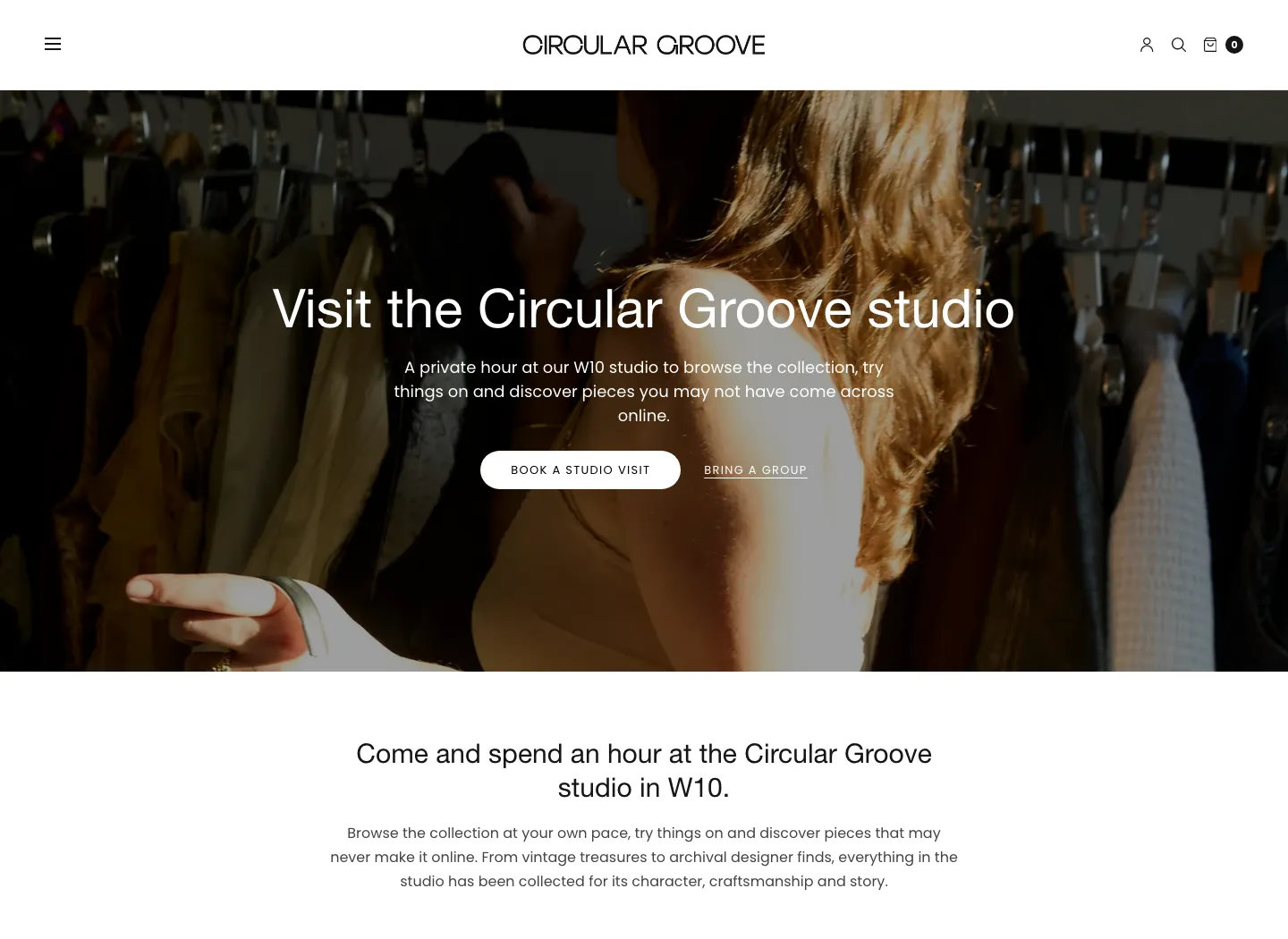
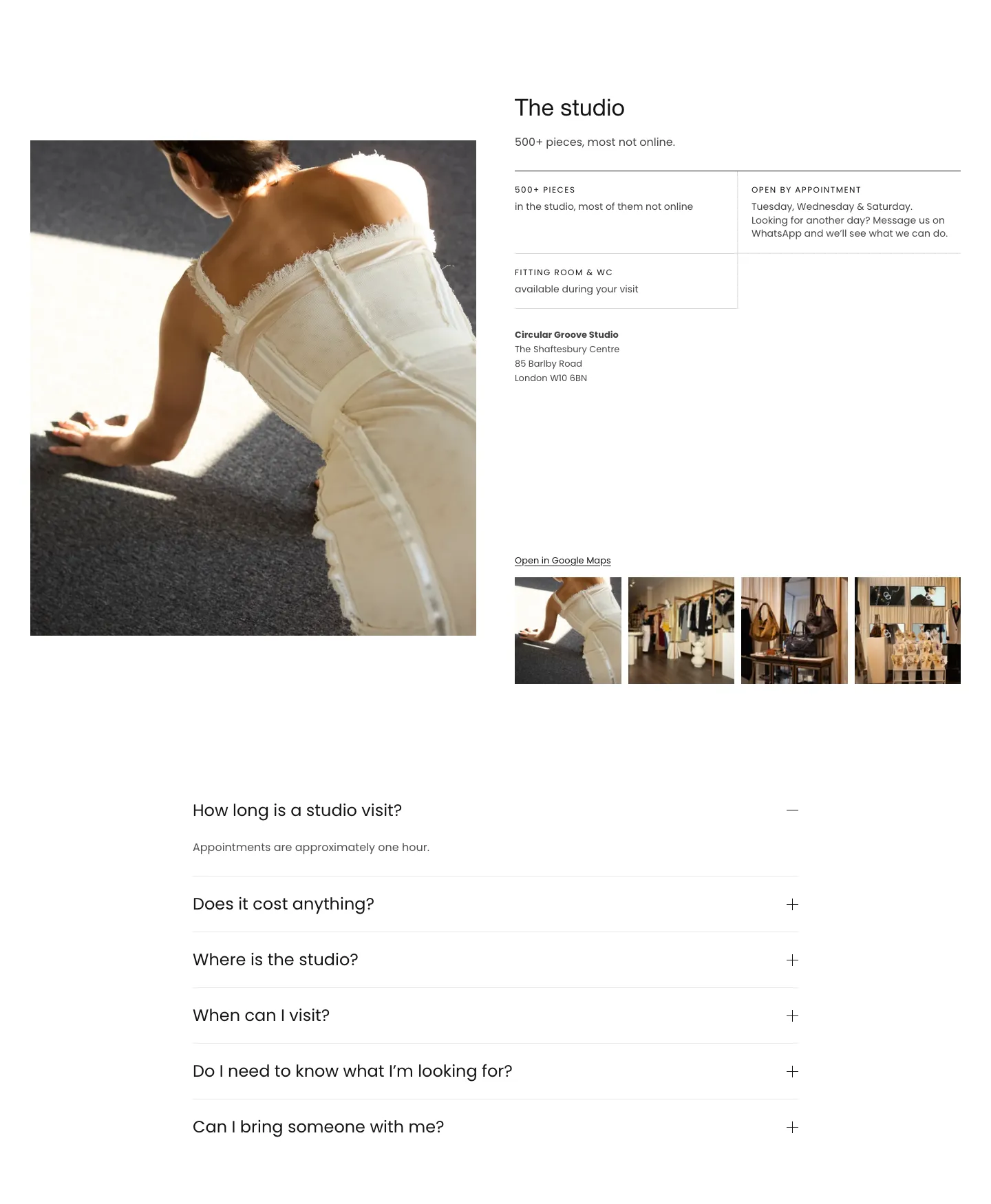 See it all
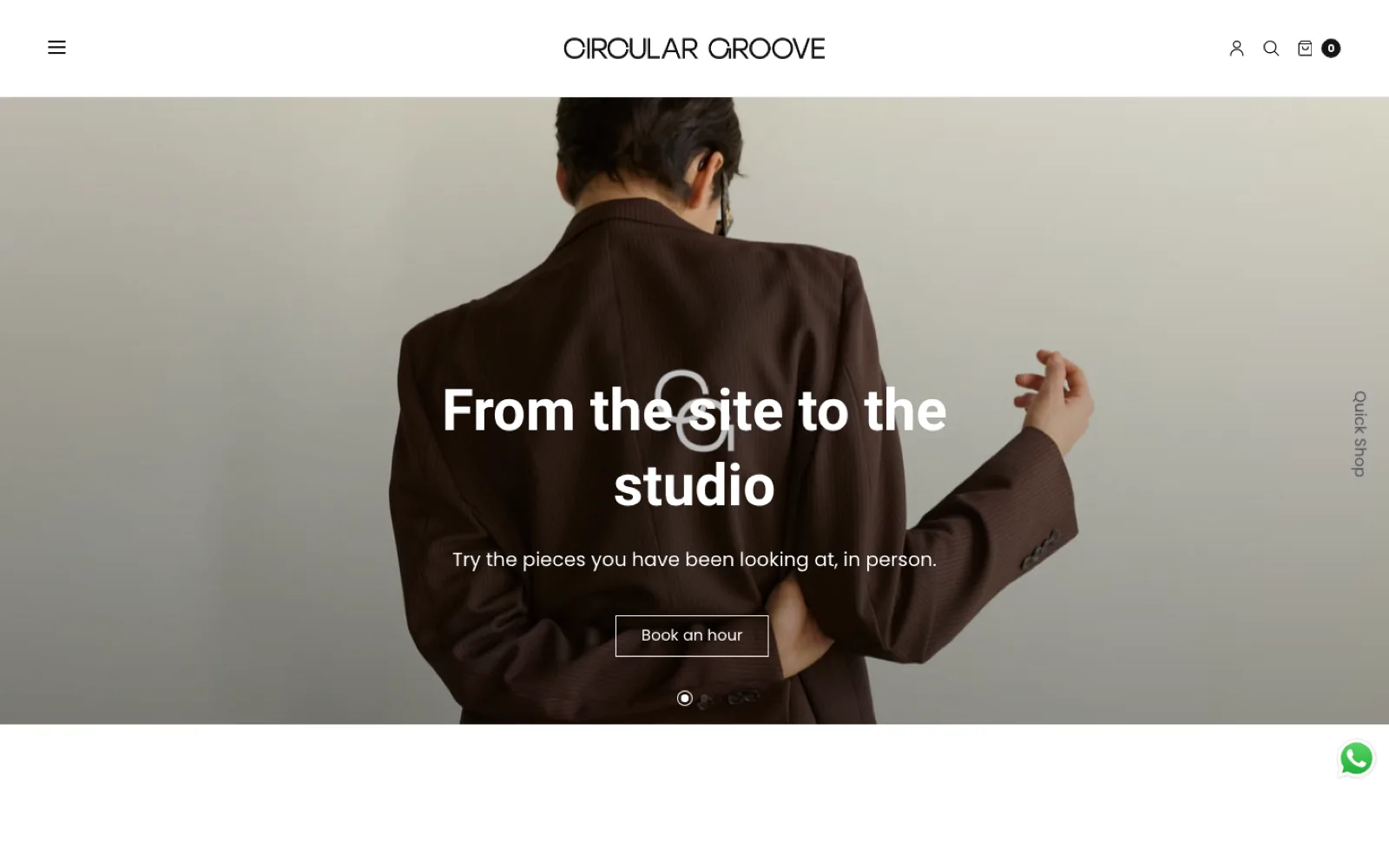
The final page
This is the page as it stands now, after Ksenia's changes. The booking calendar doesn't show up in a screenshot, so the shots stop above it.
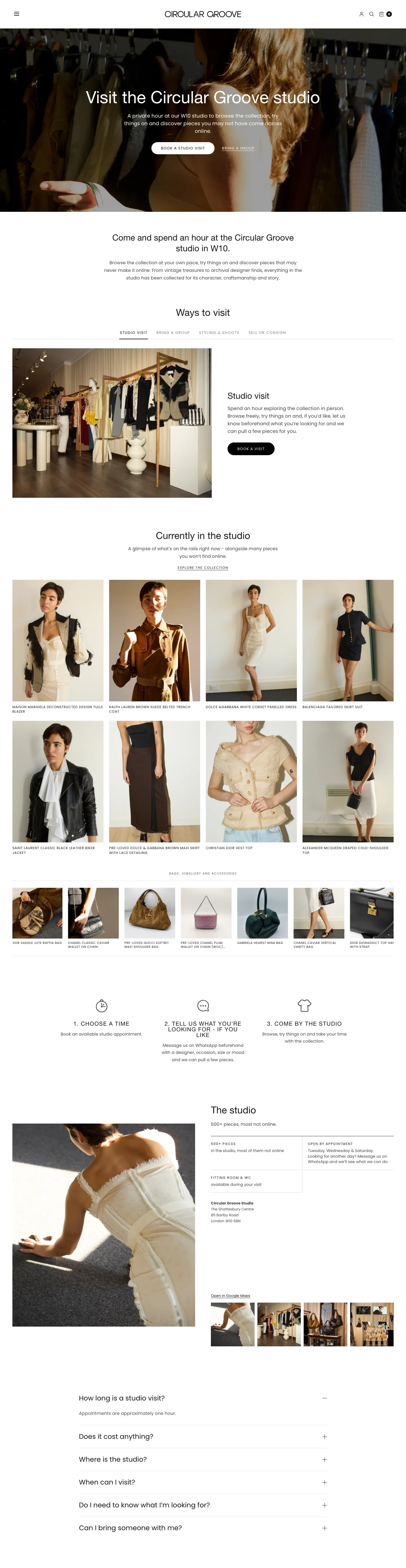 See the full page
 See the full page
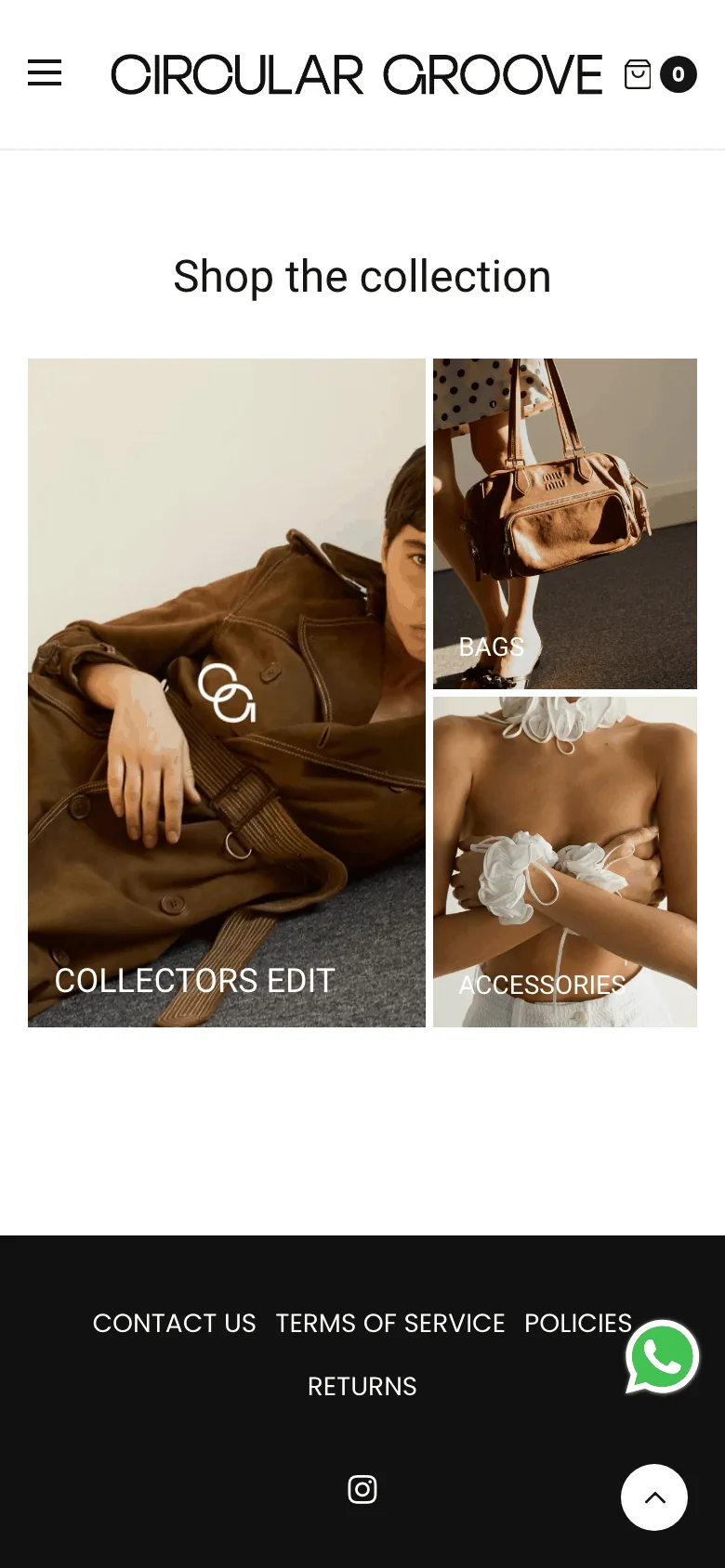 See the full page
The numbers
Counted from the transcripts for the whole 21 October session. Round 4 isn't counted. The same chat also ran a docs review, a tracking check and the cold read below.
| My prompts | 17 |
|---|---|
| Words I typed | 457 |
| All AI output | 232,907 tokens |
| Wall clock | 1 h 42 min |
| Agent waiting on me | 43 min |
| Agent working | 30 min |
The 457 words leave out about 168 I typed earlier in the coordinator chat, the Claude Code chat that hands work out to the others.
What it cost
At API list prices on 21 October (Opus 5.5 for the main agent, Sonnet 5.5 for the subagents), the session comes to about $17. $9.30 of that is the models re-reading context they had already cached. The two subagents that built the page come to about $4.60. Those are US prices.
What it got wrong
It wrote three promises into the draft copy that Ksenia never made, like "we will have ideas ready". It caught two itself. The coordinator chat caught the third.
It said "I've added it" about the address. It meant a line in a notes file. I wrote "woah it's not live right?". It wasn't.
It drafted a message to Ksenia I hadn't asked for. It also went quiet for 18 minutes while round 3 built, and I sent "?".
The final-page subagent hadn't checked the mobile page, so the main agent did. Cowlendar ignores a normal link, so the first Book button opened an "Invalid calendar" error. The subagent rewrote every Book link and clicked 11 of them. Three are still untested.
A cold read before it went to Ksenia
A subagent read the page cold, as Ksenia or her own AI would. It found 13 issues, five of them blockers. Four got fixed on the page. The studio details I had guessed at were left for Ksenia, and her changes in round 4 replaced them. A few smaller points were left as they were.
What I decided
I picked the hero from A, the product block from C, hero 1 and the tabs. In rounds 2 and 3 the agent would have picked differently.
I shared the preview with Ksenia on WhatsApp myself the same day. She said she'd send a doc of changes, and she did. They're in, and it goes live when she says.
Tools referenced
 Claude CodeThe AI we trust most to change our code. It plans the work, builds the hard parts, briefs Cursor's agents on the rest and reviews what comes back. A person decides what goes live.Tech
 ShopifyShopify runs the products and checkout behind a store we build, and we send purchases to the ad platforms from the server, so ad blockers and checkout scripts don't lose them.Tech
More from the Content Hub
- How to write emails with AI that still sound like youWe compared 189 of my emails from before ChatGPT with the ones our agents draft for me. AI detectors were the wrong test. Measuring my style, giving the AI real examples and checking for leaks and promises worked.Read the note
 How we built 136 FAQs in minutes: the power of Cursor + Webflow MCPHow Cursor and Webflow's MCP server helped us create 136 FAQs for our website in minutes, and what we did first to make it work.Read the note
 How to make a free websiteYou can make a free website and own it. Here's how we built our own, pacing.agency, with AI coding tools and hosting that can cost nothing, step by step, and the parts that still cost money.Read the note
Get the next one in your inbox.
Occasional emails, only when there's something worth reading. You can unsubscribe from any of them.
Ready to get started?
Book in a free video call, a meeting in and around London, or even a running or climbing session.
- A 15-minute callYour goals, your challenges, and whether we're the right fit.
- A 1-hour discovery callWe dig into your numbers. Worth a hundred emails.
- A concrete planAds, a custom build or both, as a one-off project or ongoing.