









How do you measure ROI and attribution from Meta advertising campaigns?
We judge Meta on the leads and sales in your own records, not on the return Meta reports. Every form carries the ad's click ID into your CRM, and conversions go back to Meta from the server, so Meta's count can be checked against the same leads.
How we measure Meta ads
Meta's reports credit Meta generously. Someone who saw your ad on Tuesday and searched for you on Friday can be claimed by Meta and by Google at the same time, so adding the two platforms together overstates what you got. We never add them up. We start from your own records.
What we set up
- A visitor ID and the ad's click ID written into every form, so each lead in your CRM shows the campaign that brought it.
- Conversions sent to Meta from the server through Stape, and on our own site with hashed email and phone so Meta can match them to people. Where the browser pixel sends the same event, both share one event ID so Meta counts it once.
- A check before any campaign spends: pixel, server events, domain and landing page, proved with a real test conversion rather than a tag that looks right.
How we check the numbers
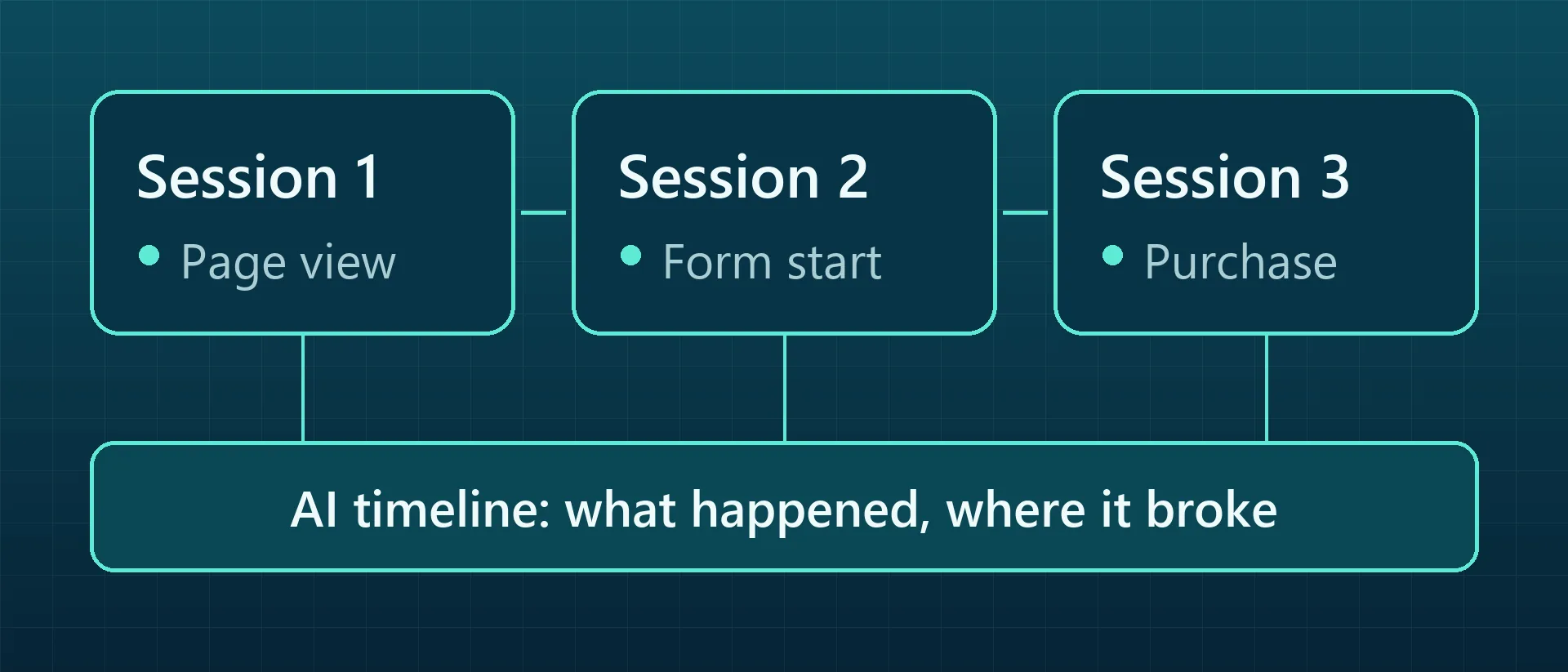
We compare Meta's figures with the leads and sales in your CRM or online shop, campaign by campaign. To see one person's path, Pacing Journey reads their whole history from your GA4 export and lines it up with the lead or order. Our own Meta instant forms go straight into our CRM as a person and a deal, so the source is on the record from the first minute.
What no tool can see
A sale only counts if it's recorded somewhere we can match back to the click: a CRM stage, a booking or an online order. If a sale has nothing linking it to the original enquiry, it can't be tied to an ad, and we'll say so rather than guess.
How we set up Meta is on the Meta tool page.

Also worth asking
Other answers about the same tools.
What is paid marketing and how does it work?
Paid marketing means paying to put your business in front of people, usually through ads on Google, Meta or LinkedIn. You set a budget and an audience, and you pay per click or per thousand views. The hard part is knowing which ads bring customers.
What platforms do you use for paid marketing campaigns?
Google Ads and Meta (Facebook and Instagram), plus LinkedIn for B2B work. We use Microsoft Ads where a campaign needs it. Which ones we use depends on whether people search for what you sell.
How much should I budget for paid marketing?
Start from what a customer is worth to you and what a lead costs in your market. The budget then needs to be big enough to get meaningful conversions in a month, and small enough that you can afford to find out it isn't working.
Want a quick starting figure from your revenue and a growth goal? Try the budget planner.
What’s the difference between paid search and paid social campaigns?
Paid search (Google Ads) shows your ad to people typing a query. Paid social (Meta, LinkedIn) shows it to people browsing. Search catches demand that's already there, and social creates interest in something new.
How do Meta advertising platforms differ from Google Ads?
Google Ads shows your ad to people searching for something. Meta shows it to people by audience while they scroll Facebook and Instagram. If people already search for what you sell, start with Google. Meta reaches the people who aren't looking yet.
Still have questions?Talk to us
Bring your numbers.
We'll tell you if the spend makes sense.
- A 15-minute callYour goals, your challenges, and whether we're the right fit.
- A 1-hour discovery callWe dig into your numbers. Worth a hundred emails.
- A concrete planAds, a custom build or both, as a one-off project or ongoing.